
Please Note: If in the following review you notice a level of writing fluency (not to mention political knowledge) far superior to what is normally contained on this blog, it is because this review was co-written and edited by the future Prime Minister of Australia, Christopher Weinberg.
Genre: Dramatic Biopic, Political Satire
Director: Oliver Stone
Cast: Josh Brolin, James Cromwell, Richard Dreyfus, Thandie Newton, Elizabeth Banks, Toby Jones, Jeffrey Wright
Running Time: 129 minutes (plus trailers)
 When it was announced that Oliver Stone, the controversial left-wing director behind JFK, Platoon and Natural Born Killers was making a film about the life and presidency of George W. Bush, many people sat up in eager anticipation. As everyone’s favourite gun-toting Texan departed the Oval office for the last time there was a great amount of interest in both the political and the film community as to how Stone would portray this influential figure, generally considered to be America’s most hated president. Released in the USA just a couple of weeks before the 2008 election, in which Bush’s legacy was harshly rebuked with the inauguration of Barack Obama, I think most people were expecting an out and out slamming of Bush along the lines of Fahrenheit 9/11. Instead, W. is a remarkably kind portrait of George Bush, depicting him not as evil or stupid, but as a good intentioned if naïve man who was unsuited to leadership, but always did what he thought was right.
The key to the film’s success is the impressive ensemble cast, which one enormous exception. Josh Brolin is undoubtedly one of the most versatile actors of this decade, going from an innocent cowboy in No Country for Old Men, to a simple and tortured politician in Milk. In W. he shows an immense amount of devotion to the role; his accent is sublime and epitomises the Texan nature of Bush, and he was criminally overlooked for a Best Actor nomination at the Oscars. James Cromwell is amazing as the overbearing and conservative Bush Sr., and the scenes between the father and son provide us with a fascinating look into Bush’s personal identity: a boy who never had his father’s approval. Richard Dreyfus embodiment of Dick Cheney is pitch perfect. With a striking physical resemblance, Dreyfus conveys Cheney’s speech structure incredibly well and really gives the sense of a crazed hunter in a suit. Elizabeth Banks is wonderful, although slightly underused as Laura Bush, as are veteran actors Toby Jones, Ellen Burstyn, Scott Glenn and Jeffrey Wright as Karl Rove, Barbara Bush, Donald Rumsfeld and Colin Powell respectively. At the other end of the spectrum, Thandie Newton as Condoleezza Rice is atrocious. Along with her "performance" in RocknRolla, she has recently proven herself to be one of the weakest actresses of our time, and her portrayal of the National Security Advisor comes across like a bad sketch. Seriously, she is unfathomably bad.
 The film’s non linear timeframe is a mixture of Bush’s formative years, his ascension to Governor of Texas and then finally the war in Iraq as was crafted by the inner sanctum of the Administration. Strangely, Stone and screenwriter Stanley Weiser (The Queen) chose to exclude several key moments in Bush’s career, most notably the contentious 2000 election. When looking back on what is covered in the film, it seems that Stone has decided to examine moments in Bush’s life in which he was in control of. Additionally, he spends a lot of time exploring the various people that influenced Bush; the relationship between Bush Jr. and Bush Sr. is the foundation on which the film is based. Constantly, Bush Jr. is seen trying to win his father’s approval and gain respect in the face of low expectations. It’s interesting to see that it was the younger Bush, Jeb, who was considered the heir to the Bush legacy. It proves that W had some strength and capability to achieve the title of President, something Stone tries to weave in throughout the film. The other major influence that is seen to be immense is that of Dick Cheney In order to make Bush identifiable, Cheney is depicted as the devil, using the president to further his own agenda, driving the country closer and closer to war.
 The best scenes in the film are the ones that occur during Bush’s actual presidency, being both impressively accurate and brilliantly satirical. The movie opens with a great scene in which Bush and his advisers coin the term ‘Axis of Evil.’ Another such flash of brilliance comes when during a luncheon with Cheney, Bush signs off on a change in defence policy. Whilst seemingly unremarkable, it is to allow for rendition of ‘enemy combatants’. This change to allow for America to torture alleged terrorists highlights the extreme power of the Presidency. Over a burger and fries, one man can determine whether his nation engages in grievous moral acts or not in order to preserve the security of millions of people. Furthermore, the ‘final confrontation’ in which the decision to go to War in Iraq is given, highlights the nature of the First Bush Cabinet, the inherent conflicts within it, and the nature of Bush as a leader. In it we see Colin Powell, Secretary of State, vehemently advocate for not going into Iraq, suggesting it would be a diplomatically, economically and socially costly engagement. As Powell’s arguments become more legitimate in the mind of Bush, we see Cheney take control and clearly lay out the reasons for going into Iraq, a certain substance known as Black Gold. In the end, we see Bush agree to war and then leads his Cabinet in prayer.
 However, while individual scenes such as those listed above are great, the overall structuring really holds this film back. While almost everything shown is at least interesting, I really didn’t care that much about his alcohol problems or college years (also, as good as Brolin is, he cannot play a 25 year old.) Every time we cut to another flashback, I was frustrated, wanting to get back to the politics rather than the ‘touchy feely’ family moments. Honestly, I think I would have preferred for the film to begin with his election, and just go on from there. The other screenwriting problem is the inclusion of the famous ‘Bushisms.’ Every time we hear one of his real life idiotic remarks, it takes us out of the film, and does not gel at all with Stone’s sympathetic vision of the president. Even so, this movie is general well written, and the last twenty minutes, starting with the realisation that Iraq does not possess WMD’s, are a brilliant combination of sharp satire and emotional drama.
 W. is a portrait of man whose life takes on an incredible transformation. In the beginning, Stone shows us a drunken idiot, shameful in the eyes of his father. By the end we see him a born-again Christian, leading the free world. And yet he can never win his father’s complete admiration; during the course of the war, Bush suffers a nightmare in which his father verbally and physically assaults him, blaming him for the desecration of the Bush legacy. Stone takes great effort to portray the man behind the speeches, and proves him to be nothing but an ordinary American caught in an uncertain life, seeking direction and approval. I’m not sure who exactly the target audience of this film is: Pro-Bushies will hate it for it’s liberal sensibilities, and Anti-Bushies will leave disgusted that this film actually made them feel sorry for the man. However, if you can leave your political beliefs at the door, this film proves to be worth the watch.
W. will be released on DVD in Australia at some point in 2009.
Genre: Dramatic Biopic, Political Satire
Director: Oliver Stone
Cast: Josh Brolin, James Cromwell, Richard Dreyfus, Thandie Newton, Elizabeth Banks, Toby Jones, Jeffrey Wright
Running Time: 129 minutes (plus trailers)
 When it was announced that Oliver Stone, the controversial left-wing director behind JFK, Platoon and Natural Born Killers was making a film about the life and presidency of George W. Bush, many people sat up in eager anticipation. As everyone’s favourite gun-toting Texan departed the Oval office for the last time there was a great amount of interest in both the political and the film community as to how Stone would portray this influential figure, generally considered to be America’s most hated president. Released in the USA just a couple of weeks before the 2008 election, in which Bush’s legacy was harshly rebuked with the inauguration of Barack Obama, I think most people were expecting an out and out slamming of Bush along the lines of Fahrenheit 9/11. Instead, W. is a remarkably kind portrait of George Bush, depicting him not as evil or stupid, but as a good intentioned if naïve man who was unsuited to leadership, but always did what he thought was right.
The key to the film’s success is the impressive ensemble cast, which one enormous exception. Josh Brolin is undoubtedly one of the most versatile actors of this decade, going from an innocent cowboy in No Country for Old Men, to a simple and tortured politician in Milk. In W. he shows an immense amount of devotion to the role; his accent is sublime and epitomises the Texan nature of Bush, and he was criminally overlooked for a Best Actor nomination at the Oscars. James Cromwell is amazing as the overbearing and conservative Bush Sr., and the scenes between the father and son provide us with a fascinating look into Bush’s personal identity: a boy who never had his father’s approval. Richard Dreyfus embodiment of Dick Cheney is pitch perfect. With a striking physical resemblance, Dreyfus conveys Cheney’s speech structure incredibly well and really gives the sense of a crazed hunter in a suit. Elizabeth Banks is wonderful, although slightly underused as Laura Bush, as are veteran actors Toby Jones, Ellen Burstyn, Scott Glenn and Jeffrey Wright as Karl Rove, Barbara Bush, Donald Rumsfeld and Colin Powell respectively. At the other end of the spectrum, Thandie Newton as Condoleezza Rice is atrocious. Along with her "performance" in RocknRolla, she has recently proven herself to be one of the weakest actresses of our time, and her portrayal of the National Security Advisor comes across like a bad sketch. Seriously, she is unfathomably bad.
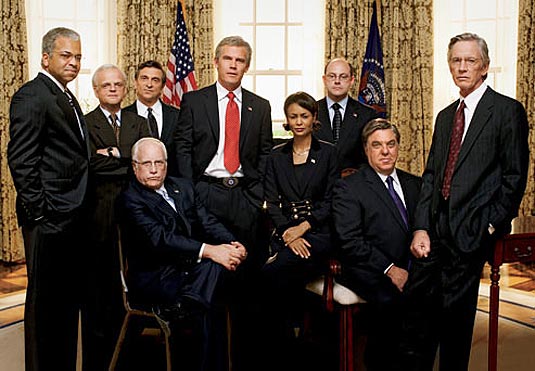 The film’s non linear timeframe is a mixture of Bush’s formative years, his ascension to Governor of Texas and then finally the war in Iraq as was crafted by the inner sanctum of the Administration. Strangely, Stone and screenwriter Stanley Weiser (The Queen) chose to exclude several key moments in Bush’s career, most notably the contentious 2000 election. When looking back on what is covered in the film, it seems that Stone has decided to examine moments in Bush’s life in which he was in control of. Additionally, he spends a lot of time exploring the various people that influenced Bush; the relationship between Bush Jr. and Bush Sr. is the foundation on which the film is based. Constantly, Bush Jr. is seen trying to win his father’s approval and gain respect in the face of low expectations. It’s interesting to see that it was the younger Bush, Jeb, who was considered the heir to the Bush legacy. It proves that W had some strength and capability to achieve the title of President, something Stone tries to weave in throughout the film. The other major influence that is seen to be immense is that of Dick Cheney In order to make Bush identifiable, Cheney is depicted as the devil, using the president to further his own agenda, driving the country closer and closer to war.
 The best scenes in the film are the ones that occur during Bush’s actual presidency, being both impressively accurate and brilliantly satirical. The movie opens with a great scene in which Bush and his advisers coin the term ‘Axis of Evil.’ Another such flash of brilliance comes when during a luncheon with Cheney, Bush signs off on a change in defence policy. Whilst seemingly unremarkable, it is to allow for rendition of ‘enemy combatants’. This change to allow for America to torture alleged terrorists highlights the extreme power of the Presidency. Over a burger and fries, one man can determine whether his nation engages in grievous moral acts or not in order to preserve the security of millions of people. Furthermore, the ‘final confrontation’ in which the decision to go to War in Iraq is given, highlights the nature of the First Bush Cabinet, the inherent conflicts within it, and the nature of Bush as a leader. In it we see Colin Powell, Secretary of State, vehemently advocate for not going into Iraq, suggesting it would be a diplomatically, economically and socially costly engagement. As Powell’s arguments become more legitimate in the mind of Bush, we see Cheney take control and clearly lay out the reasons for going into Iraq, a certain substance known as Black Gold. In the end, we see Bush agree to war and then leads his Cabinet in prayer.
 However, while individual scenes such as those listed above are great, the overall structuring really holds this film back. While almost everything shown is at least interesting, I really didn’t care that much about his alcohol problems or college years (also, as good as Brolin is, he cannot play a 25 year old.) Every time we cut to another flashback, I was frustrated, wanting to get back to the politics rather than the ‘touchy feely’ family moments. Honestly, I think I would have preferred for the film to begin with his election, and just go on from there. The other screenwriting problem is the inclusion of the famous ‘Bushisms.’ Every time we hear one of his real life idiotic remarks, it takes us out of the film, and does not gel at all with Stone’s sympathetic vision of the president. Even so, this movie is general well written, and the last twenty minutes, starting with the realisation that Iraq does not possess WMD’s, are a brilliant combination of sharp satire and emotional drama.
 W. is a portrait of man whose life takes on an incredible transformation. In the beginning, Stone shows us a drunken idiot, shameful in the eyes of his father. By the end we see him a born-again Christian, leading the free world. And yet he can never win his father’s complete admiration; during the course of the war, Bush suffers a nightmare in which his father verbally and physically assaults him, blaming him for the desecration of the Bush legacy. Stone takes great effort to portray the man behind the speeches, and proves him to be nothing but an ordinary American caught in an uncertain life, seeking direction and approval. I’m not sure who exactly the target audience of this film is: Pro-Bushies will hate it for it’s liberal sensibilities, and Anti-Bushies will leave disgusted that this film actually made them feel sorry for the man. However, if you can leave your political beliefs at the door, this film proves to be worth the watch.
W. will be released on DVD in Australia at some point in 2009.


