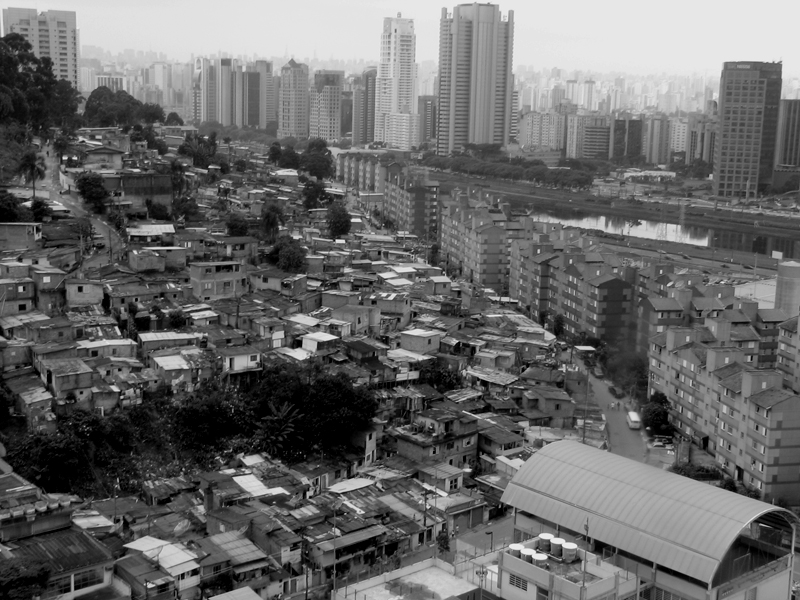
When our grandparents re-imagined the urban environment, we wound up with Pruitt-Igoe and the Parisian banlieues. As a result, popular opinion leans somewhat sharply in the negative direction when it comes to large-scale urban renovations. Still, it is largely accepted, among the current generation of urbanists and architects, that the suburbs are in need of a serious, large-scale overhaul. It's always important, when taking on a major project, to learn from the lessons of the past. But what exactly do the tower blocks and windswept concrete plazas of the latter half of the twentieth century teach us? On the surface, it's that tower blocks and windswept concrete plazas make for dire cities. But beyond that, these stark interventions illustrate quite plainly that it is almost never a good idea to rip down everything and start from scratch.
It's too bad, really, because starting a city from scratch is a very romantic and exciting idea. But cities are places that are used by millions of people, in millions of different ways; the longer a place is inhabited, the more people develop routines in and around them. Aesthetics aside, familiarity sets in, and even ugly places can become comfortable and familiar. Modernist urban renewal projects didn't just fail because they were severe and lacked a sense of human scale; they failed, at least in part, because they ignored the patterns and rhythms of the places that they replaced.
 It's encouraging, then, to see that some of the cities considered the greatest offenders by anti-sprawl camp are starting not only to attempt to densify, but that they are doing so in ways that adapt rather than replace their built environments. Take, for instance, Miami, where a former car dealership is being redeveloped as a highrise urban district, or Charlotte, North Carolina, which has taken several steps in the past few years to actually start acting like a city of its economic stature. A new light rail has been built, for instance, with plans for considerable expansion; density has been encouraged along the transit lines; in one suburb, all new commercial buildings are required to have at least two stories. For a city with a population density of only 2,515 people per square mile (slightly less than that of Bangladesh), these are very promising steps toward urbanization. Better yet, there's been no wholesale removal of the city's existing fabric; just modifications.
Other sprawling cities are starting to take notice. Atlanta, the undisputed Capital of the New South since its rapid revival back in the late 1980s, has recently taken note of Charlotte's urbanization, with the Atlanta Journal-Constitution calling the city "a feisty, undersized boxer [that punches above its weight]." No small words from the Rome of Suburban Postwar America. And as that same article notes (albeit in downplayed terms that any smart urbanist will snicker at), Atlanta is currently struggling under the weight of the obscene freeway system that grew as fast as the metro's population. The city is already saddled with several eight-lane freeways (that's eight in both directions, for a total of 16) and the Georgia State Assembly seems to be making transit decisions using a 1965-vintage playbook. With New Jerseyans now complaining about the gridlock in the Big Peach (which they actually do in the AJ-C article), Atlanta's mobility problems are looking like a very serious liability.
Charlotte, meanwhile, has half the population of Atlanta but less than half the congestion. It remains to be seen if Charlotte will ever catch up to Atlanta in terms of international economic stature, but even if it doesn't, Charlotte can lead the way as a slew of sprawling mid-sized Southern cities (the entire region is notorious for its sprawl, after all) seek to densify and re-work their urban fabric. By taking the lead on lifestyle issues, Charlotte could become the capital of the New New South.

(Photos from Flickr user wbwood1969 and The Daily Green.)