Showing posts with label 5 Stars. Show all posts

Saturday, November 27, 2010

Movie Review - The Social Network

Director: David Fincher
Running Time: 121 minutes
Australian Release Date: 28 October 2010
Review by Tom Clift

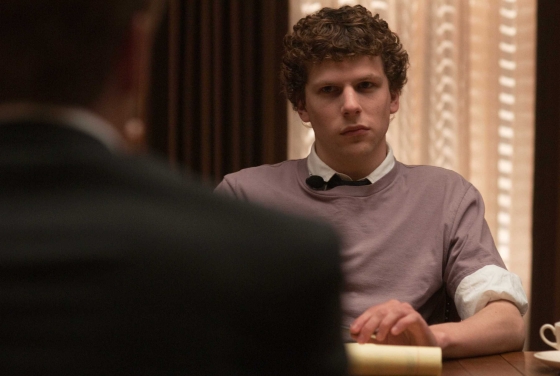
While it was his frenetic visual style that made Fight Club one of the definitive pictures of the nineteen-nineties, recent years have seen David Fincher take on an increasingly controlled and reflective approach to movie-making. His latest undertaking – a follow-up to the Academy Award nominated The Curious Case of Benjamin Button – is The Social Network, an enthralling tale of betrayal and intellectual property theft based loosely on the real life founding of the massively popular internet website, Facebook. Adapted from perhaps one of the best scripts in living memory by West Wing scribe Aaron Sorkin, the movie is a stunningly absorbing and superbly acted drama with a flawless pace and mesmerizing aesthetic. It is a film that offers a brutal critique of one of its most influential figures of the internet age, and one that sees Fincher’s evolution as both a storyteller and an artist come magnificently to a head.

The Social Network is definitely Fincher’s most subdued film to date, especially from a visual standpoint. The overt technical wizardry that shook the celluloid in Fight Club is all but gone, replaced by a steady and restrained technique that is never-the-less every bit as exhilarating as any of his previous efforts. The cinematography is meticulous; cold and strikingly dark, reflecting the scrupulous inner workings of Facebook founder Mark Zuckerberg’s psyche. Likewise, the fantastic score from Atticus Ross and Nine Inch Nails front-man Trent Reznor (the first motion picture project undertaken by the latter) is perfectly in tune with the impatient potential and emotional frailties of the films various characters. Through a combination of electronic beats and humming strings mixed with simple, vulnerable piano chords, Reznor and Ross have crafted a soundtrack that is simultaneously edgy, urgent and ethereally beautiful.

Naturally Fincher has not abandoned his toys entirely; for example, a particularly memorable college rowing sequence utilizes sharp and soft photography set to a hyper-synthesized rendition of In the Hall of the Mountain King, the result of which is so potent that it threatens to burst and crackle from the screen. For the most part however, Fincher wisely chooses to rein himself in, letting the narrative, rather than his camera, provide the thrills. And what a thrilling narrative it is – Sorkin uses two lawsuits that the Facebook CEO finds himself embroiled in to frame the story, setting a majority of the action in flashbacks as we witness the birth of a social phenomenon from a dorm-room at Harvard University. A year ago, no one could have foreseen that “the Facebook movie”, as it was derisively referred to by film fans around the globe, would be one of the most gripping, entertaining and insightful movies of 2010. Yet that is exactly what it is.

At the centre of the film is a trio of young male actors, each of whom deliver potentially career making performances. Andrew Garfield provides the story with much of its emotional core and is absolutely phenomenal as Zuckerberg’s best friend and Facebook co-founder Eduardo Saverin, while Justin Timberlake (in an ironic piece of meta casting) plays Napster founder Sean Parker; the pop-star turned actor capturing perfectly the arrogance of the twenty-first century entrepreneur. Most compelling of all is Jesse Eisenberg as Zuckerberg, whose work here is nothing short of a revelation. The Facebook CEO as portrayed by Eisenberg is a character for the ages; quick witted, abrasive, socially inept and unexpectedly ruthless – essentially every characteristic we would associate a youth who makes a life for himself online. Eisenberg deserves every accolade, including the Academy Award for Best Actor, for a performance that represents the bile of an entire generation, yet never once breaches the borders of disbelief.

It also helps that Eisenberg and company are working from what I consider one of the best written scripts in decades. From the opening scene to the closing credits, Sorkins dialogue is rapid-fire and razor-sharp, and is delivered with the kind of blithe sarcasm and detached irony that is characteristic of internet users all around the world – albeit ones several hundred times more witty than the likes of you or I. The characters in this film talk and argue with a fluency that real people can only dream of, producing some of the most inspired one-liners and devastating comebacks you will ever hear. On a personal note, as a writer, the impeccable structure and seemingly effortless expression of this screenplay is both awe-inspiring and wholly depressing; Sorkin exhibits a level of eloquence here that seems all but unattainable.

Of course eloquence only counts for so much, and the fact that Sorkins screenplay is based on a book – Ben Mezerich’s The Accidental Billionaires – known to be rife with factual inaccuracies adds a troubling undercurrent to the entire production. Many Facebook staffers including Zuckerberg himself have come out in protest of both the book and the film, and while the movie never technically claims to be accurate, I can certainly understand why Zuckerberg would be upset by his fictional character biography as depicted in The Social Network – in a movie populated almost entirely by unlikeable characters, Zuckerberg comes across as the most selfish, misogynistic and petty-minded of them all. There is certainly an interesting moral debate to be had on this issue – if the screenwriter and director are going to be using the real names and events, should they be beholden to the facts, or should creating a good story be their only aim?

Regardless of how accurate the film is, there can be no doubt that in creating a good story at least, Fincher and Sorkin have more than succeeded. The Social Network transcends the realm of movie based on true events; it is a masterpiece of modern screenwriting, a veritable acting clinic and a maturely made and subtly gorgeous aural and visual experience. It is also one of the most discerning movies yet made in and about the internet era. David Fincher ended the nineteen-nineties by producing one of its most important films; with The Social Network, he has started the twenty-tens in a similar fashion.


Monday, August 9, 2010

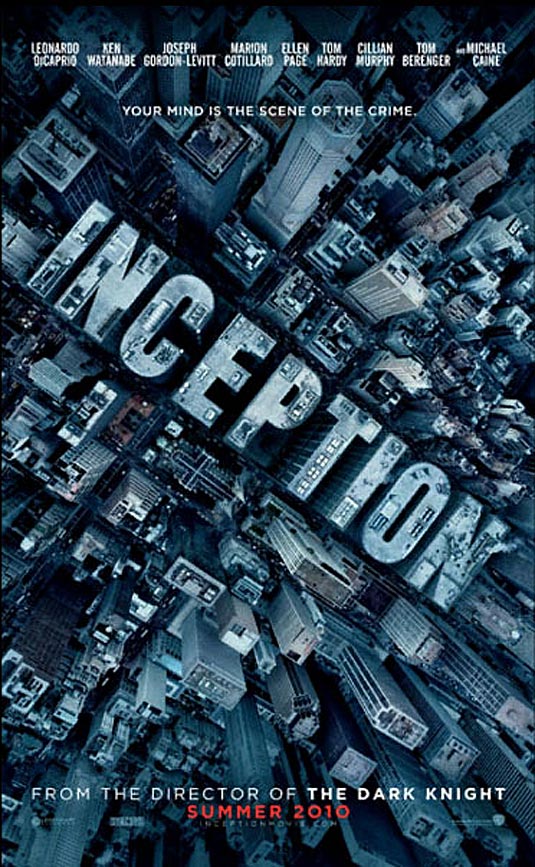
Movie Review - Inception

Genre: Sci-Fi Action
Director: Christopher Nolan
Starring: Leonardo DiCaprio, Joseph Gordon-Levitt, Ellen Page, Tom Hardy, Marion Cotillard, Ken Watanabe, Cillian Murphy, Dileep Rao
Running Time: 148 minutes (plus trailers)

"Dreams feel real while we're in them. It's only when we wake up that we realize something was actually strange."

Fresh off the heels of the wildly successful and critically beloved superhero film The Dark Knight, British-American filmmaker Christopher Nolan crafts a complicated, exciting, original and at times genuinely awe-inspiring science fiction thriller called Inception. Centred around a group of thieves who enter a man’s subconscious in order to plant an idea deep within the recesses of his mind, the movie deals with notions of reality and perception with an intelligence rarely seen in big budget action pictures, while at the same time more than delivering on all the thrills that mainstream audiences demand. Given that Nolan directed not one but two of my all times favourite films, it is fair to say that my expectations for Inception were fairly high; the fact that he able to once again surpass everything I could have hoped for cements him as one of the most talented and ambitious minds working in the entertainment industry today.

Even excluding Inception, there are only a handful of directors with a filmography as impressive as Nolan’s. His debut film was the low-budget thriller Following, a movie that set the groundwork for almost all his later films, both in its fascinating non-linear script and in the obsessive characters that it documented. He perfected these themes with his first masterpiece, the critically acclaimed cult film Memento, often referred to as “the film told backwards”. After a remake of a Norwegian thriller called Insomnia, Nolan journeyed into big budget film-making with a reboot of the Batman franchise, bringing his dark, psychological rooted storytelling to the mythos of the capped crusader. The second film of this planned trilogy, separated by another engaging brainteaser in The Prestige, was The Dark Knight, one of the most critically beloved (not to mention profitable) blockbusters of all time. With Inception, Nolan has combined the intellectual complexity of his smaller works with the commercial appeal of the Batman franchise to create one of the most wholly unique pieces of Hollywood cinema in years.

Inception is an entry into a small subgenre of science fiction films that I would designate “science fiction of the mind”; a subgenre shared by other great films such The Matrix, Dark City and Total Recall. The influences of all of these stories can certainly be seen in Nolan’s film, but just as we have come to expect, he pushes the concepts they introduced to their mind-bending limits. As characters dive deeper and deeper into their own subconscious brains, the director builds a devilishly complicated maze of dreams within dreams. This is not a film that you can watch passively; Nolan demands a lot of his audience, but as a result the reward is far more satisfying than your typical summer blockbuster. And Nolan is sure to counter the more cerebral moments with wonderfully imaginative and electrifying action beats. The films core concept – the world of the dream – allows for chase and fight sequences set in all kinds of environments, in places where the laws of physics do not necessarily apply.

What’s more, just as he incorporates the perfect amount of action, Nolan never allows the complexity of the story to overpower its emotional core. If there is one complaint I have of Nolan’s films, it is that the human emotion is sometimes sacrificed to the enigma of the script. When compared to the twisting paths of his earlier movies like Memento and The Prestige, Inception is relatively straightforward, but the way in which Nolan incorporates recurring elements into this script is masterful on a whole other level. Lines of dialogue repeat throughout the film, and each time they gain new meaning and significance. Likewise, recurring imagery and objects – for example, a train, a pinwheel or a spinning top – allow for some superb emotional payoffs. The three core relationships in the film, between a husband and wife, father and son and most potently, a parent and his two children, are all given powerful moments of catharsis, a feat made all the more impressive by the fact that many of them take place only within a dream.

It is the balancing of these three facets that makes Inception such a phenomenal film. To be fair, it is not quite my favourite Nolan film – it doesn’t have the epic character drama of The Dark Knight, nor does is it match the frustrating brain-tease of Memento. Never the less, after three viewings I can confidently say that it is the film that best demonstrates why Nolan is my all time favourite writer and director. This man has always set himself apart through his screenplays, and this script blends action, emotion and conundrum with a skill that I don’t think has ever been seen before. This also feels like Nolan’s most personal movie – it is his first film since Following that is not based on a previously existing story, and reportedly he wrote the first draft of the screenplay more than a decade ago. A film that provide both effective emotional moments and first rate action is rare enough; that Inception does both without ever dumbing down it’s script is nothing short of extraordinary.

Of course Inception doesn’t succeed solely because of Nolan. The A-list cast is unanimously fantastic, (although I can’t help but feel that DiCaprio played essentially the same role slightly better in Shutter Island earlier in the year). Due to the inherently ensemble nature of a heist film, a lot of the movies ancillary character don’t get enormous attention, but so strong are the performances that the movie doesn’t really suffer for it. Ellen Page and Joseph Gordon-Levitt continue to prove themselves as some of the best young actors around, and British actor Tom Hardy, after wowing critics last year with his mind-blowing turn in Bronson, is now given the opportunity to amaze general audiences as well. Marion Cotillard is dark and disturbing as DiCaprio deranged wife, and I also thought the Cillian Murphy was terrific as a character whose allegiances shift depending on the level of the dream he finds himself in – yet another fascinating dimension to Nolan’s screenplay.

On a technical level, Inception is equally brilliant. With such an outlandish and dreamlike premise at its core, it would have been frightfully easy to resort to scene after scene of distracting CGI, but instead Nolan utilizes practical effects wherever possible – and anyone who has seen the films already beloved corridor fight scene can speak to the success of this decision. These is no point in this film where the special effects overwhelm the action, offering yet another reason why Inception stands out above almost any big budget film of the digital moviemaking era. The cinematography by Wally Pfister is gorgeous, and the movies utilization of slow motion photography is effective and beautiful without ever being gratuitous. Finally, Hans Zimmer somehow manages to top his work on The Dark Knight, providing one of the strongest scores of his extensive career. This magnificent soundtrack moves from bombastic to thrilling to touching at a moment’s notices, and adds an additional intensity to whatever scene it accompanies.
Before I conclude, I will say that Inception is not quite a perfect puzzle. Like most films this convoluted, it can be picked at and prodded until the flaws and logical problems are revealed, and if you’re friends are anything like mine, you’ve probably had several conversations in which you do just that. But to be honest, that might be one of the best things about the film. This is not just a movie people are dying to see, but one they are dying to talk about afterwards. In my eighteen months of writing about films, I have never participated in so many debates and arguments, seen so many Facebook statuses, tweets and blog posts, than I have about this movie. Does it make sense? Does it all fit together? And that ending…my god, that ending! Nolan’s greatest triumph is that he has managed to create a crowd-pleasing action sci-fi thriller with genuine emotional peaks that is also complex enough that it forces everyday moviegoers to use their brains. And even better, that seems to be why people love it.


Inception is in cinemas now


Large Association of Movie Blogs

Wednesday, June 30, 2010

Movie Review - Toy Story 3

Genre: Children’s Adventure, Comedy
Director: Lee Unkrich
Starring: Tom Hanks, Tim Allen, Joan Cusack, Ned Beaty, Don Rickles, Michael Keaton, Wallace Shawn, John Ratzenberger, Estelle Harris
Running Time: 103 minutes (plus trailers)

“What are you going to do with these old toys?”

Setting the standard not just for kids films but for films in general, the collaborators over at Pixar Animation Studios – including John Lasseter, Andrew Stanton, Pete Docter, Brad Bird and Lee Unkrich – have been responsible for some of the most creative, entertaining and moving motion pictures of all time, including several favourites that will forever define the childhoods of my entire generation. Fifteen years after they first burst onto the scene with an ingenious story of a cowboy doll jealous of a brand new action figure, Pixar has returned once more to the franchise that made them great; to the series that first launched Buzz Lightyear and his inspiring slogan into the stratosphere of the popular consciousness. And it should come as no surprise to anyone that with Toy Story 3, they have managed once more to reach infinity, and beyond.

This film sees the return of one of the big screens all time classic duos: Sheriff Woody (Tom Hanks) and Buzz Lightyear (Tim Allen), along with the rest of Andy’s Toys including Hamm, Rex, Barbie and Mr. & Mrs. Potato Head. But just as time has been moving in our world, so too has it been moving in theirs, and with Andy off to college, the gang find themselves unintentionally donated to Sunnyside Daycare Centre where they encounter a whole horde of new toys including Chunk, Big Baby, and of course Ken the Ken-doll. Unfortunately, what at first seems like a blessed new life soon turns into a nightmare, with Andy’s toys forced by the centres evil ruler, Lotso the Lots O’ Huggin’ Bear, to do hard time with the toddlers. With only a few days before Andy departs, the gang must find a way to escape from their playtime prison and make it back home to their owner.

Now for the obvious part: I adored Toy Story 3. Of course I did. Along with new films by Quentin Tarantino, Christopher Nolan or the Coen Brothers, movies from Pixar will always be amongst my most anticipated films of any given year, and each year my inflated expectations will somehow be exceeded. In the case of Toy Story 3, the bar was raised even before the movie had properly begun; as is customary with all Pixar releases, the movie was preceded by a short film, one that perfectly demonstrated the originality of the entire creative team. Blending 2D and 3D animation ingeniously, the five minute cartoon entitled Day & Night is wonderful in both conception and execution; funny, intelligent and incredibly adorable, and like many of the best Pixar creations in recent times, it is largely dialogue free. Although Toy Story 3 isn’t quite my favourite Pixar feature, Day & Night is definitely my favourite of their shorts.

From there, the movie opens with a gloriously animated fantasy sequence that takes you inside the depths of a child’s imagination. This brilliant sequence pays homage to the opening of the original whilst simultaneously having you in stitches. And the laughs never stop coming; Toy Story 3 probably won’t be celebrated to quite the same degree as other recent Pixar fares such as WALL-E or Up, as for most of its run time it is predominately concerned with the simple task of making you laugh. But that is in no way a complaint, because from the moment Barbie first lays eyes on Ken to the extended jail break sequence, this movie is unwaveringly hilarious, so much so that there is a serious danger of this review turning into me simply listing the gags that made me laugh the hardest (anything involving Hamm the Piggybank is a good place to start.)

But in my opinion, the true joy of this film is not in any one individual joke. Instead it is in feelings of nostalgia and childlike wonder, the same that you might feel when after many years you find an old toy of your own and see that it is exactly how you left it. It has been fifteen years since Toy Story, and ten since Toy Story 2. For my generation, these were the years in which we grew up. But for all that may have happened to you over that time, I guarantee this series will still be able make you smile. And just because the trilogy is finally over, it doesn’t mean we have to say goodbye. Just as we will read them Harry Potter books, these are some of the first films we will show to our own children. And in doing so, we will introduce an entirely new generation of moviegoers to some of the world’s most beloved toys.


Toy Story 3 is in cinemas now


Large Association of Movie Blogs

Saturday, December 5, 2009

Movie Review - A Serious Man

Genre: Drama, Black Comedy
Director: Joel & Ethan Coen
Starring: Michael Stuhlberg, Richard Kind, Sari Wagner Lennick, Fred Melamed, Aaron Wolff, Jessica McManus, Adam Arkin
Running Time: 105 minutes (plus trailers)

“Receive with simplicity everything that happens to you”

I have never seen a Coen Brothers film that I haven’t liked more the second time around. Be it because of the incredible attention to detail found in the production design and visual composition of each frame, the subtleties and nuances of the often dark and macabre humour or the rich and expressive worlds they create and the bizarre characters that inhabit them, I find that each film by the brothers, whose body of work includes Fargo, The Big Lebowski, No Country for Old Men and Burn After Reading, improves exponentially with each viewing. I do not love every film they have ever made, and indeed I am oftentimes confused and frustrated by the extremely unsatisfying nature of the stories they tell. Never the less, I would hard pressed to name a director currently working in Hollywood more talented than Joel and Ethan Coen, and despite some irritation I have about the way their latest projects plays out, I think A Serious Man might just be one of their best.

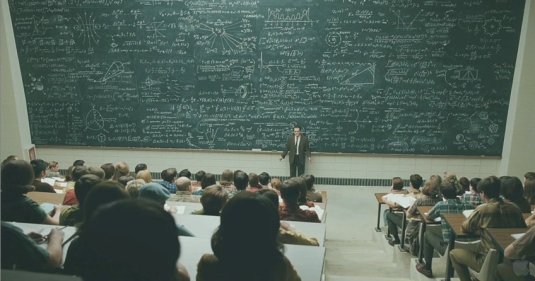
To confirm, I have seen A Serious Man twice in theatres, and I very intentionally held off writing my review of the film until I had done so; there is a lot to appreciate about this movie, and the last thing I wanted to do was miss something. The movie opens with a quote from the medieval French rabbi Rashi (above) and a bizarre and seemingly irrelevant prologue in which a Yiddish woman murders someone who may or may not be a demon. Skip forward to 1967 suburban Minneapolis, where we are introduced to Jewish physics professor and father two Lawrence Gobnick. Larry is a considerate member of the community, raising his children Danny and Sarah in the faith, and generally trying to live his life as “a serious man”. Despite this, over the course of two weeks, Larry's life is completely and utterly destroyed.

Now the Coen brother’s are not known for being kind to their characters; remember in their last outing (Burn After Reading), the only truly selfless person was violently hacked to death with a hatchet. But even by their standards, the abuse that Larry suffers in A Serious Man is brutal; indeed, the movies entire story is centred around Joel and Ethan's methodical and downright malicious dismemberment of Larry’s very existence. His wife wants a divorce, he is forced into a motel with his shut in of a brother, his children barely acknowledge his existence and to top it all off, his chance of receiving tenure at the university is being threatened by a disgruntled student and a series of denigrating letters from an anonymous source. As his desperation to hold his life together increases, Larry seeks advice from a number of unhelpful Rabbi, but is unable to find a single solid reason, religious, scientific or otherwise, for all of his woes.

Now it may not sound like it, but this movie, despite not being a comedy in the traditional sense of the word, is hilarious. Theatre actor Michael Stuhlburg has perfect timing as Larry, his mannerisms and line delivery reflecting flawlessly a man on the verge of total emotional breakdown, and he is well deserving of the Oscar buzz surround his name. Like so many Coen films, the humour in A Serious Man comes from the strangest of places; for example, the meandering tale told by a the second of Larry’s rabbi about a local dentist who finds a message hidden in one of his patients' teeth. Now the account holds no relevance to the story or Larry’s own predicament, but the way it is told makes it probably one of the most ingenious sequences of the year. Not just the dialogue but the camera angles, the use of music and production design. This movie is actually very cruel, with most of the laughs coming from Larry’s increasingly desperate attempts to find a clear answer. And I found even more to laugh at and appreciate the second time around.

There are many people who are not going to like this movie. Again, like so many Coen films, A Serious Man is not satisfying, at least not in terms of plot resolution. Take for example the opening scene. What is the purpose of the parable; who are these characters and what bearing do they have on the narrative? And for that matter, why the hell is the scene shot in a totally different aspect ratio to the rest of the film? One thing I’ve found as I explore the Coen’s filmography further is the apparent lack of respect they have for their audience. Be it the claim at the beginning of Fargo that the film is based on real life events – a claim known to be completely false – or the totally unsatisfying and seemingly pointless final twenty minutes of No Country for Old Men, this duo does not seem to care what an audience (let alone a critic) makes of their films. Do not expect your questions of the opening sequence to be answered, because A Serious Man is a film that delights in not answering them. Likewise, the films abrupt ending (coming after one final twist of the knife) resolves absolutely nothing, leaving you only with more questions and a sneaking suspicion that all the characters, Larry especially, are supremely screwed.

And yet this isn’t really a complaint. I have mentioned several times now that A Serious Man shares many similarities with the Coen brother’s previous films, and in many ways this is a very typical Coen brother’s film; frustrating, inaccessible, a little bit smug and somehow brilliant. It also features the usual behind the scenes crowd; Carter Burwell produces another excellent and moody score, and Roger Deakins does great work as the cinematographer. And of course Joel and Ethan themselves are in total control behind every aspect of the production, co-writing, producing, directing and editing (under their common pseudonym) the film with their usual meticulous attention to detail. The first time I saw the movie was with my brother, and upon leaving I asked him what he thought. He replied that he liked it, but couldn’t explain why. I feel quite similar to him; I find it very difficult to articulate what it is exactly that puts the Coens and their movies so far ahead of the curve.

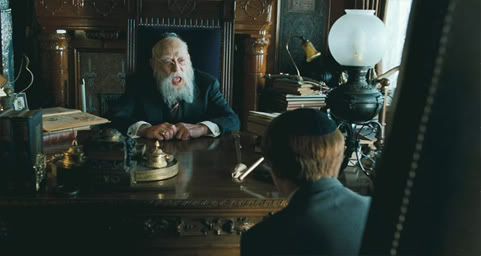
But if I had to try, I would probably say it is because of that attention to detail. In one of the final scenes of the film, Larry’s son Danny walks slowly through the Rabbi Marshak’s office to his desk. As the camera moves through the office, I found myself (on both first and second viewing) totally absorbed, searching for meaning in every wayward artefact stacked in piles on the floor. Despite not always liking their films (and rarely liking the way they treat me as a viewer), I cannot deny that the Coens' are masters of the craft, and every word, every shot, every single piece of furniture in this film feels like it has been intentionally selected to make the movie the near perfect picture that it is. They say that God is in the details, which is ironic given that the biggest question in A Serious Man is ultimately “why is God punishing Larry when he didn’t do anything?” But it's Joel and Ethan, not God, who are doing the punishing. The reason why?

They haven't told me.


A Serious Man is in theatres in Australia now


Large Association of Movie Blogs

Tuesday, December 1, 2009

1001 Movies You Must See Before You Die: "Requiem for a Dream" (2000)

The 1001 Movie Club is a conglomerate of film bloggers inspired by the phenomenal book 1001 Movies You Must See Before You Die, the title of which is fairly self explanatory. A tome of cinematic information and recommendation, it is a bible for movie buffs, and over the next few days, myself and the other members of the club will be reviewing four of the acclaimed films that can be found within its pages. Be sure to visit the club’s site where the reviews will be collected and an aggregate score bestowed, and if you are so inclined, feel free to join in on the fun.

REQUIEM FOR A DREAM (2000)
Genre: Drama
Director: Darren Aronofsky
Starring: Jared Leto, Ellen Burstyn, Jennifer Connelly, Marlon Wayans, Christopher McDonald
Running Time: 102 minutes

Based on the 1978 novel of the same name, Darren Aronofsky’s follow up to his debut feature Pi is a dark and distressing tale about the perils of addiction, and is undoubtedly one of the most visually and aurally distinctive films of the past decade. Requiem for a Dream follows four Coney Islanders – Harry, his girlfriend Marion, best friend Tyrone and mother Sara – over three seasons – summer, fall and winter – as they attempt to live with their addictions before finally being overwhelmed by the unforeseen yet inevitable consequences of their decisions. Dealing with themes of desperation, delusion, selfishness and human weakness, Requiem for a Dream is at times unflinchingly bleak; it’s depiction of the horrors of drug use will put you on the straight and narrow faster than any afterschool special. In all honestly, it may well be one of the most depressing movies ever made. It is also one of the best.

The movie opens with Harry stealing his mother television set so that he can afford to buy heroin. As we soon come to understand this is not the first time this has occurred, with even the pawnbroker from whom Sara is forced to buy back her set time and time again advising her to go to the police. But of course she does not. This is Requiem in a nutshell; a vicious cycle in which desperation causes people to turn on those they love just to feed their habit. Harry and Tyrone decide to go into the drug trade, with Harry planning to use his share of the profits to help Marion start up her own fashion store. But with the three junkies burning quickly through their own supply, it’s not long before the seasons begin to turn for the young entrepreneurs and they find themselves going to more and more desperate lengths to find a fix.

Leto, Connelly and Wayans as Harry, Marion and Tyrone respectively all give career best performances as the three young heroin addicts. But they are all of them overshadowed by Ellen Burstyn as Harry aging mother Sara, a lonely widow with an addiction of a very different kind. Spending her days watching infomercials and talking to her dead husband Seymour, Sara’s life is changed dramatically when she gets a phone call telling her she “has already won”. Now with the chance to appear on television herself, Sara decides to start taking diet pills and quickly becomes lost in a terrifying world of hallucinations. Burstyn’s characterization of Sara will break your heart. The scene in which Harry comes to visit her and she explains that the television and the red dress give her “a reason to get up in the morning” is one of the finest pieces of acting I have ever seen.

Of course that scene is also notable for its distinctive lack of cuts and edits, something that is certainly atypical for this film. Aronofsky’s directorial approach in Requiem is unique; extreme close ups, split screen, time lapse, smash cuts and frantic split second editing all give the viewer the sensation of “pushing off” with the films characters. The obvious similarities between Harry and Tyrone’s heroin use and Sara’s addiction to television are highlighted by similarities in the editing and sound effects when, as they reach for the needle, she reaches for the remote. And of course, Clint Mansell mesmerizing score is probably one of the most recognizable film scores ever written, and its presence in the film always indicates that tragedy is just around the corner. On top of the moving story and the magnificent acting, Requiem for a Dream is a full blown sensory experience, and will leave viewers disoriented and afraid. Having never used hard drugs I cannot say how well the film replicates heroin use, but along with maybe Trainspotting, Requiem for a Dream is the most frightening depiction of drug use I have ever seen.

As I’ve said, this might be one of the most despairing films ever made. Aside from the tragedies that befall the four lead characters, the movie is filled with selfish, parasitic minor characters who represent the absolute worst of human behavior. The doctor who prescribes Sara her weight loss pills without even looking up from his clipboard (and the cynical irony of the line “I can see you’re a little overweight”). The pimp who tells Marion will foul certainty that he will “see you Sunday” after he humiliates her by trading drugs for oral sex. Even the friendly Mr. Rabinowitz, sympathetic to Sara, is not above purchasing her stolen television and then selling it back to her at an inflated price. Finally there is what I cite as one of the most telling moments in the entire film, when a doctor, after examining Harry’s arm which has become severely infected from incorrect needle technique, chooses to hide the narcotics in his office and call the police. This is not a film where people help each other.

The worst thing of all is that none of the main characters are bad people. As is made very clear early in the film, Harry and Marion truly love each, and make plans for a bright future, and while even though Harry does steal from his mother, he always tries to make it up to her. But the problem is that he and all of the others are weak, and none of them are ever willing to take responsibility. Marion begs Harry to let her get high of of their working drug load, and then blames him when they don’t have any the next day; of course, his only response is that how he could he be expected to watch her shoot up and not push off himself? Sara chooses rather than to stick with her diet to take drugs, and Harry, after visiting her and witnessing her near emotional breakdown, does what? Does he stay and comfort her, or try and get her off the pills? No. Instead he shoots up in the back of a cab, and spends the ride home blank faced and hollow eyed. No, these are not evil people. What they are is weak and selfish, and this is what destroys them.

As the story reaches its climax, the editing becomes faster and faster, cutting between images more and more brutal, before Harry finally disappears into a dream. What then follows is one of the best sequences ever put to film. The final montage, in which each of the characters curls up into the fetal position before Sara finally gets her moment on stage, is as close to emotional perfection as any film has ever gotten. You cannot watch the end of Requiem for a Dream and then just move on with you life; this movie will leave you devastated. I love stylish film making, and along with Fight Club and Eternal Sunshine of the Spotless Mind, I would put Requiem up there as a movie I could watch once a day just to appreciate what Aronofsky does with the camera. But if I ever tried, I have no doubt that I would slit my wrists before the week was out. Never the less, Requiem for a Dream is one of the most effective, powerful and impressive movies of the modern era.

Score
10/10

So does it deserve to be in the book?
Without question. Not only is it, I feel, one of the best movies ever made, it is also a hullucinatory experience unlike no other. There are so many aspects of the film that make it brilliant; the acting, the direction and of course the story itself. The is one of the most important films you will ever see.


Large Association of Movie Blogs

Please note: seeing as my copy of Raising Arizona did not arrive in time, I will not be reviewing it. Thus this ends my commitment this month to the 1001 Movie Club. I hope you have enjoyed reading my reviews and I encourage you to check out the other members of the club for some different perspectives.

Tuesday, September 15, 2009

Movie Review - The Cove


Genre: Documentary
Director: Louie Psihoyos
Running Time: 90 minutes (plus trailers)

“I spent 10 years of my life building up the dolphins-in-captivity industry, and I spent the last 35 years trying to tear it down”

Directed by Louise Psihoyos, an internationally acclaimed nature photographer and co-founder of the Oceanic Preservation Society, The Cove is a documentary about the yearly slaughter of thousands of dolphins in Taiji, Japan. The film follows a group of nature activists as they attempt to get video footage of the killing, as well as exploring the exploitative nature of the dolphin performance industry and revealing the devious internal politics of the International Whaling Commission (IWC). Lastly, it the story of one man’s guilt, and his all consuming quest to right his wrong. A powerful and at times thrilling film, The Cove is virtually guaranteed to score a nomination for Best Documentary at this Academy Awards, and is one of the most memorable movies I have seen all year.

When we first introduced to Ric O’Barry it’s hard to know what to make of him. A man well into the later half of his life, he hunches behind the wheel of his van wearing a face mask, convinced the Taiji police are following him everywhere he goes. At first he seems paranoid, but as we soon learn, there is some validity to his concerns. Universally hated in the small Japanese fishing community, O’Barry has made it his life’s mission to bring an end to the dolphin capture and slaughter industry in Japan, and we soon find out why. O’Barry was responsible, in the 1960’s, for capturing and training the five female dolphins who played the eponymous character on the television series Flipper, a program that he blames for the human desire to swim and interact with the smiling creatures, which in turn lead to the explosion of the dolphin-in-captivity industry, now worth more than two billion dollars a year.

Knowing that the only way to bring international attention to the issue is to capture the annual slaughter on video, Psihoyos and O’Barry put together a crack team of film-makers, divers and activists whose mission it is to procure the footage by any means necessary. Using hidden cameras and military grade surveillance equipment, the team embarks on an illegal and highly dangerous covert operation to expose one of the most brutal acts of animal cruelty that occurs in the world today. Shot with thermal cameras and night vision lenses and backed by a terrific score from J. Ralph (best known for his commercial work, and who previously composed the excellent Lucky Number Slevin score), these scenes are as tense and thrilling as anything in a Hollywood feature, and are enhanced by the knowledge that these are real people and that should they be caught the punishment could be real jail time or worse.

The film-makers obviously have a very specific agenda; that much is clear from the moment the words “the Oceanic Preservation Society presents” flash across the screen in the opening credits. The movies does everything it can to convince you of its point of view, exploring via interviews and other footage issues ranging from government corruption, the dangers of consuming dolphin meat, the supposed intellect of the creatures and the apparent myth that dolphin hunting is a cultural practice in Japan. I cannot speak to how fair or accurate the film is; I don’t believe any documentary that explores a topic like this is capable of being entirely objective (and The Cove doesn't really try to be). What I can speak to is the effectiveness of the film and the film-making. The way editing is used, the way each issue is addressed in turn (interspersed with the “mission” footage) is phenominal, and the director does a great job of making the audience care about the subject at hand.

Of course, the movies crowning achievement, the things that will stick with you long after the end credits, is the slaughter footage itself. I don’t think it’s a spoiler to tell you that we do eventually see what goes in the titular cove, and to warn you in advance, it is as vile and horrific as you can possibly imagine. There one shot from an underwater camera that shows the sea turning red with blood, and the effect of this sight, and the sound that comes with it, is nauseating. You want the director to cut away, but of course he doesn’t, and by the end of the scene, I was more shook up than I have been by any choreographed violence from a feature film in years. Likewise, the way the video of the slaughter is then used by the film-makers as a weapon against their enemies is incredibly satisfying, as is O’Barry final redemptive moment at the IWC. Although the whole thing felt very arranged, it was undeniably moving.

The Cove is definitely a one sided film. For example, we never hear about the economic effect that ending this industry is likely to have on Taiji. It is clear that Psihoyos and O'Barry have an agenda, and I think it's important to keep that it mind when you watch the film. But their message is also very important, and politics aside, the movie is fantastically crafted - exciting, emotional and brutally effective in its purpose. Seek it out and see it at all costs. And take some friends so you can talk about it afterwards

The Cove is currently in limited release in Australia and overseas


Large Association of Movie Blogs

Saturday, September 5, 2009

Movie Review - Up


Genre: Children’s Animation, Comedy Adventure
Director: Pete Docter
Starring: Ed Asner, Jordan Nagai, Bob Peterson, Christopher Plummer
Running Time: 96 minutes (plus trailers)

"Thanks for the adventure. Now go have another one!"

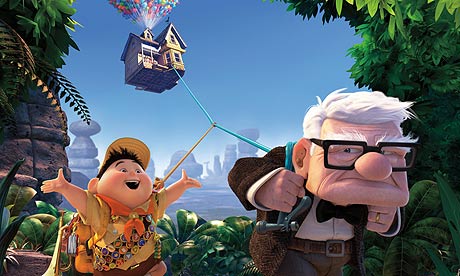
Pixar Animation Studios have always been in a league of their own, both in the quality of their animation and the superiority of their storytelling. It’s almost unfair to compare recent kid’s films such as Kung Fu Panda or Shrek (both of them decent movies in their own right) to the likes of Finding Nemo or The Incredibles, movies that put to shame anything being produced by rival studios. Then of course, last year, we saw WALL-E, a quantum leap forward from what was already a very high level of standards. That film made me and many others reevaluate what a modern children’s film could be, and left us wondering if Pixar would ever be able to replicate that level of success. Up is the film that proves not only that they can replicate that success, but better it. It is a film that blends the best parts of all of Pixar’s previous films, and yet somehow manages to be utterly unique, and utterly wonderful. It is not only my favourite film of 2009, but my favourite Pixar film of all time, surpassing even WALL-E in terms of adventure, beauty and human emotion.

The story begins with a shy young boy, Carl Fredricksen, bonding with an outgoing young girl named Ellie over their mutual dreams of exploring the world. The pair fall in love, marry, and grow old together – a journey that is outlined in a gorgeous dialogue-free montage near the beginning of the film. The way a lifetime of love is communicated so beautifully using just music and images in this sequence in awe-inspiring, and if I had one complaint of Up, it would be that after such a superb first act, the film never quite manages to reach such insurmountable heights again. But I wouldn’t trade those scenes for anything in the world; the emotional effect that Ellie’s passing has on both Carl and the audience is incredible, and within ten minutes of the film starting I literally had tears in my eyes (a feat that no live action film this year has managed to achieve).

Carl, now a seventy-eight year old widower, lives alone, filled with regret about having never travelled to South America with his beloved Ellie. But after a run in with the law leaves him facing life in an aged care facility, Carl decides to go the adventure he never had. In another one of the films stunning visual set pieces, Carl attaches tens of thousands of helium balloons to his house and flies off to Paradise Falls in the jungles of Venezuela. His sabbatical is somewhat complicated however when he discovers that Russell, a plucky ten year old wilderness explorer, has stowed away aboard his house. Without giving away too much of the story, the duo end up pitted against a villainous old explorer, humourous hi-jinks ensue, and with the help of this unlikely friend, Carl finally learns to overcome his grief.

The beauty of the animation in this film is simply indescribable. Gorgeous, stunning, mesmerising; I can throw around all the synonyms I want, but you truly cannot appreciate it until you see it for yourself. There are so many individual moments throughout this film that could be frozen, framed, and hung on the wall of an art gallery for all to see. But it’s more than that. These aren’t just empty pictures to be analysed; there is true feeling behind every frame. We feel as though we have been with Carl his entire life, experiencing each of his emotions for ourselves. Such is the level of storytelling in this film that two worn armchairs sitting next to each can be as memorable an image as the sight of a thousand balloons floating against the crimson backdrop of a rising sun.

Where I think Up truly trumps WALL-E is in its sense of fun. Say whatever you like about that movies stunning visuals and thought provoking themes; at the end of the day, a lot of those things are going to go straight over small children’s heads. While Up is undoubtedly as mature a film as any of Pixar’s previous works, it is also a rip roaring comic adventure that kids are going to love. Maybe you could argue that this film gets a little silly as it goes on, but I think it’s ridiculous to hold that against what is, at its core, a movie for primary schoolers. Pixar does sometimes have a problem balancing what appeals to kids (Cars, Monsters Inc.) with what appeals to critics (Ratatouille, WALL-E). With Up, I believe they have found the perfect match of emotional maturity and light hearted entertainment, and because of this, kids who love Up when they’re five years old are going to be able to come back in ten, twenty, thirty years and enjoy it all the more.

Up is one of those rare movies that can be enjoyed by everyone, be you young, old or in between. It is entertaining, with a great story, terrific characters and heart warming message. It is funny, and manages to be so without having to resort to flatulence humour or inane pop-culture references. It is moving, capturing the full range of human emotions with inexplicable ease and captivating grace. It is one of the most beautiful, memorable, touching films I have ever had the privilege of watching. That much, I can explain with words. But words, as this movie proves, can only do so much. So if you want to understand how I truly feel about this film, go and see it. At least twice.


Up is in cinemas in Australia now

Large Association of Movie Blogs

Thursday, April 16, 2009

Movie Review - Grindhouse


Genre: Double Feature – Zombie Horror, Car-Chase Action
Director: Robert Rodriguez & Quentin Tarantino
Starring: Rose McGowan, Freddy Rodriguez, Josh Brolin, Mary Shelton, Jeff Fahey, Michael Beihn, Kurt Russell, Rosario Dawson, Zoë Bell, Tracie Thoms, Vanessa Ferlito, Sydney Poitier
Running Time: 191 minutes (plus trailers)

"A double feature that'll tear you in two!"

Back in 2006, beloved directors Robert Rodriguez (Desperado, Sin City) and Quentin Tarantino (Pulp Fiction, Kill Bill) announced that they would be directing a double feature called Grindhouse. An homage to 70’s exploitation films that would be screened in so called grindhouse theatres, the film is over three hours long, and features ridiculous violence, intentionally damaged film stock and a bevy of scantily dressed women. Unfortunately, due to its poor box office performance in the US in ‘07, it was released international as two films: Tarantino’s Death Proof and Rodriguez’s Planet Terror. I had been looking forward to the film for months, and was absolutely gutted when it was split up. Although I eventually saw both on DVD and enjoyed the hell out of them, it just wasn’t the same. However, last night, after two years of waiting, I attended a screening of Grindhouse at the Astor. And let me tell you…it was fucking amazing.

Just some of the beautiful ladies featured in Tarantino's segment

The first film shown in the sleaze-filled saga was Rodriguez’s Planet Terror, which tells the story of a group of survivors in a small town who band together after a mysterious toxin is released from a nearby military base, turning much of the surrounding populace into boil covered pus leaking blood lusting zombies. Rose McGowan stars as Cherry Darling, a go-go dancer whose leg is ripped off by the bloodthirsty fiends, only to have her missing limb replaced with an M16 by her former lover, the mysterious and deadly El Wray (Freddy Rodriguez). Meanwhile, Dr Dakota Block (Mary Shelton) is ready to leave her abusive husband (Josh Brolin) for…wait for it…her lesbian lover, when the infection rolls in and she finds herself caught up in the mayhem. Throw in real life B-movie stars Jeff Fahey and Michael Beihn and cameos by Bruce Willis and Stacey Ferguson and you have the complete blood splattered package. Sound ridiculous? That’s because it is! Rodriguez took the projects concept literally and recreated the kind of balls out exploitation flick one would actually see at a grindhouse theatre circa 1972, complete with scratches, burnt film, a sordid saxophone score and even a missing reel (which is used to great effect.) This is a movie in which cars explode for no reason, limbs are severed in increasingly hilarious ways and a mad scientist collects men’s genitals as trophies. Hell yeah!

Planet Terror is not a movie that takes itself too seriously

This is followed by Tarantino’s Death Proof, which is definitely the more cerebral of the two films (although it is by no means less absurd). Rather than recreate a grindhouse film, Death Proof feels like a loving tribute to the kinds of movies that Tarantino worships. Kurt Russel stars as Stuntman Mike, a charming serial killer who murders beautiful girls with his death proof stunt car. However, when he targets a group of women played by Rosario Dawson, Tracie Thoms and real life stuntwoman Zoë Bell (appearing as herself) he finally gets a taste of his own medicine. After the insane mayhem of Planet Terror, audience members may find themselves as little surprised by Death Proof – characters actually talk in this film. In fact, this is Tarantino at his most self indulgent (and I'm not even counting his bizarre obsession with womens feet); the dialogue is great, but at the same time you can feel him masturbating behind every word. People who hate him will loathe Death Proof, but people who love him will adore it. For the record, I fall well and truly into the latter category. I think it could have done with some trimming, especially in the first act, but never the less the characters are great and the last twenty minutes features some of the most heart stopping action that I have ever seen. Tarantino takes a shot at directors who utilize CGI instead of real effects; in Death Proof the action is all real and he goes to enormous lengths to make sure you know it. The climax, in which Zoë Bell clings to the front of a speeding car as it is rammed repeatedly by Stuntman Mike, will have you on the edge of your seat.

"It's my mom's car"

But that’s not all. Because in order to completely replicate the grindhouse experience, this film includes four fake trailers by prominent directors. Planet Terror is preceded by a preview – also directed by Rodriguez – for a film called Machete. Danny Trejo stars as the titular character, a knife wielding Mexican assassin who is double crossed by his employers. Following the first feature and a brief intermission (yes, they actually have an intermission, and it’s awesome) we get three more glorious commercials for “coming attractions”. Rob Zombie (The Devils Rejects) gives us Werewolf Women of the SS, a tribute to Nazi films, featuring a cameo by Nicholas Cage. Edgar Wright (Shaun of the Dead, Hot Fuzz) gives us Don’t, a hilarious spoof of haunted house films with cameos by Nick Frost and Simon Pegg. And finally, in what was possibly the highlight of the entire night, Eli Wroth (Hostel) gives us Thanksgiving, a gratuitously violent slasher film about a serial killer with a penchant for decapitating his victims. This trailer is horrifyingly funny, and features perhaps the most shocking stabbing you will ever see. What is even better is that all four directors have expressed interests in expanding their trailers into feature length films. Fingers crossed.

"They just fucked with the wrong Mexican"

Extended versions of both Planet Terror and Death Proof are available on DVD. Both movies are great, and if that is your only way of seeing them, by all means do so. But it is only when viewed together on the big screen that Grindhouse is revealed as the masterpiece it really is. This is a one of a kind film, and seeing it on a massive screen with great sound and an excited audience was a one of a kind experience. People of my generation will never be able to go to an actual grindhouse theatre, and so everyone should jump at the chance to see this film as it was intended to be seen; back to back, fake trailers, missing reels and all. It will screen one more time at the Astor theatre in Melbourne on May 13th, so I implore you: do everything in your power to see it. It is clever, it is gratuitous, it is ridiculous and it is bloody. And it is a hell of a good time.


Friday, April 10, 2009

Movie Review - Mary and Max


Genre: Comedy, Drama, Claymation
Director: Adam Elliot
Starring (voices): Toni Collette, Phillip Seymour Hoffman, Barry Humphries, Bethany Whitmore, Eric Bana
Running Time: 80 minutes (plus trailers)

I’m not going to lie to you: I was at the end of my tether. I love movies (hence the blog), but my recent theatrical experiences were taking a drastic toll. The combined effect of Knowing and Dragonball Evolution took me to a dark place from which I thought there may be no escape. I needed a miracle. I needed a film that was funny, touching and well crafted, a film that would remind me why I enjoyed going to the cinema every week (and sometimes three or four times). Mary and Max proved to be just that. Sweet, quirky and beautiful in every respect of the word, this movie was my saving grace and I cannot recommend it enough. From the gorgeous animation to the amazing voicework to the simple but powerful story, Mary and Max is a timeless tale about friendship, and is perhaps one of my favourite Australian films of all time (not that that’s saying a whole lot.)

Mary and Max was written, directed and designed by Adam Elliot, whose claymated (is that a word?) short film Harvey Krumpet won an Academy Award for Best Animated Short. This film shares many similarities with Krumpet: the animation, the bizarre and at times grizzly sense of humour as well as the ultimately optimistic messages about life. Mary is an lonely eight year old girl living in the suburbs of Melbourne, Australia. Her family consists of an alcoholic mother, an introverted father and a pet rooster named Ethel. Max is a 44 year old man living in New York City. He is morbidly obese, and suffers from Asperger’s syndrome. They become pen-pals after Mary picks his name at random out of a phonebook, and from there, their unusual friendship blossoms, spanning over twenty years.

This simple premise is executed almost flawlessly by Elliot and his cast and crew; the film took five years to make, and their passion and dedication is apparent in every frame. The look of this film is absolutely superb. The animation style makes it feel hand crafted, and you get the sense that it was a true labour of love. From the opening sequence to the end credits, the attention to detail in each shot will blow you away. Residents of Melbourne will take enormous pleasure in the authenticity of Elliot’s recreation of Mount Waverley, reflecting Australian suburban life perfectly – from the Sherrin football on a rooftop to a lone sausage on a backyard barbecue. This film is filled with hundreds of Easter eggs that promise to reveal themselves on repeat viewing (something I certainly intend to do.) However, even those who have never been to Melbourne can appreciate the amount of work that went into every single shot, as well as the atmosphere that those details help create.

On top of the animation, every other production element in this film is equally well suited. The voicework is terrific without exception: Phillip Seymour Hoffman captures Max’s anxiety and loneliness with incredible subtlety, Barry Humphries is brilliantly cast as the narrator, and the highlight is newcomer Bethany Whitmore as the voice of young Mary. Elliot’s direction is ambitious, and he never allows the animation to cause him to take shortcuts with the camera work. The use of music is great, and I have been humming the films infectious main theme all day.

But as wonderful as design and detail are, they are nothing without a good story and interesting characters. And thankfully, Mary and Max has that as well. The friendship between these two loners is so moving and feels so genuine that you will forget that you are watching a movie, let alone an animated one. It is not the most original or most compelling story, and perhaps one would expect more from a live action film, but it works. Additionally, this movie had me laughing out loud many times in the theatre, and the humour ranges from simple and subtle to sick and twisted. One gets the feeling that Elliot is something of a cynic, and this is reflected in some of the darker and more morbid jokes. However, he wisely keeps this separate from his characters, and so even when we are laughing at the various and ridiculous ways in which supporting characters kick the bucket, Max and Mary always remain innocent, kind and fundamentally good.

As much as the nerdish fanboy in me is protesting, Mary and Max is officially overtaking Watchmen as my favourite film of the year so far. I loved this film: it made me laugh, it made me cry and it made me think. Beautiful in both it’s style and it’s substance, it is touching, it is funny, it is authentic and it is a must see for people young and old, for those recovering from Dragonball fever, and for those who simply love going to the movies.

Mary and Max is in cinemas in Australia now. It will be available in the US on demand from October 14th. You can watch Elliot's award winning short film Harvey Krumpet here.