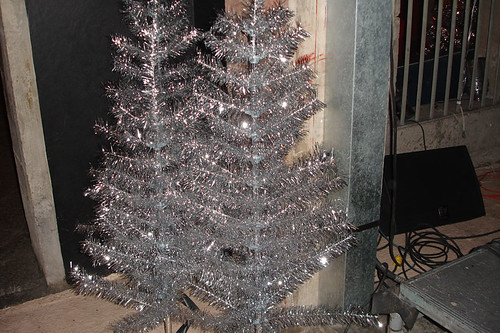
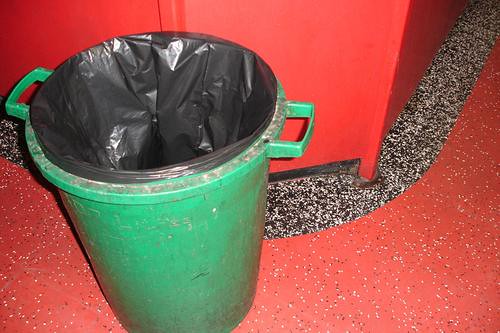
Alright, there’s been a lot of talk going around the blogosphere lately about the recycling epidemic forming in the United States. Basically, if you haven’t already heard, the United States sends a majority of their recyclables over seas to China to be processed into new materials, however, because of the global economic crisis prices for recyclables have plummeted leaving the United States with a growing pile of trash. So yes, this is a problem, but seriously, don’t you think it’s an even bigger problem that we create so much waste we have to ship it overseas?
 Maybe it's time we begin to look at our recyclables as a raw material rather than a waste product. Many designers from around the world have been creating beautiful products made from post consumer products. Take for instance the Campana Brothers or Piet Hein Eek, both creating beautiful furniture from reused materials and both happen to be outside of the United States. Perhaps it's time for US designers to start looking at these waste materials as a material to work with rather than ignore. The alternative craft movement in the US have been quick to use found materials as it is economically attractive due to the fact that waste is generally free. Also, the use of waste materials is an evironmentally sustainable idea, cutting down on the mining, processing, and shipping of raw materials.
Aside from the alternative craft movement, there have been a few grassroots movements to use our waste as a raw material and divert malterials from being barged overseas or dumped in a landfill. Tiny Texas House has been carefully deconstructing houses in their region and building new prefab houses out of the materials. For me this just makes sense, and apparently it is working from an economic perspective as well.
 So what is really stopping these ideas sound really great, and seem to make so much sense, what is stopping them from really taking off? Well there are 2 real issues. First, economic feasibility, Tiny Texas Houses works however they are only producing a very small amount of homes a year and aimed at a particular market who are willing to pay a high price for sustainability. The production of houses is a very refined process and the mining and transporting of materials is rigorously efficient. Maticulously taking down houses and preserving the material is a much slower process and therefore costs more money. New processes and networks need to be put in place before these ideas can really take off. These can come in the form of online networks or informal networks. Ebay and Craigslist are 2 online networks that have done a great deal for reuse. Think about how many items have been listed on craigslist that would most likely have found the landfill 10 years ago? Informal networks can work too, for instance the scrap industry, where legitimate, (and sometimes illegitimate) scrappers pick up reusable materials and sell them to scrap yards for a small profit.
 Second, a paradigm shift will have to occur in which the general public changes their opinion on the value of our recyclables. Big name designers don't fool around with used materials because they presume their consumers will not appreciate used materials over new ones. This is why reuse is still a niche market. It is important to note however, that reuse is gaining steam and many companies, such as Frietag, maker of recycled messenger bags, have made enormous strides in changing the perception of used materials. The best way to infiltrate popular opinion is to hit the authorities in consumer products. When Macy's, Bloomingdales and Barneys start selling reuse, soon to follow will be all the small retailers scattered across the nation. But in order for reused goods to get there, there needs to be a good amount of quality designs using these materials to choose from. Maybe we need a national design challenge or something.
(Photo from TreeHugger. The original full-sized color version can be viewed by clicking the photo.)
(Photo from DesignCrack. The original full-sized color version can be viewed by clicking the photo.)
(Photo from TinyTexasHouses. The original full-sized color version can be viewed by clicking the photo.)
(Photo from TreeHugger. The original full-sized color version can be viewed by clicking the photo.)