Showing posts with label historic preservation. Show all posts

Thursday, May 28, 2009

Boredom in a Globalized World

At the center of the city of Kashgar, on the far western edge of China, is a city of twisting streets lined by mud and brick buildings dating back centuries, to when Kashgar was a trading post along the Silk Road. The Chinese filled in a moat to create a ring road back in the 1980s, and built a highway through the middle of the historic center a few years later, but this historic urban core remained largely intact until recently. Today, Party officials in Beijing have issued a death sentence to historic Kashgar, citing earthquake-preparedness as an excuse for removing the largely Muslim population and leveling the neighborhood house by house as the residents leave.

I've never been to Kashgar; and yet, I find this news deeply disturbing. Reading a recent New York Times article about the Kashgar "redevelopment" on the heels of Katia's post about the planned clearance and "redevelopment" of Dharavi yesterday got me thinking about the effects that clearance projects have on the sociocultural fabric of our cities, and wondering what local changes might signal in the broader context of globalization.

China and India are the undisputed leaders of the pack in the developing world; anyone looking to learn about how globalization will affect cities in our rapidly globalizing world should look no further than the massive metropolises of these rising giants. Slum clearance is the name of the game in cities of all sizes in both of these countries; in places like Kashgar, such projects break up ethnic and cultural enclaves, spreading their tightly-knit populations across the sprawling, newer areas on the edge of the city. Drew's post on Monday pointed out the danger in not making room for smaller, less commercially-viable artistic and cultural scenes: when the grassroots scene dries up, the entire city's cultural cachet declines. Or, as Richard Florida likes to quote Jane Jacobs as saying, "When a place gets boring, even the rich people leave."

What happens to a globalized city when it becomes boring? Could the decline of cultural diversity eventually undermine growing economic centers? Looking beyond the effect of cultural shifts on cities, what happens to a country in a globalized world when that country becomes boring?

As they become more economically established, India and China are edging in on the cultural and economic dominance of the United States and the EU; what happens to the West once these two juggernauts are operating at full tilt? It's possible that everything will go smoothly. It's also highly unlikely. And with plenty of countries lining up for their chance at some record-growth years (think: Brazil, Turkey, Iran, Vietnam, Malaysia), it's the West that's getting increasingly "boring," to extend the metaphor.

Perhaps that's why the destruction of a place that I've never seen is so disturbing to me: in a globalized world where cities are the new neighborhoods and countries the new cities, the cycle of cultural turnover could eventually make entire regions irrelevant at a pace we've never seen before. It's important to remember that, while many cities are benefitting greatly from the effects of globalization, there is something to be said for keeping some aspects of culture local.


(Photos from Flickr users nakamamin and sake.vanderwall. The original full-sized versions can be viewed by clicking the photo.)

Monday, November 17, 2008

The Next, Next Street Art

Street With A View is a performance/digital art hybrid (I know! So rad!) coordinated by a small team of artists, residents of Pittsburgh's North Side, and Google. The artists thought up the idea to create vignettes in the city's streets that would be coordinated with when Google's Street View camera car would drive down those same streets. They tapped local residents to act out a series of scenes, coordinated with the Googleheads, and the rest is history.

SWAV's staged "interventions," as the team refers to them, point out an interesting possibility for street art. Referring to an earlier post on the subject, tech like RFID chips and barcodes will make digital graffiti a more ready possibility in the future. SWAV highlights one of the many ways that this type of art could be achieved: take a 360˚ photo (of which there are plenty freely available through Street View for an enterprising hacker), doctor it, and attach it to an RFID chip installed inconspicuously nearby. Set it up with an automatic trigger, and any passersby with an iPhone or a Blackberry will be treated to an alternate reality version of the place that they're walking through.

Aside from the potential for humor, there is political potential here as well. Think of preservationists looking to impress upon people the importance of preventing the destruction of historic structures; take the current, well-publicized battle over St. Vincent's in Manhattan, for example. A skilled digital artist with a penchant for quirky 1960s-vintage low-rises could create a digital, 360˚ recreation of the intersection of 7th Ave and 12th Street in which to-scale renderings of the 300 and 233 foot towers planned by the adjacent hospital replaced the distinctive O’Toole Medical Services Building. Passersby could get a better sense of the scale and blandness of the new development than they ever could from a wallet-sized picture in the Times.

Inverting the perspective, SWAV says some interesting things about Google's Street View feature as well. When examining the interventions on the Google Maps website, try to imagine what a normal user, unaware of the SWAV project, might think when encountering the digital parade. At the same time that it makes Google Street View more fantastical, SWAV also makes it, in a way, seem a bit more real. Certainly moreso in examples like the moving truck or the garage band practice. Add to that the impromptu "meta-interventions" staged by locals unaware of the project until it was happening, and the lines between reality and digital representation get delightfully blurry.

To ponder: If people become more aware of the Google Street View camera car and scenes like those staged by SWAV become more common (which seems very plausible, I think), what role does the Street View feature take on? Its parallel reality becomes heightened; humor and politics are woven into the scenery, and become as valid as the built environment that the feature was intended to represent. In addition, what does a more theatrical representation on the web mean for the real place being represented? If one were to walk down Sampsonia Way in Pittsburgh -- a charmingly "Pittsburgh" kind of street -- would it seem boring? Less authentic or interesting than its Street Views counterpart? Does the digital city draw from the real city, or add to it?


(Photo from Street With a View. The original full-sized color version can be viewed by clicking the photo.)

Wednesday, September 17, 2008

Jane

Do people actually read Jane Jacobs anymore, or has she become a misappropriated symbol for old-guard thinking in the same way that she was misappropriated as a symbol for David-vs-Goliath preservationism? Even Kazys now suggests that we throw her out in the face of gentrifying and demographically inverting cities -- things that make her core arguments for variation, limited regulation, and localism more relevant than ever. Her most revered book is nearly 50 years(!!!) old, he exclaims. What good could she be to us now?

Token Jacobsism.

Tuesday, March 18, 2008

It Takes a Video Game to Save a Village

Most cities have a love-hate relationship with tourists -- civic officials love them, and residents hate them. Tourism generates billions of dollars in revenue for cities across the globe each year. The number of traffic accidents caused by tourists not watching where they're walking? So far, no reliable estimates have been made.

Still, tourism is a vital part of any urban economy. Even moreso, it can be a powerful factor for a neighborhood that is trying to lift itself up. Tourism As Economic Strategy is a well-worn path. But with all of the emerging technologies related to the web and wireless communication, it seems like the old urban tourism formula (cleaned up historic buildings + quirky neighborhood attraction + Starbucks and/or Cold Stone Creamery and corresponding independent cafe/gelato bar = success!) is due for an overhaul.

Let's start by thinking small, with the traditional Japanese village. Japan's demographic woes have been well-reported over the past few years; indeed, as young residents of this highly urbanized island nation put off having families and move to the cities in droves to pursue fast-paced careers, the raw population number isn't the only thing being affected. Culturally, Japan is seeing the evaporation of its small villages, and the slow death of ancient rural and cultural traditions.

Enter: mixed-reality gaming. An explanation, c/o Very Spatial: "One of the areas of convergence for location-based applications and gaming is the idea of mixed reality, where places in the game correspond to real-world locations, and actions in one lead to events or consequences in the other." A recent Nintendo DS game, Treasure Quest: Enoshima, follows this very blueprint, using a small island north of -- surprise! -- Tokyo as the setting for a handheld video game. Players have to visit and explore the actual island to play the game. The DS unit acts as the mixer, blending the fictional and real worlds, literally with the push of a button.

The problem with Treasure Quest, though, is that it's over. The software could be downloaded off of the internet, and the game only ran until February 19th. Makes sense, considering that Nintendo doesn't own the island, and thus can't stake any real claim to it. But what if they could? What if, as a way to draw in tourists, a rural village somewhere in Japan agreed to sell off a large number of its abandoned buildings to Nintendo in an agreement to become the permanent setting for a mixed-reality video game?

It sounds crass at first, but with the right amount of finesse, it just might be a win-win economic development strategy. For instance, to prepare the town for guests (players), Nintendo would agree to upgrade local utilities. It would also take on the responsibility for upkeep of public areas. Streetscaping, garbage collection, and parks maintenance would be taken care of by the entertainment giant. Villagers would enjoy a higher quality of life at a lower rate of taxation (though I'm assuming the American system there since I know very little about the governance of rural Japanese villages). In return, residents would agree to coexist peacefully with players. A particularly savvy game designer would craft the game as a cultural experience, creating some sort of mystery or adventure plot that made use of the area's native traditions.

The argument could be made that Nintendo (or whatever company helmed the project) was being given too much power over a municipal entity; it could also be said that cultural traditions were being bastardized and pillaged in the name of commerce and fleeting entertainment. But when the options for the village are Sink or Swim, the picture becomes less black and white. After all, don't most -- if not all -- preservation efforts (architectural or cultural), on some level, tokenize the very things that they aim to preserve?

So assume that Nintendo creates a mixed-reality game around a rural Japanese town, and it becomes a wild success. Players start booking rooms at a nearby hotel months in advance for their chance to play. The villagers find new opportunities to pass along their cultural history and traditions. Nintendo makes a buttload of cash. Everyone's happy. A small town in rural Portugal hears of the success and decides to give it a try. Sony's European headquarters gets a call from the mayor...

Ten years later, mixed-reality gaming has become an economic silver bullet. Hundreds of villages in countries around the world have mixed their realities with fantastical virtual counterparts. The trend goes big-time when the city of Detroit sells a square mile of its infamous "urban prairie" to the Walt Disney Co., which painstakingly re-creates the neighborhood circa 1930 to stage a depression-era mob mixed-reality urban epic. The arts & crafts bungalows are the hotel. Visitors live in the game. A month later, Blizzard Entertainment announces a joint deal with CCTV and the city of Shanghai to buy up hundreds of defunct surveillance cameras and create the world's largest multi-player mixed-reality on-and-offline mega-game. The setting? Pudong.

Of course, it must be asked: when is the reality in question no longer considered to be mixed? When does "mixed" become simply "augmented?"

(Photo from Flickr user Mathias M. The original full-color version can be viewed by clicking the photo.)


Links:
Mixed Reality Gaming In Japan (Very Spatial)

Wednesday, September 5, 2007

Build, Rebuild, Build Anew

One of the best articles written about New Orleans' progress (or lack thereof) two years after its tango with Katrina has come from within the Crecent City, itself. Nola.com's article by Doug MacCash, entitled Architectural Soul of the City at Stake, discusses in great detail the efforts of preservationists to save the city's pre-hurricane architecture; and that label is very deliberate, as there is a general push to save anything, be it from the 1800s or the 1960s, that survived Katrina and the resulting floods.

MacCash's article has particular resonance because it so very subtly ties New Orleans' architectural soul to its overall civic soul; indeed, the city's identity, now in crisis, is intrinsically tied to its built environment. New Orleans faces the intractable problem of having to build, to rebuild, and to build anew. That is to say, NOLA must replace destroyed buildings (build) without further damaging -- and trying to maintain -- its legendary sense of place (rebuild) in a way that avoids painful, regressive kitsch (build anew). This explains the desire to save everything -- no matter the architectural style -- that wasn't truly irreparably damaged.

John Magill, a historian with The Historic New Orleans Collection, is quoted in the Nola.com article as saying "There are so many houses lost. Nobody can comprehend what's gone." This quote is particularly telling because it refers not to Garden District mansions or classic Victorian shotguns, but to the so-called "slab city" neighborhoods built in the post-war era. Magill's lamentation is for the brick-veneer bungalows that can be found blanketing suburban tracts from Seattle to Atlanta, but that "meant a great deal to the people who lived in them." The point being made here is that what has been decimated in New Orleans is not just a physical vernacular, but an emotional one as well. A page of the city's cultural story has been savagely ripped from the binding.

But the name of the game on the bayou is Resilience, and the destruction of New Orleans has presented a dream scenario for architects and urban designers. Visions for the city's future have not been scarce, though traction with public officials, unfortunately, has been. Still, they continue to come pouring in. Most recently, Thom Mayne's National Jazz Center and TEN Arquitectos, Hargreaves Associates, and Chan Krieger Sieniewicz's reimagining of the downtown riverfront have added some lustre to the city's architectural news roster.

Of course, the reality is that these projects could quite possibly fizzle out like their predecessors. "Still," a NY Times article on the proposals points out, "the scope and creative ambition of these projects suggest how architecture could someday be vital to the city’s physical and social healing. Both seek to transform dead urban areas into lively public forums, employing powerful architectural expressions of a democratic ideal."

New Orleans hasn't been a center of contemporary design since "contemporary" refered to the kind of flowery aesthetic that makes today's historicists salivate. In the wake of an event that has changed the very way in which the city thinks about itself, there is a chance that this could change. In fact, while the artistic merits of modern architecture (as with any style) will forever be argued, with its clean lines and frank honesty modernism is (metaphorically speaking) exactly what the city needs

Trahan Architects have come up with what may be the most enticing endorsement of modernism in the new New Orleans with their impossibly sleek update of the city's most beloved piece of vernacular: the shotgun house (pictured above). If built, this house would be a new, flood-conscious building that could easily nestle into a newly cleared lot (build) that draws from the city's architectural and cultural tradition (rebuild) in a way that is neither chintzy nor dishonest (build new). This is democratic architecture at its best.

People will always be wary of buildings built in newer styles of architecture because they suggest, whether it's true or not, that the places around them are changing. But New Orleans is a city that can not afford to deny change, and it can likely be agreed that, after Katrina, it would be particularly bullheaded to do so. Modernism is certainly not the answer to every problem facing this city, and shouldn't even necessarily be the primary architectural mode in the city's reconstruction. But embracing innovative and progressive architectural values, in a place where architecture is so vital to the civic character, can help to bring about important changes in a city desperate for a new raison d'ĂȘtre. The people of New Orleans cannot rebuild simply for the sake of doing so; the hurricane has given them an incredibly rare chance to create a built environment and a community that together form something greater and stronger than the insular, stagnant city that they had before.

It's time to consider building change into the vernacular.


Links:
Architectural soul of the city at stake (Nola.com) (found via Life Without Buildings)

Two Infusions of Vision to Bolster New Orleans (NY Times)

Trahan Architects (Photo credit)

Thursday, June 28, 2007

The Brewhaus

When was still living in Milwaukee, I got a call from my roommate one afternoon. A mutual friend of ours had founded a photography club, and he had somehow managed to befriend the security guard of the Pabst Brewery complex and convinced him to let the club tour the old Pabst Brewhaus. The roommate wanted to know if I wanted to come along.

A bit of background: for those who don't know, beer is kind of a big deal in Milwaukee, historically speaking. The city was once the largest German city in the world after Berlin, and the German Beer Barons who built the city's legendary breweries -- Miller, Blatz, Schlitz, and Pabst are the best remembered -- were major celebrities in their day. Many of their elaborate Flemish mansions still stand. And while microbreweries are nearly as ubiquitous as corner bars in the Brew City, Miller Brewing Co. is the only one of the historic brewers left (Pabst still exists, but brewing operations have been contracted out to Miller).

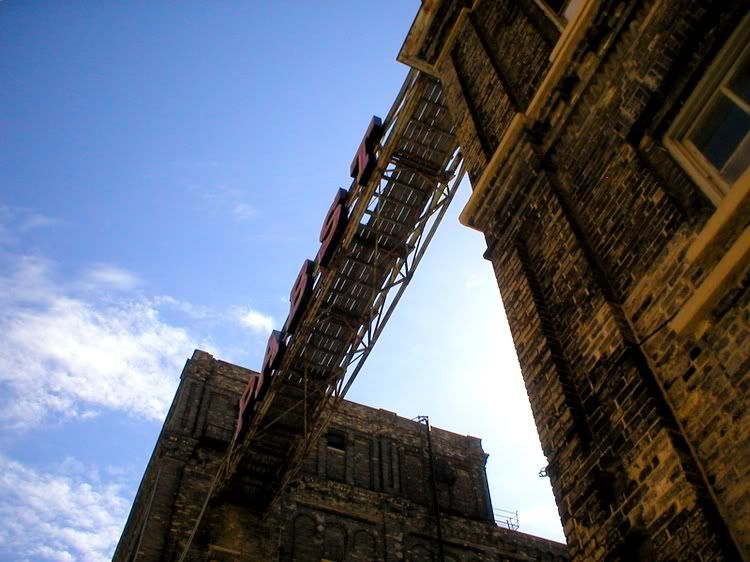
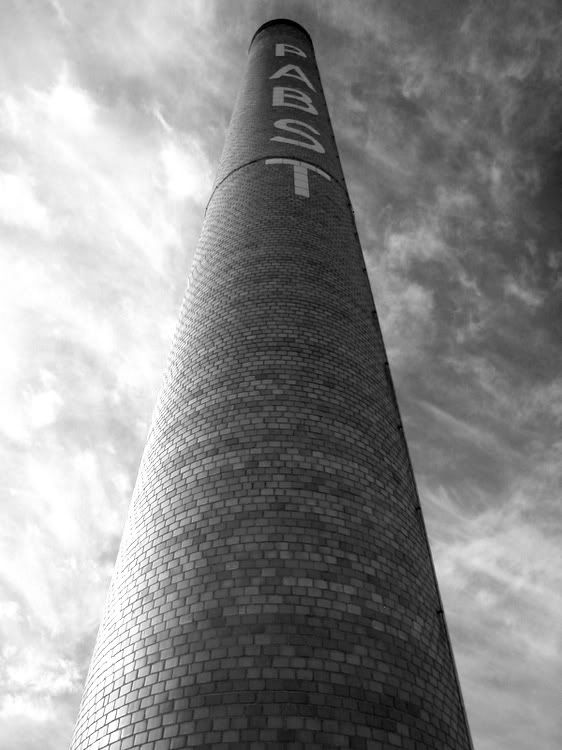
The Blatz and Schlitz complexes have both been converted into residential and office complexes. Pabst's 20-acre complex, however, which sits isolated on a hilltop at the far northwestern corner of downtown, remains empty. With its great smokestack, gothic spires, and the huge red "PABST" lettering that hangs from a skybridge connecting it to a neighboring structure, the 1872-vintage Brewhaus is an imposing landmark on the skyline.

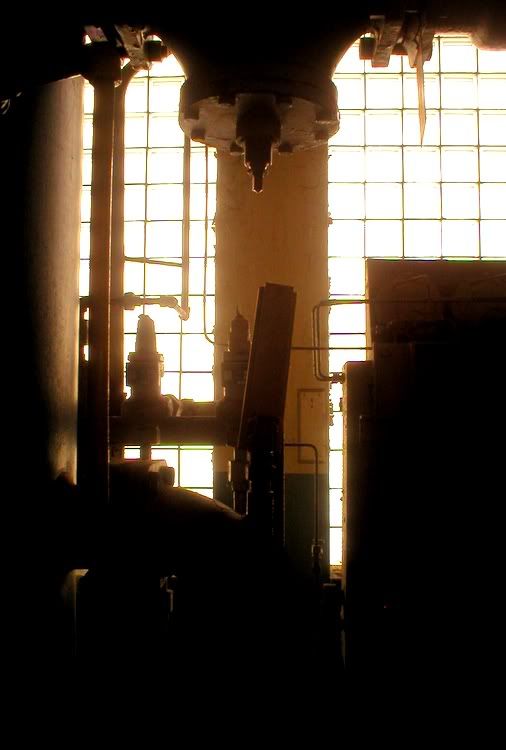
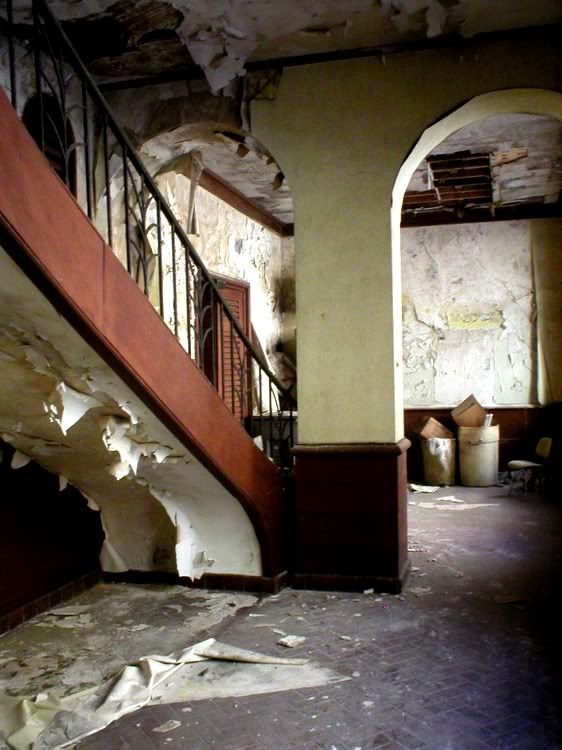
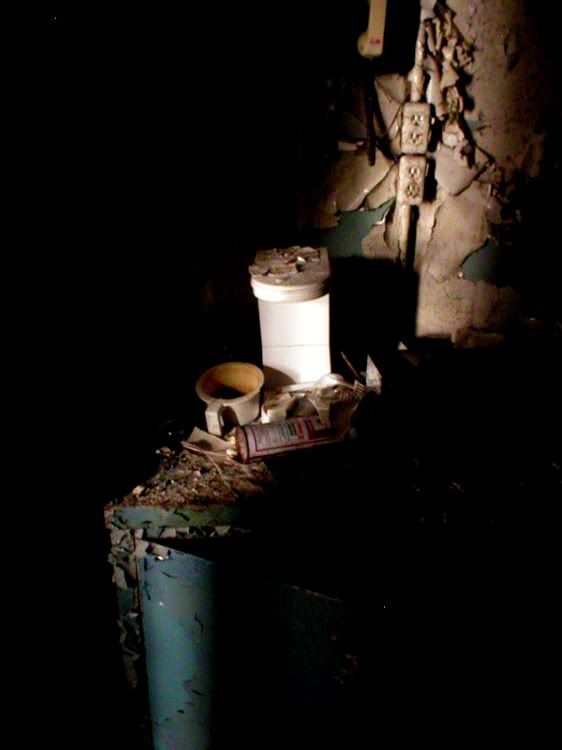
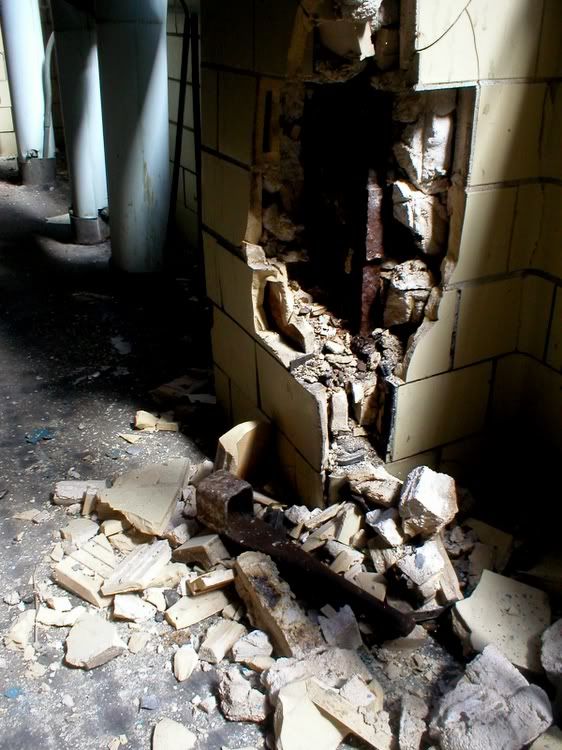
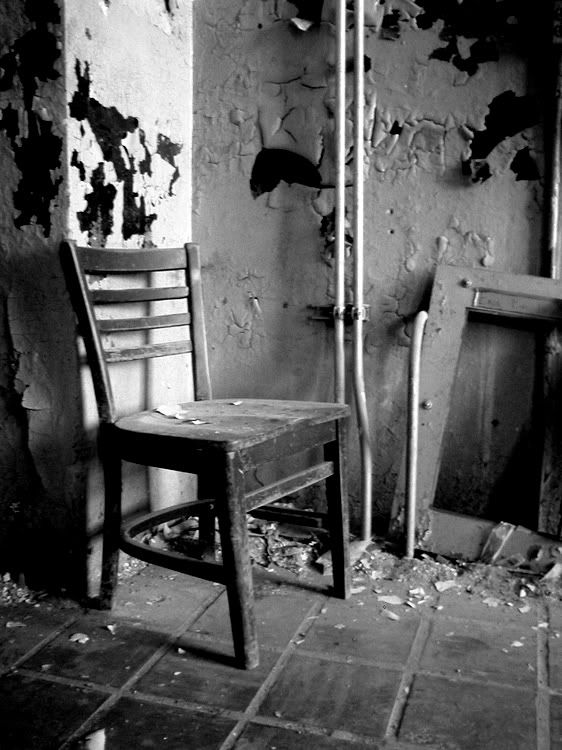
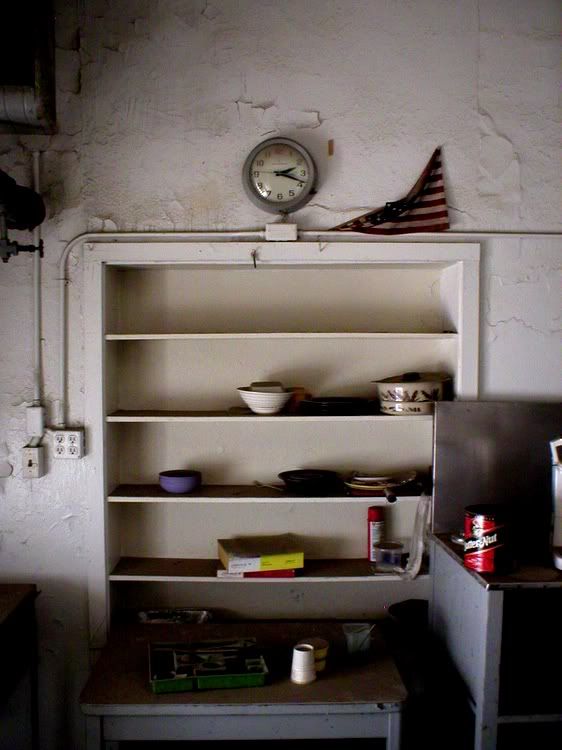
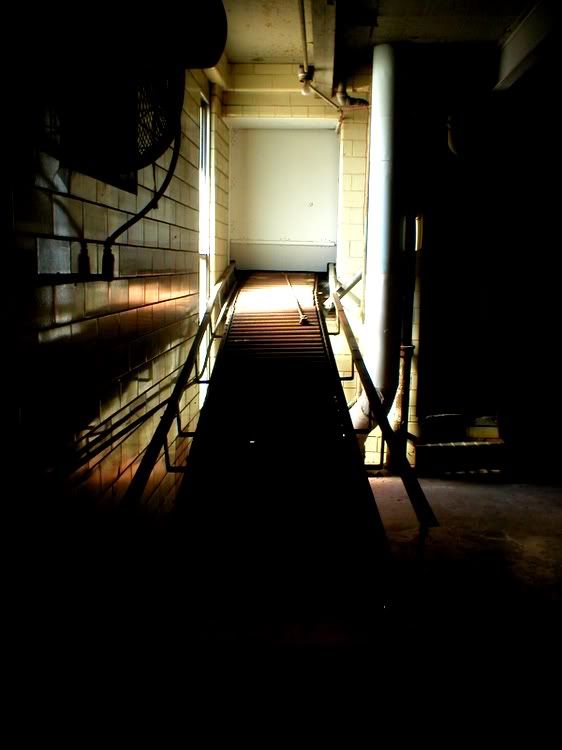
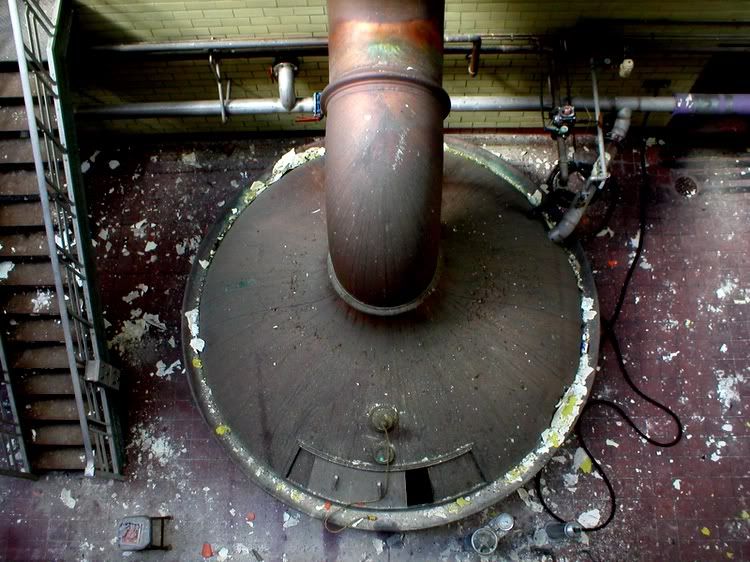
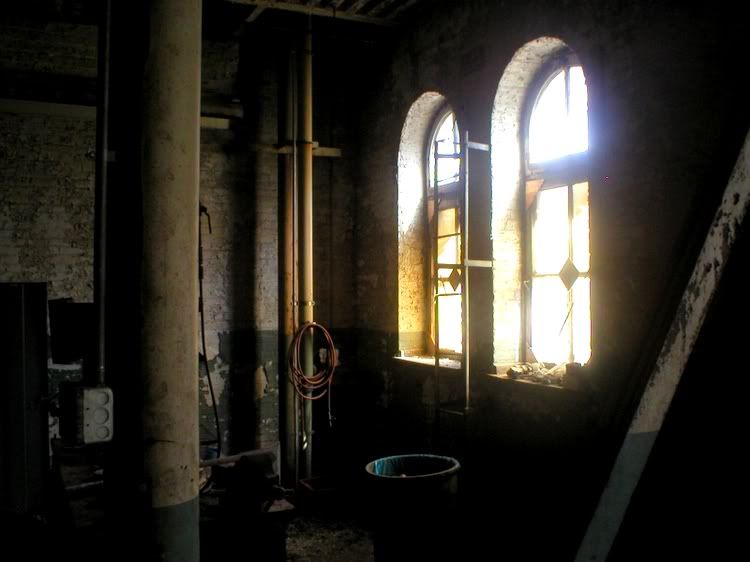
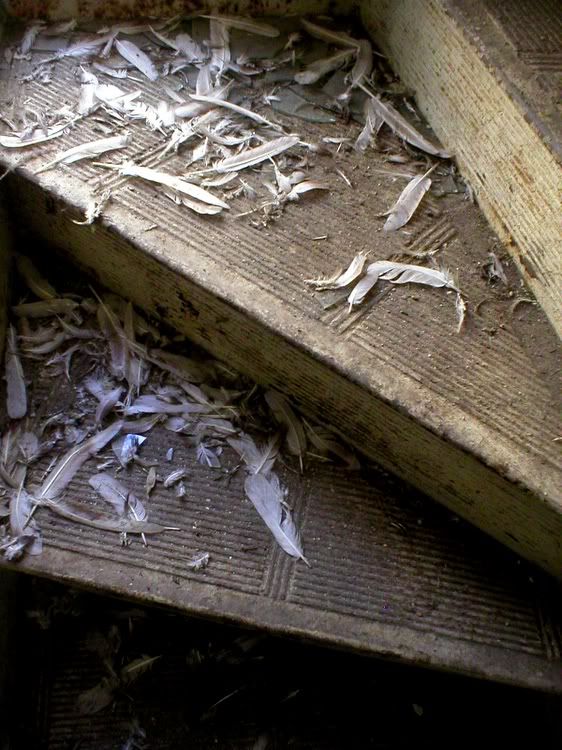
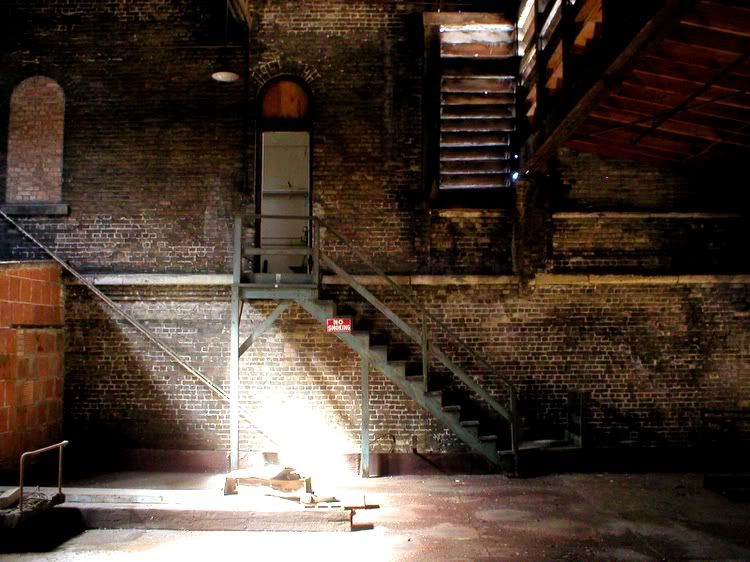
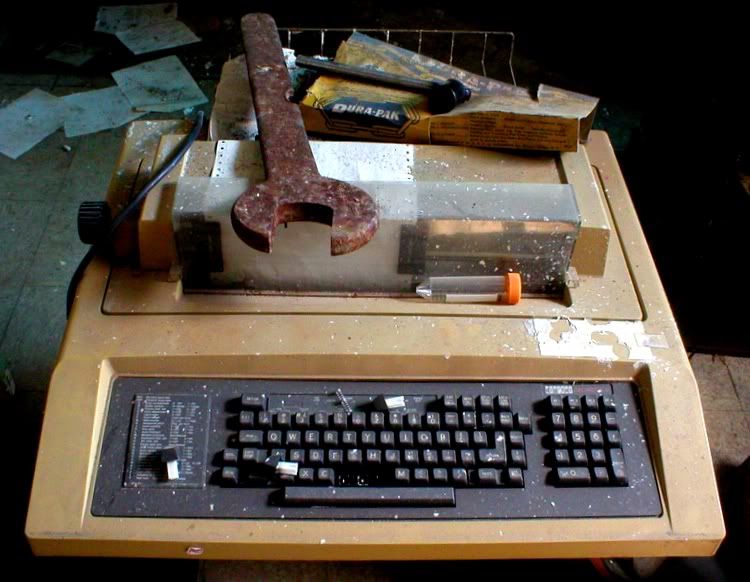
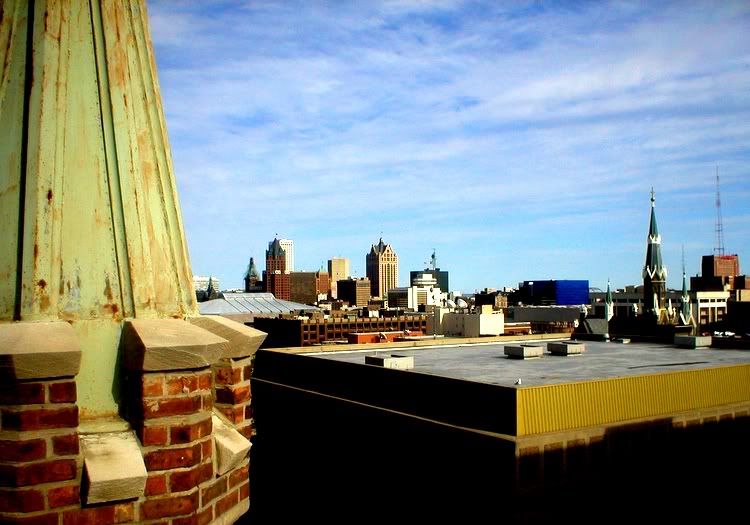
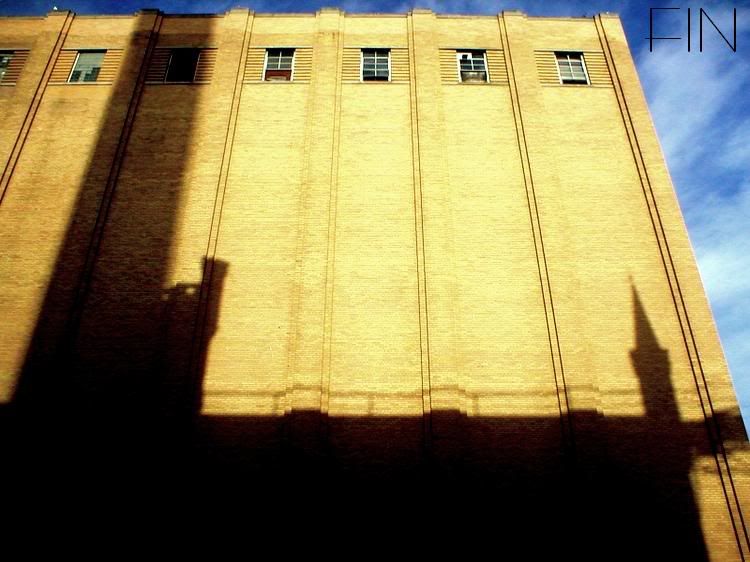
Did I want to come along on a tour of the building? Of course I did. A year and a half later, the complex is finally being rehabilitated and sold off piece by piece in a unique historic preservation redevelopment by Zilber Ltd. While I'm ecstatic to see this fabulous complex so carefully brought back to life, I will probably always remember the Brewhaus as it was the afternoon that I first went inside: broken, decrepit, and devastatingly beautiful. The following photos were taken with an older digital camera (an Olympus D-380, I think) that I've since managed to lose. I couldn't use the flash and had no tripod, so there's a bit of haze in some of these...whether or not that adds to or subracts from the images, I will leave the decision up to you. And so...


(Click the thumbnails for full images.)


Links:
The Brewery

Zilber Ltd.