Showing posts with label urban exploring. Show all posts

Friday, January 25, 2008

WEEKEND READING: January 19-25, 2008

Another really great crop for Weekend Reading this Friday. We're going all over the web this week...make sure you set aside some time to browse.

ITEM ONE: TNAC's Hayley Richardson on Richard Florida and the Creative Class (And Florida's response).

ITEM TWO: Nifty blog about architecture and urban planning in the Ugandan capital, Kampala (via Global Voices Online).

ITEM THREE: Ever tried traversing every block of every street in your city? Bill McGraw of the Detroit Free Press has, and now his findings are online.

ITEM FOUR: This one's not so much about the reading as it is the watching -- a mind-blowing clip of software that builds automatic online cities.

ITEM FIVE: Bill Gates calls for a "creative capitalism." (Where is published on a Mac, but this blogger does admire Mr. Gates' social ingenuity).

ITEM SIX: WorldChanging goes head-to-head with the pro-car crowd, breaking down how cars aren't just killing the natural environment, but the built as well.

ITEM SEVEN: The curiously named blog List of Dorms ruminates on the suburbanization of urban cores, with Chicago as a brief case study. (This looks like a blog to watch...)

ITEM EIGHT: One more for the road -- City of Sound provides this well-illustrated update on its World's Best Urban Places & Spaces project.

Sheesh...if the urbanism web keeps up at this speed, the eighth item might become a standard feature! Have a gerat weekend.

(Photo from Flickr user pinehurst19475. The original full-color version can be viewed by clicking the photo.)

Tuesday, January 15, 2008

Bite-Sized City

The bite-sized book is an idea being pioneered by a site called DailyLit, where, according to Trendwatching.com's blog Springwise, "books are sent by email or RSS in individual instalments on the days and times selected by the reader—for example: every weekday at 7:45 a.m.—and each instalment is small enough to be read in less than 5 minutes."

This format strikes me as a particularly interesting (and easy) way for a person to explore the urban environment. Imagine that you've just moved to a new neighborhood. You go to the neighbors' association's website and subscribe to a free daily mini-tour. Each Saturday at 1:00 pm, you receive a text message with a starting point. Once there, you open a temporary audio file on your Blakberry or iPhone or whatever wired mobile device you're carting around, and you're talked through a 15- to 20-minute exploration of another corner of your new surroundings. The tours could even be recorded by a variety of people who are active in the given neighborhood, and could seamlessly integrate opportunities for community involvement into what might otherwise be aimless walks by highlighting local events, organizations, and landmarks.

Now imagine that you're a tourist on a first-time trip to New York. Subscribe in advance to a feed like this and have bite-sized neighborhood tours sent to you every three hours. These tours could even be sequentially linked to start you off in each neighborhood, allowing for a few hours of independent exploration between tours. Heck, with the ubiquity of GPS technology, you could download a series of geo-coded tours in advance that would be triggered when you passed from one neighborhood to the next. As you walk north across Houston Street from SoHo to the Village, your phone rings. You answer, and a voice suggests that you walk three blocks east to Houston and Thompson to begin the Greenwich Village tour.

With this sort of technology, unfamiliar territory becomes a bit less intimidating. Recent transplants get out and meet more of their neighbors. Tourists get a boost in confidence that would likely encourage them to cover more ground and venture farther off the beaten path than if they were wandering about with nothing but a street map and a dated copy of Fodor's New York. Perhaps part of the reason that there are so many people in Times Square is that people can recognize where they are; they understand their position in the city. For the intrepid urban explorer this may seem superfluous, but any city hoping to increase tourism or revitalize a neighborhood is woe to underestimate the power of the sense of disorientation.

Making cities and neighborhoods more friendly, inviting places -- for visitors and locals alike -- is an important step in the struggle to improve urban conditions. People naturally avoid places where they feel uncomfortable. Encourage them to expand their understanding of their surroundings, and half the battle is won.

(Photo from Flickr user morethanreal. The original full-color version can be viewed by clicking the photo.)


Links:
DailyLit

Books in bite-sized portions (Springwise)

Sunday, December 23, 2007

Urbanffffinds 010

I had to venture out into a small blizzard to find a wi-fi spot for this week's Urbanffffinds. Now that's dedication!


Have a happy holidays, everyone. Where will be back on December 26th.

Monday, November 19, 2007

Airoots Gets Lost in Deep Urbanmess (Guest Post by Matias Sendoa Echanove and Rahul Srivastava)

We arrive at a narrow commercial street lost somewhere between Bombay and Tokyo. It is crowded with pedestrians, bicycles, street vendors, food stalls, and wandering cows and dogs that don’t allow cars to pass through. Most of the buildings lining the street are two to three stories high, covered either with faded, dusty shop-signs painted in art-deco fonts, or snazzy neon lights. Billboards with smiling Manga faces and Bollywood movie stars eye each other warily.

An intricate web of wires, pipes, pathways, and cables connect the buildings, huts, cottages and shop-fronts to each other. They hang overhead or lie snugly underground. They are like masses of snakes intertwined into each other – alive and organic. They buzz with whispering voices, crackle with coded e-mails and crisp exchange of smses, gurgle with water or sewage and are swollen with pornographic images looking for immediate release, along with religious icons that appear on screens of high-tech devotees who bow to them in tiny studios.

The air is abuzz with invisible energy fields. Wireless networks that feed on cables and transmit the cyber-world into this dense neighbourhood. They compete for airspace with the smells of food, fish, gutters, and incense and the crowded sounds of the city.


Walking through the gulleys and streets one sees second-hand electronic shops selling tiny bits of chips and wires. We bump into a bull, resting in front of a poster selling Chinese medicine. Withdrawing, we stumble over a robot-dog who yelps angrily, snapping mechanically and uselessly at our ankles.

Going deeper one sees nimble hands stripping off circuit-board wires. They magically transform the pieces into copper jewelry that is marketed as tribal art. On one side otakus and geeks wait to devour cheap electronic left-overs – on the other, hippies and high-fashion lovers wait to decorate themselves with re-designed electronic waste.

An entrance to one street looks particularly crowded. It is lined with Japanese tea-shops, Iranian Samovar-houses and Chai-stalls served by kids. Old men and women sip tea, keeping an eye on children playing dangerously close to railway tracks. The street shudders as two trains zoom pass each other – one a yellow and brown old-fashioned rusty local train with open doors and another a sleek silver, futuristic machine made of steel, its windows covered with dark tinted glass.


The sound of new stalls being put up and old ones being pulled down rent the air. A bearded man with wild eyes sells mangas in a makeshift stall right next to an old sadhu with dirty, matted hair, who tells your fortune. The mangaman reads out stories to a group of teenaged girls who giggle crazily as he shows them explicit pictures. The palmist-cum-astrologer catches a hapless European tourist and predicts that he will hook up with one of the teenaged girls, who is already smiling at him.

The two connect and vanish around the corner hand in hand. To be continued...


(All of the images above are photoshop collages of Bombay and Tokyo.)

------------------


Big thanks to today's guest bloggers! Matias Sendoa Echanove and Rahul Srivastava are the bloggers behind Airoots/Eirut. Check out their blog for more ruminations on "adventitious roots, urban forests & villages, natural cities, lost tribes, new nomads, and everything in between."

Tuesday, November 13, 2007

Traversing Newark Avenue (Guest Post by Tyson Thorne and Josef Reyes)

On a windy Sunday this past October, we walked the entire length of Newark Avenue in Jersey City, New Jersey, starting from one end of the avenue and finishing at its other end on the other side of the city. This avenue cuts westward through Jersey City from the downtown section in the east, slipping underneath the New Jersey Turnpike, and terminating at the city's outskirts near the Hackensack River. As we walked down this avenue, which takes a little over an hour to fully traverse, we shot photographs of its surroundings and recorded the avenue's sounds and noises.

In documenting Newark Avenue block by block, the resulting photographs and sound recordings reveal the shifting temperament of this city street. From the densely modest dimensions of the downtown area to the barreling vehicular traffic at the leg heading up to Dickinson High School to the richly polychromatic/polyphonic environs of India Square, Newark Avenue continuously mutates in scale, in typology, in demographics and in meaning as it maneuvers its way around Jersey City. These mutations are made perceptible when Newark Avenue is documented in a linear fashion and the visual and aural textures of the street is organized and collated in their real-time order.

The following photographs and sound recording of Newark Avenue, specially edited for Where, is a condensed version of our visual/aural documentation of the avenue. This Newark Avenue document is part of a street recording project that we will be conducting at various streets in different cities and locales.

Click this image to launch the
Newark Avenue photo essay/sound recording:


------------------


Big thanks to today's guest bloggers! Tyson Thorne is a graphic designer and photographer based in Jersey City (Website). and Josef Reyes is the editor of Conveyer, a zine about Jersey City.

Sunday, November 4, 2007

Urbanffffinds 003

The thrill of the unexpected is an ephemerality that defines the urban experience. The idea that "real" urbanites are jaded cynics may have a bit of truth; but if we are less likely to be surprised it is because we have come to expect the unexpected. Still, it is the variety of cities that keeps us interested, always wondering what we may find around the next corner. This week's Urbanffffinds each highlight, in their own way, the strange and delightfully unpredictable nature of urban places, be it in the startling geometry of a structure seen from an uncommon vantage point, the juxtaposition of architectural styles, or a good old-fashioned zoo escapee.


Wednesday, September 26, 2007

Framing Urbanism

Anyone who lives in a city is a student of urbanism. We have the choice of whether or not to pay attention to the lessons we are being taught, but they are taught either way. Every day of living in a city is a chance to learn about how the place works. So it helps to have a way of organizing the observation process.

That being said, I came across an organizational tatic of which I am particularly fond recently on re:ACT, a blog run by a dozen architecture students in Singapore. Ronald Lim, one of the re:ACT bloggers, put up a post entitled "My Wishlist for Architecture in Singapore." It's short (five items), practical, and the objective is very clear even without being directly stated. That objective is to make Singapore into a more architecturally conscious city, to improve the quality of the buildings being designed there by improving public awareness of architecture and design. Lim calls for an architecture and design department at the Singapore Art Museum, an annual competition similar to PS1 or the Serpentine Gallery, and an interesting set of tax incentives (among other things).

The benefit of having such a list, as an individual observer of a specific city, is that a person can identify what it is they are looking for in terms of an area's strengths and weaknesses. It's a framing technique, really. But a wishlist is especially helpful, I think, because it gives a person something to look for when visiting other cities. Even more than framing how one sees one's own city or even one's neighborhood, it frames how one approaches the urban form in general. This is beneficial because it allows the observer to absorb information from one place and take it home with them, using it to enrich their own city.

I've always thought it'd be really interesting to see a neighborhood group do this kind of thing, collectively. The common perception of the Neighborhood Association or Block Group is that of a stodgy, reactionary coalition of anti-growth crumudgeons with pickett signs and way too much time on their hands. Rather than hearing moaning and groaning about the death of a neighborhood's precious, precious character every time someone so much as proposes to trim their hedges, it'd be fascinating to see how a group might impact their community by identifying what defined the character that they were trying to preserve and coming up with a wishlist of ways in which that character could be strengthened and enhanced, and maybe even improved. Imagine a neighborhood group that actually courted developers to help achieve their goals of enhancing the architectural character of a neighborhood, welcoming and even helping to speed a long the process of approval for a new building in exchange for architectural sensitivity and some streetscaping improvements.

I wouldn't be surprised, actually, to hear that this has been or is being done. In fact it would be great to hear stories of this kind of thing; a neighborhood threatened by the dreaded gentrification beast working with developers instead of against them. I wonder how that works out...are the neighbors better off in the end, or do they wind up getting screwed over time? I'd be willing to bet on the former, but I'm open to arguments for the latter...

***

By the way -- while we're on the topic of taking observing what other cities are doing right when traveling, if you haven't heard of Civic Tourism yet, check out the link below. It's a great concept, and it seems like the kind of thing that could really give some extra oomph to your next urban vacation.

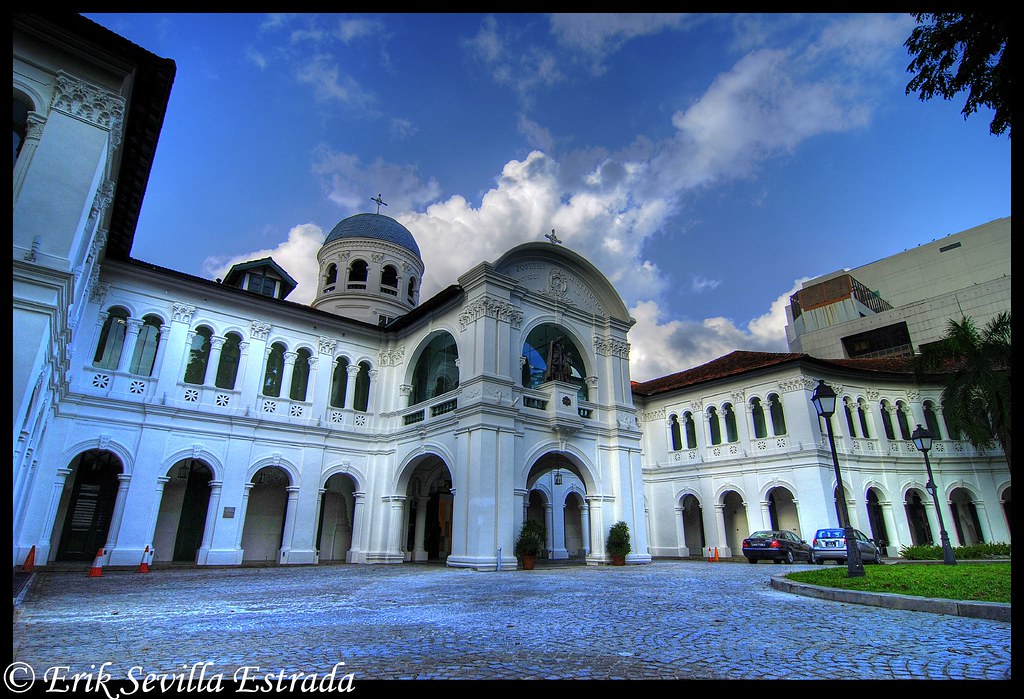
(Photo from Flickr user Erik Sevilla Estrada.)


Links:
My Wishlist for Architecture in Singapore (re:ACT)

Civic Tourism

Thursday, June 28, 2007

The Brewhaus

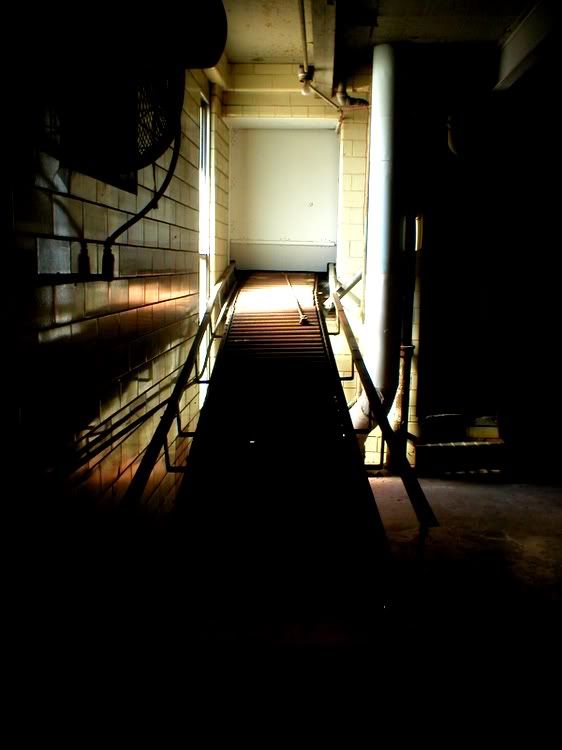
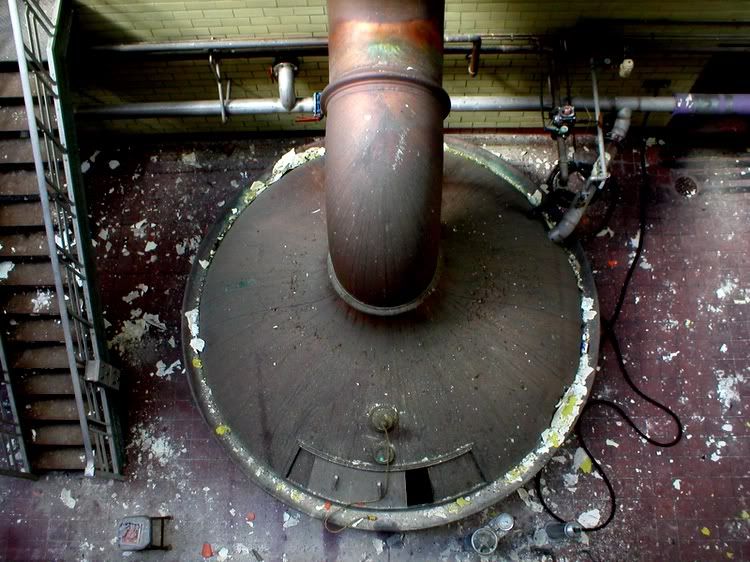
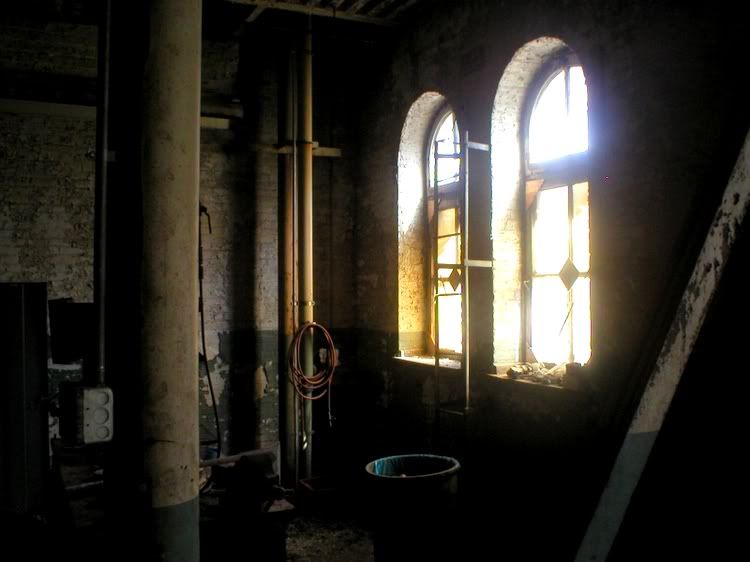
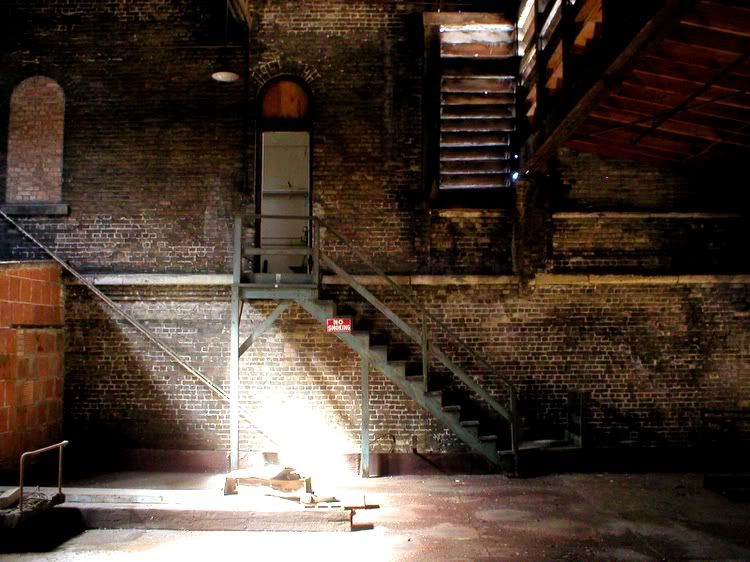
When was still living in Milwaukee, I got a call from my roommate one afternoon. A mutual friend of ours had founded a photography club, and he had somehow managed to befriend the security guard of the Pabst Brewery complex and convinced him to let the club tour the old Pabst Brewhaus. The roommate wanted to know if I wanted to come along.

A bit of background: for those who don't know, beer is kind of a big deal in Milwaukee, historically speaking. The city was once the largest German city in the world after Berlin, and the German Beer Barons who built the city's legendary breweries -- Miller, Blatz, Schlitz, and Pabst are the best remembered -- were major celebrities in their day. Many of their elaborate Flemish mansions still stand. And while microbreweries are nearly as ubiquitous as corner bars in the Brew City, Miller Brewing Co. is the only one of the historic brewers left (Pabst still exists, but brewing operations have been contracted out to Miller).

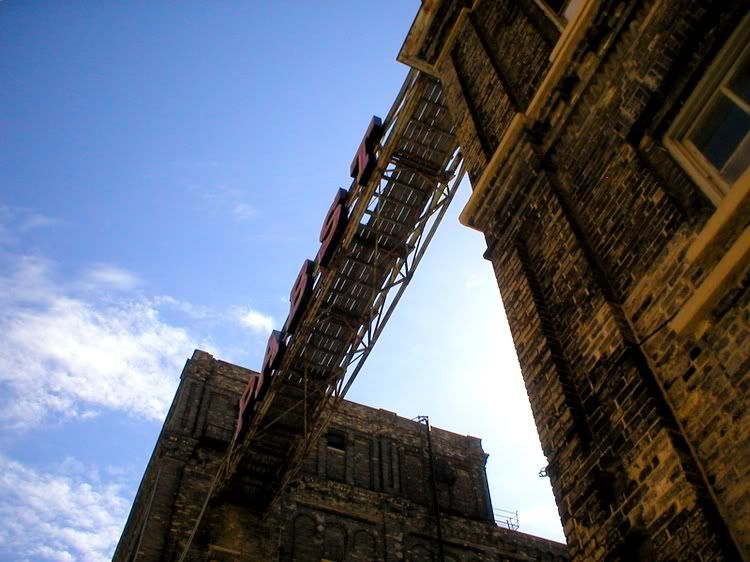
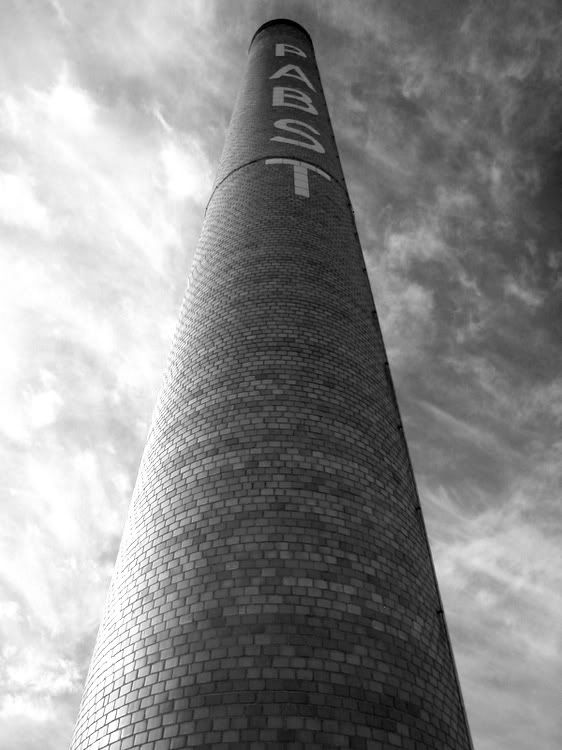
The Blatz and Schlitz complexes have both been converted into residential and office complexes. Pabst's 20-acre complex, however, which sits isolated on a hilltop at the far northwestern corner of downtown, remains empty. With its great smokestack, gothic spires, and the huge red "PABST" lettering that hangs from a skybridge connecting it to a neighboring structure, the 1872-vintage Brewhaus is an imposing landmark on the skyline.

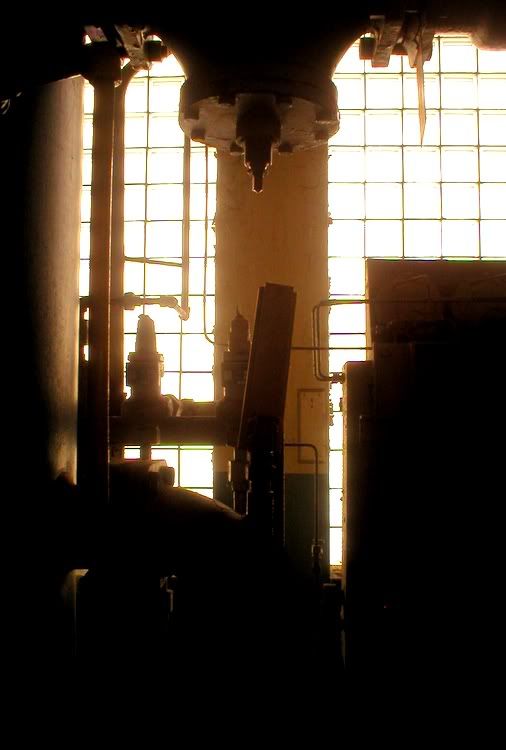
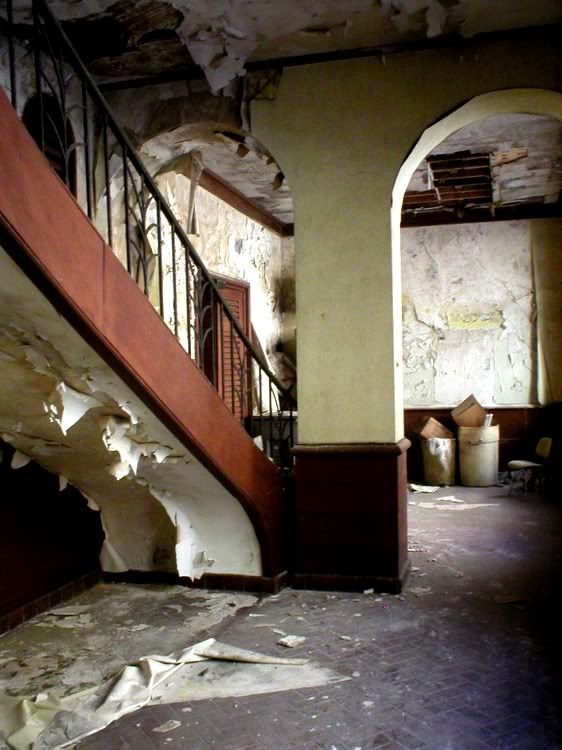
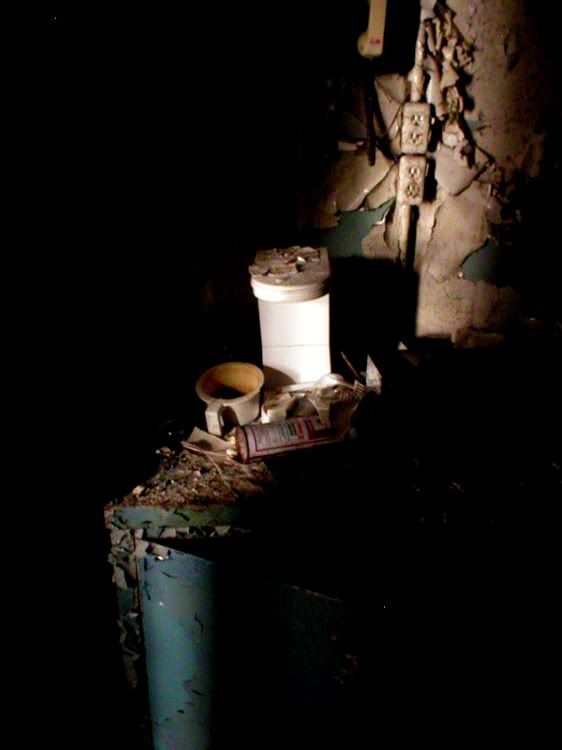
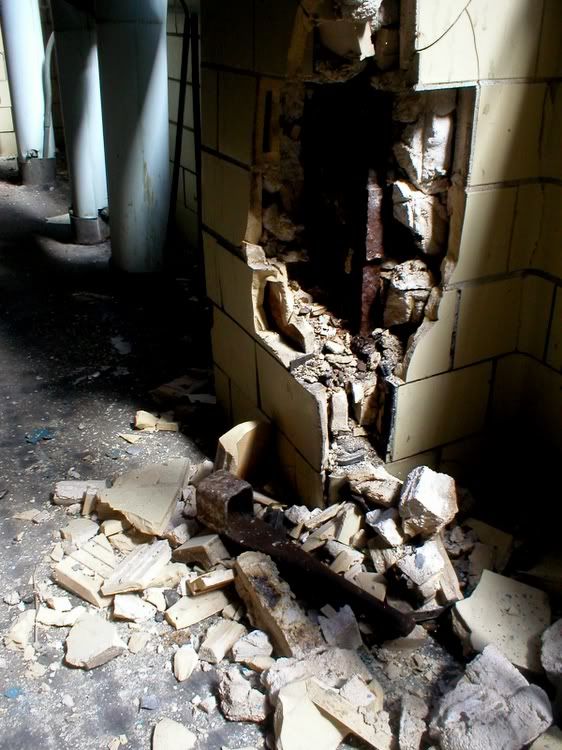
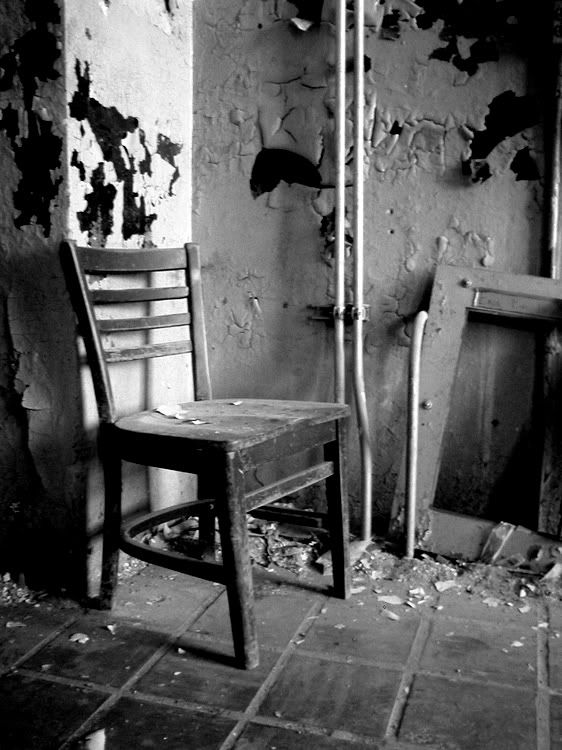
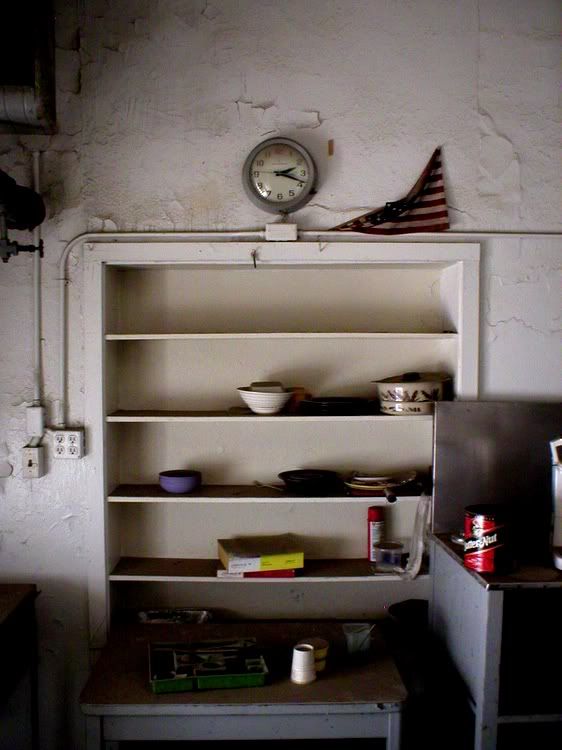
Did I want to come along on a tour of the building? Of course I did. A year and a half later, the complex is finally being rehabilitated and sold off piece by piece in a unique historic preservation redevelopment by Zilber Ltd. While I'm ecstatic to see this fabulous complex so carefully brought back to life, I will probably always remember the Brewhaus as it was the afternoon that I first went inside: broken, decrepit, and devastatingly beautiful. The following photos were taken with an older digital camera (an Olympus D-380, I think) that I've since managed to lose. I couldn't use the flash and had no tripod, so there's a bit of haze in some of these...whether or not that adds to or subracts from the images, I will leave the decision up to you. And so...
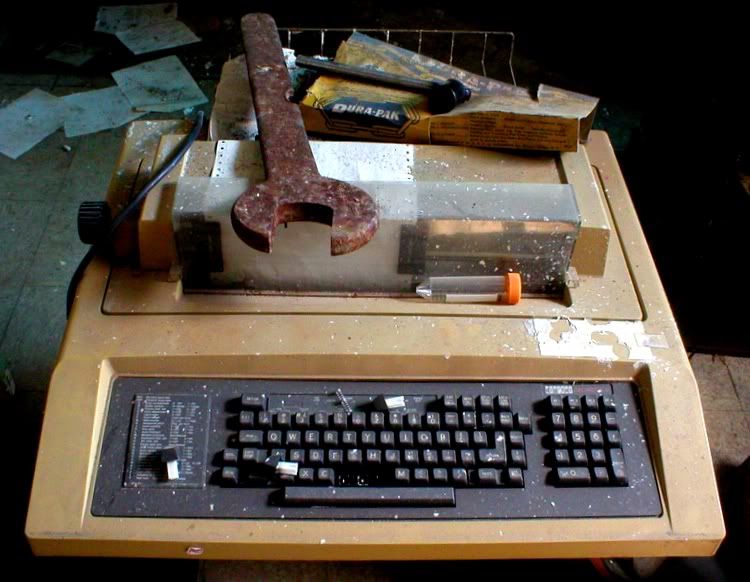

(Click the thumbnails for full images.)


Links:
The Brewery

Zilber Ltd.

Friday, June 15, 2007

Urban Dreamscapes


I've been contemplating the idea of dreamscapes a lot lately and wondering how they relate to the existing urban environment. There isn't really an established idea, culturally speaking, of what a dreamscape is, so the topic is fairly malleable. The official definition explains the dreamscape as "a dreamlike, often surrealistic scene," though I think that refers more to paintings and other artwork. I'm more interested in how the same ideas used by the fine arts crowd manifest themselves in the designed urban environment.
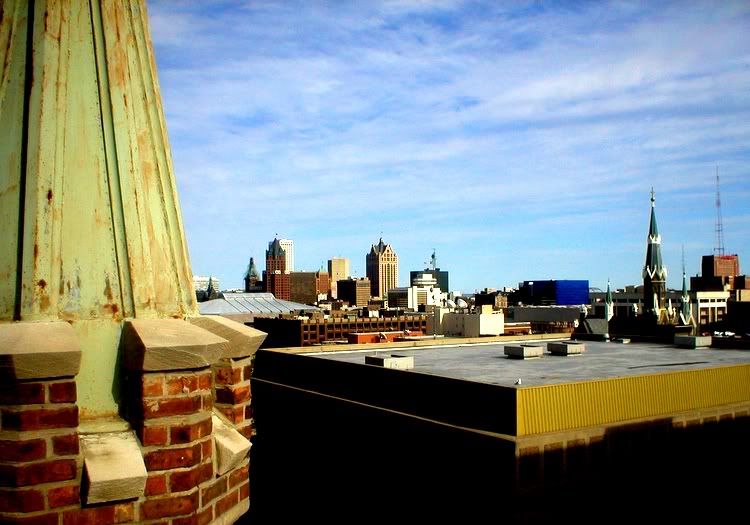
Urban design and architecture are perhaps the most relevant artforms, in terms of daily life. This is by no means a knock against the fine arts, but it is an inarguable truth that buildings and city plans are works of art that we encounter and interact with almost constantly. The downside of this is that, through their relevance, buildings and neighborhoods become incredibly mundane, far moreso than a painting or drawing ever could. So to find a dreamlike or surrealistic scene in your immedeate surroundings is next to impossible, because even intentional dreamscapes become so common as to be taken for granted.

Take, for example, Lincoln Park in Chicago. The Windy City is notoriously flat. Yet along the lakefront north of downtown, where the landscape should be at its most elevation-challenged, you will find gently rolling hills covered in grass, trees and, of course, statuary. This geological aberration is by design, planned out by landscape architect Ossian Simonds in the 1860s. Simonds followed Prairie Style design maxims that led him to carve out a whimsical dreamscape in a no-nonsense city that valued right angles and evenly-distributed commercial districts. Chicago is still one of the most utilitarian cities you'll find in on Earth (in terms of layout), but over time the curvaceous landscape of Lincoln Park has become an accepted fact of the urban environment that fails to surprise as, assumedly, it once did.

Cities are rife with these forgotten urban dreamscapes; places that used to thrill and excite now serve as pleasant surroundings for pedestrians and joggers. The ironic thing about dreamscapes is that, while those that are created become unremarkable, some of the most unremarkable places by design can be infused with intense meaning and mythical importance in an urban environment teeming with people. I read this week about a project in Singapore that aims to "build a collective memory of the magical spaces in [that city]." They describe a magical space as "a place that holds memories and emotional treasures. It could be ANY place, ANY where." This concept takes the idea of a dreamscape and tweaks it a bit. A magical space is a place that is dreamlike or surreal because of a personal experience, not a careful design. This is the sort of idea that reinforces the "cities are places for people" way of thinking; approaching the city as a place filled with tiny, almost imperceptible magical spaces transforms even the most annonymous of neighborhoods into dreamscapes filled with emotional artifacts and spiritual alcoves.

A post by the L-Arch geeks over at Pruned provides an important piece of my frame of reference, here. After accidentally typing "Utak" into their Google Maps search for Utah, Pruned discovered a landscape in a practically uninhabited area of Russia dotted with long strings of mysterious horseshoe-shaped mounds. Their reaction? "Lest someone tell us that they are simply defensive fortifications or ordinance storage bunkers or outdated meteorological instruments or the beta test site of Bush-Putin's Transcaucasian missile shield or Michael Heizer's Complex Four or ancient auroral observatories -- don't! Better to speculate than to be told the truth, right?"

In the end, this seems to sum up, better than anything I can think of, why exploring urban environments is so exciting. When we walk around new neighborhoods or in new cities, we are promised nothing but the unexpected. Even if a place seems familiar, it is completely new. Even if we find nothing odd or abnormal or even terribly interesting, everything corner we turn has the potential to shock and awe us. And if we are lucky enough to find some strange, magical place -- if we do manage to stumble upon a real, honest-to-goodness dreamscape -- isn't it better to speculate than to be told the truth?

(Photo from Flickr user evanembee.)


Links:
The Magical Spaces Project (Five Foot Way)

Uta(h)(k) (Pruned)