Showing posts with label medellín. Show all posts

Wednesday, December 31, 2008

Considering Urban Retail: A Re-post at the Crossroads

As we head into 2009 with economists predicting the closing of as many as 73,000 retail locations across the United States due to dismal holiday sales, it seems like a good time to look back at one of Where's most popular posts from last year, "The Possibilities of the Post-Retail City," originally published in August of '07.


I just had my first exposure to Reverend Billy, the leader of the Church of Stop Shopping. After reading a Polis post about the Reverend's anti-consumerist group, I thought it was an actual church. To which I said: "Oh, excellent.

Of course, the CoSS is actually an act, with the "Reverend" being the stage persona of NYC performance artist Bill Talen. It's a send-up of streetcorner preachers and televangelists, and it sounds hilarious. Better yet, there's a point! Reverend Billy preaches against corporatist architecture and urbanism, advocating for sustainable, walkable communities with local economies. And while the site does pay lip service to independently owned local businesses, it is the Church of Stop Shopping, and one of their taglines is "Love is a Gift Economy!" Obviously, these people think that there are better ways for us to use all of that street-level retail space.

And that got me thinking: if there were no major retail chains and independents had to hold up the local economy, what would we do with all of that ground-floor space? Indeed -- and my upbringing in a capitalist society may shine through right here -- but where would we walk to? Certainly, there are plenty of places that we walk every day, but a large amount of pedestrian traffic is genereated by shoppers. And while it's not a requirement for these ground-level spaces that make up our streetscape be places of commerce, their presence is utterly vital to functioning neighborhoods. Often (these days) even moreso than upper-level residential windows, storefronts are the Jacobsian "eyes on the street" that act as a natural deterrant to crime.

Shopping is also a huge part of the social life in many (if not most) contemporary cities; in fact, that's just what Reverend Billy and his fake church take issue with. And whether or not you agree with the Church of Stop Shopping (or, as I'm sure many do, find it outright offensive), it's interesting to imagine a world in which shopping took a back seat to other social spaces as the dominant street presence. Imagining Paris without the Champs-Elysées or New York without Park Avenue sparks a giddy, no-holds-barred creative energy akin to imagining those cities in a work of science fiction or postapocalyptic literature.

To get an idea of what might fill the void, it might be interesting to see how social space is structured in places where gift economies (or at least barter systems) often already exist and retail strips are few and far between, at least in the traditional sense: slums.

An article from Forbes, mentioned briefly in a previous post at Where, described the socioeconomic situation of many older, established slums in Asia and South America thusly: "Many slum dwellers are in fact entrepreneurs, albeit writ very small. They recycle trash, sell vegetables, do laundry. Some even run tiny restaurants and bars for their neighbors." So while there are no Ginza Districts in the favelas of Rio, there is a social commerce to such places. Restaurants and bars remain important components of the neighborhood, which makes good sense; people have always come together over food and drink, and will continue to do so regardless of any freak evaporations of the retail sector.

Another thing that brings people together is knowledge -- or, more specifically, the exchange thereof. Another recent post covered McGill University's Edible Cities project in Kampala; the site for the students' project "includes a low-lying wetland area...where a youth cooperative practices brick-makings, providing work for otherwise unemployed youth...and a sloping dryland area where farming is [practiced]." While this is a very rural area being discussed (albeit in the context of a larger city), the Kampala site illustrates two more possible uses for a retail-less streetscapes: public workshops (which could cover a variety of topics in addition to brickmaking) and storefront hydroponic community gardens.

Heh.

If the second option seems somewhat far-fetched, the first is hardly at all; in fact, in the face of looming irrelevance in the digital age, libraries around the world are starting to take on a more social role in their respective cities, staging various events and programs to encourage public discourse and teach skills that cannot be learned with a mouse and keyboard. One of the most innovative library programs that I've heard of recently is in Medellín, the second city of Colombia.

Once the so-called Kidnappping Capital of the World, Medellín has made more news recently for building five spectacular modernist libraries (like the one in Santo Domingo Savio, pictured above) in its most impoverished barrios. One of the programs to utilize these new libraries -- which are equipped with computer labs full of brand spankin' new computers -- is HiperBarrio, which teaches teens in the barrios how to use blogging and other social media tools as a creative outlet for self-expression. Juliana Rincon, one of the founders of HiperBarrio, spoke of the program's inspirataion in a recent interview with Global Voices Online, saying, "It was amazing...telling these kids about blogs and finding out that they had no idea that there was something like a blog, that they existed. [Or even] that you could write online and have a virtual space to keep your writing, the videos you like, and pictures." Libraries, in this case, serve not just as containers for information, but as catalysts for the creation of new information and new ideas. Certainly, this kind of social space, the place of public learning, will play an increasingly important role in cities as we continue through the Information Age.

Whatever we come up with to fill storefronts and social spaces, shopping districts and neighborhood retail strips are unlikely to disappear within the lifetime of anyone reading this blog post. Still, imagining a world without retail can tell us a lot about how we use cities, why we do things the way that we do, and how we can improve urban places without courting Starbucks and Barnes & Noble for civic salvation. In fact, picturing your neighborhood without any shops selling anything other than necessities might be a great way to fall in love with the place all over again. That is, of course, assuming that you love your neighborhood -- and that you don't live off Rodeo Drive.

----------

That's all for now, folks. Best of luck to everyone in 2009. Let's hope it's not as bad as we're all worried it's going to be.

(Photo from Flickr user galitagreeneyes. The original full-sized color version can be viewed by clicking the photo.)

Tuesday, April 1, 2008

Blogedanken Public Poll

Here are my favorite entries from each of the six Blogedanken participants who submitted full responses. Take a quick read-through, pick the one you think is the most interesting, and vote in the public poll at the bottom of the post. One-two-three, and by April 10th we'll have a winner! That person will then recieve a copy of Hyperborder, courtesy of PA Press.

Patrixbanx
(Portland, Maine, USA)
It sure would be nice to have a suburban commuter rail network in southern Maine. It would be even nicer if the commuter rail stations weren’t sited in the middle of vast parking lots, especially closer to the urban core. So why not allow development to cluster around those stops, like say Morrill’s Corner? And by development, I mean dense development. We’ll need to reform our zoning to encourage such growth, of course – not just by creating incentives for density but by creating disincentives for sprawl as well. Oh, and remember – this is Maine, a land that get’s pretty damn cold over the course of our long winters, and global warming hasn’t turned us into South Carolina just yet. Yet I hear tell of other cities even further north that are colder and get more snow than us, yet still manage to have a vibrant street life even in depressing old February. We gots to have that. I don’t know how exactly but if we’re going to discourage driving so we can have more walkable and transit oriented neighborhoods, we might as well make the streets of Portland a pleasant place to be in the depths of winter – bike and pedestrian friendly snow clearance, warm transit shelters, fun festivals, whatever it takes.

Medea
(Medellin, Colombia)
24 hour public transportation makes shifts easier to stagger, so bus drivers are not competing with each other in hazardous maneuvers. Every bus and taxi driver will receive mandatory drivers ed and courses on politeness and good manners. If they are rude or customers complain, their punishment won´t be a fine, but they´ll have to do public service hours cleaning the riverbanks.

M.B.
(Mexico City, DF, Mexico)
As a way of improving safety and bridging the gap between the city core and the bulging periphery, the city has launched a Defense of Modern Ruins program, stringing together blighted sights that range from industrial sights to downtrodden art-déco buildings to bureaucratic baroque whales. The program includes low-rent housing schemes, urban wilderness tours and itinerant party circuits.

T H Rive
(Victoria, BC, Canada)
Wireless capable crosswalks.
Edit: *apologies for the absolute shortness of mine. explanation: The crosswalk I was requesting was the ones that go green on ALL sides so that diagonal crossing is validated. It's quicker. The wireless part was more outdoor, cafe oriented Etc green wireless spaces. The result of the mixup?>> Wireless Crosswalks. Still a good idea. (4/1/08 5:38 PM)

Dan Lorentz
(Lexington, Kentucky, USA)
Organize a strong city-wide neighborhood group to promote mixed-use planning that supports street-level vitality, and make the first priority of that group the reweaving of the city's street web to create more corners for mixed-use development.

Petersigrist
(Cambridge, England, UK)
Hovering leisure boats with transparent roofs and floors, which hover about twenty feet in the air and provide lifts around town above underwater gardens with glass walls at street level as well as terraces, balconies, shops, and restaurants that open onto the streets and river


Remember: vote or die! (Hah. Always wanted to use that in context).

Wednesday, November 14, 2007

Medellín: a City Planned for the Other 90% (Guest Post by Juliana Rincon)

Medellín, Colombia, is a city that I've fallen in love with, and it loves me back. Whenever I walk its streets, ride the metro, or take a bus, I feel that the city was planned with me, and with all the thousands of others who, like me, don't own a car and depend on public transportation to move around, in mind.

An example: Carabobo used to be a chaotic avenue full of seedy joints and the constant rumble of old buses expelling diesel fumes. The beautiful art deco buildings along the avenue were left unnoticed as people rushed to their destinations enclosed in the safety of a vehicle. At the far end of the street was a no-man's land where you could see homeless people warming their hands with bonfires made in steel drums, and where everything and everyone had a price. Beautiful buildings were abandoned, scavenged and then abused as crack houses, businesses where struggling to maintain customers, and something had to be done.

Nowadays, no buses run through this main avenue; only people are allowed here. Instead of the sky being overcast by clouds of combusted fuels, it is shaded by trees and palms. The former crack house is a cultural and educational center, and the architectural jewels along the way are lit up to showcase their details, while thriving businesses inhabit their spaces. It is a complete pleasure to travel up and down this public space, designed to be fully accessible for every type of citizen.

Walking down the paved walkway, you can see people sitting on park benches and resting their tired feet, bags and bags of purchases from a variety of stores sitting beside them. Textured bricks mark pathways for the blind to follow with their canes, traffic lights with sound and vibrations assist the pedestrians who might not be able to hear or see the lights change color. You don't need to step off the curbs and onto the street -- they are both at the same level, making it easy for people in wheelchairs to enjoy this space as well. No bicycles are allowed, but riders are welcome to dismount and walk their bikes through this area if they wish to.

It seems that common sense solutions are usually completely ignored by governments in Latin American cities, and it is refreshing to see that this isn´t the case with Medellín. The government is rebuilding its city for the inhabitants: they have discovered that when people have public spaces they can enjoy and where they can relax, breathe in clean air, and stretch their legs, they work harder, better, and are generally happier. The poorer inhabitants of the city don't have time or money to take vacations to the rural areas; they don't have the means to visit beaches and certainly don't have membership to country clubs...so the city decided to give them spaces where they could take their families, where they could lay on the grass, sit on a bench and kick back on a Sunday.

The city has placed trust in the people, with the firm belief that if you make citizens take ownership of these new spaces, they'll take care of them and make sure others respect the spaces as well. Store owners and workers down Carabobo street signed an agreement stating that they would take responsibility in keeping their surroundings clean, reporting uncivilized behaviors and vandalism if, in exchange, the city would do maintenance and have enough policemen in the area to ensure shoppers' safety. These store owners now thank this project for their new situation: they have a lot more clients and shoppers now that people can walk at their leisure and window shop; they have met other store owners in their block; they don't have to deal with car fumes and the noise from honking vehicles and motors; and they have come together as a community, united with one goal: to keep Carabobo looking clean, safe and beautiful for many other generations to enjoy.

However, this didn't happen overnight. The business owners in Carabobo at first were terrified that once no vehicles could come by and park in front of their stores, sales would plummet. They didn't want to deal with the months of construction, not knowing if their businesses would survive this metamorphosis. The government decided to include these concerned entrepreneurs in the discussion and planning process so they could become involved with the project and take ownership of it. On October 27th 2006, an agreement was signed, and they first saw the butterfly emerge from its cocoon.

Last week the Hiperbarrio team headed downtown to record a little bit of our experience walking down Carabobo. We took pictures, shot videos and then sat down on one of the many benches to enjoy the day. It was a wonderful way to spend a Saturday morning, and if you ever come to Medellín and visit, I would definitely recommend for you to do the same.

If you want to learn a bit more about Carabobo, you can see the government's plan for Carabobo Street with pictures of the transformation, before, during and after, or look through the pictures we took that day with the Hiperbarrio team. Below, you can watch a YouTube video where the Carabobo community celebrates one year since the cooperation agreement was signed. (The narration is in Spanish).


------------------


Big thanks to Juliana Rincon, one of the organizers of Medellín's HiperBarrio project, for writing this guest post! Photo credits go to her group and the government plan sited in the post, in that order.

Wednesday, October 31, 2007

Five Innovation Myths Applied to Urbanism

A recent CEOs for Cities post pointed out a great article by Dev Patnaik that outlined five common mistakes made by businesses looking to be innovators. All of them, in one way or another, dealt with the myth of the silver bullet, and the article made a clear and concise argument for the importance of institutional context and diversified methodology. The myths that Patnaik does away with are all important for urbanists to consider as cities work to position themselves as both innovative places and as incubators of economic and technological innovation. On top of that, responding to context (cities each have very different conditions, physically and economically) and diversification (urban problems are both numerous and intrinsically interconnected, and there is no one solution to anything) are particularly applicable. The following is a breakdown, in urbanism terminology, of Patnaik's ideas.

• Over-reliance on high-profile, "sexy" projects

The Guggenheim Bilbao made just as big a splash in the fields of urban planning and policy as it did in architecture. Now, it's a commonly-held belief that cities can build megaprojects that will catapult them into the international spotlight and trigger a surge of prosperity. In reality, even when such projects are independently successful they are never the silver bullet that was imagined. Chicago's Millennium Park, for example, is by all accounts a huge success as a public space and tourist attraction. Still, it was a financial fiasco, and the glamour and goodwill afforded the city by the park is now being squandered by the miserable failure of the city's transit system -- a battle in which the City of Chicago is too strapped to play any meaningful role. Big projects can be important to cities, but it's even more important to pay close attention to what trade-offs will need to be made in terms of basic services (transit ain't the only thing hurtin' in Chicago) in order to pull off a good piece of stunt urbanism. Millennium Park is an innovative piece of landscape architecture, but as an urban regenerator it's as archaic as they come.

• Unhealthy fascination with unique, charismatic civic leaders

Michael Bloomberg, Gavin Newsome, and Ken Livingstone all command a considerable amount of media attention for their efforts to improve their cities. This innovation red herring is especially potent in urbanism: everyone loves a superstar mayor. And while these mayors can teach us a lot, it is important to remember that the best and most innovative mayors from the past (Jaime Lerner is a prime example) were willing to take risks; that is to say that great mayors have often made names for themselves by bucking trends and trying new ideas that were responsive to their specific cities rather than following standard procedures being replicated, cut-and-paste style, in other cities.

• Misapplication of other cities' approaches

Building on the previous point, it is often assumed that because Idea X worked in City Y, it will be equally successful in City Z. This is absurd. Take, for instance, the public transportation system in Medellín. The city's 3.2 million inhabitants live in a long, narrow valley. While the central part of the city, located in the lowest and flattest part of the valley, is served by a standard subway system, the densely populated neighborhoods that climb up the western hillsides are served by the Metrocable, a cable-car line that has become very successful both as a transit line and -- to the delight of city officials -- a tourist attraction that has helped (along with other projects) to lower crime and improve the economic outlook for the neighborhood's poorer residents. The lesson to be learned here for other cities is that unconventional transit options can be worth the risk if they are properly tailored to the needs of the community. The misapplication of this lesson would be for a flat city to assume that building a cable car would be a good idea since it worked in Medellín. This is a relatively simple illustration, but you get the idea.

• Descent into a cycle of self-recrimination

Pittsburgh, the oddball city so dear to my own heart, is the poster child for this kind of thinking. Many Pittsburghers labor under the assumption that their city is suffering because it is unable to hold onto the talented young people who graduate from major universities in the area like the University of Pittsburgh and Carnegie-Mellon University. (In fact, Pittsburgh has an unusually high rate of retention of its young natives). Pittsburghers see Creative Class capitals like San Francisco and Austin attracting large numbers of young creative types and makes the assumption that it is not cool enough to compete. Untold energy is put into trying to make the city cooler and more attractive to young people. Meanwhile, the draconian tax system that discourages start-ups (the number that exist regardless of this fact is a testament to the city's unrealized potential) go unchanged because Pittsburgh fails to realize that music festivals and extensive bike paths aren't going to save the city. The Burgh was a global hub of commercial and technological innovation at the turn of the 19th century. To be successful today, all cities (Pittsburgh included) would do well to look back at their strongest points and learn how to replicate that kind of success.

• Resignation to superficial changes

Patnaik uses the example "Let's just paint the walls purple" to mock companies' shallow understanding of the funky interiors of creative business HQs -- most famously, the Googleplex. Cities have a long and storied history of believing in the power of cosmetic changes only to be let down by the results. A phenomenon that you might call Trinket Urbanism had a death grip on North American cities until relatively recently as every city rushed to have their version of one-off amenities built in other cities. Baltimore's Festival Harbor spawned a gazillion of those so-called "Festival Marketplaces." Arenas were all the rage throughout much of the 1990s. Making a city more attractive is certainly not a bad idea, but there is a dangerous perceived correlation between beautification and prosperity. Flowering medians do not a center of innovation make.

(Photo from Flickr user emsef. The original full-color version can be viewed by clicking the photo.)


Links:
Innovation Mistakes (CEOs for Cities)

Five Common Mistakes in Innovation (Business Week)

Thursday, August 16, 2007

WEEKEND READING: August 11-17, 2007

This edition of Weekend Reading is all sorts of random. It's like urbanism salad!

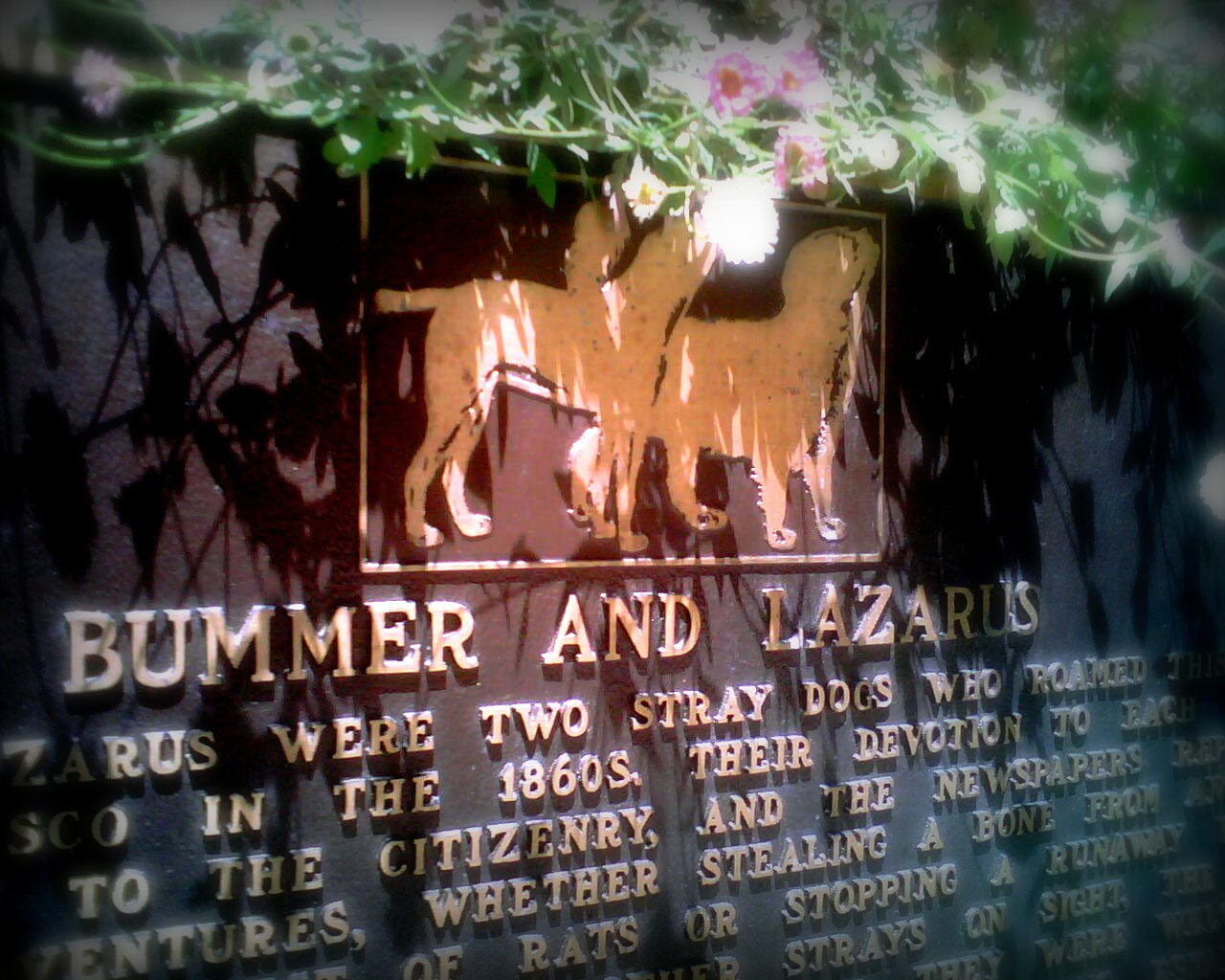
ITEM ONE: The story of Bummer and Lazarus, San Francisco's most famous pooches.

ITEM TWO: The "informal settlement"-watching blog Squatter City, written by the author of Shadow Cities.

ITEM THREE: Mexico City's mayor tries to push vendors off of the streets, but meets opposition from "a 63-year-old ex-con and great-grandmother."

ITEM FOUR: More radio hijinx from BLDGBLOG and DJ/rupture.

ITEM FIVE: The Washington Post asks "can globalization for for the world's slums?"

ITEM SIX: Will South America's first eco-city be built in rising-star Bogotá? Chances are good.

ITEM SEVEN: More from Colombia, where the previously mentioned HiperBarrio project continues to improve the city. For more on that resurgent city, click here.

See? Urbanism salad. Just like I promised. Check back over the weekend, as more of the Neighbor's Manifesto will be posted.

(Photo from Flickr user Dunstan Orchard.)

Monday, August 13, 2007

The Possibilities of the Post-Retail City


I just had my first exposure to Reverend Billy, the leader of the Church of Stop Shopping. After reading a post (over at Polis) about the Reverend's anti-consumerist group, I thought it was an actual church. To which I said: "Oh, excellent.

Of course, the CoSS is actually an act, with the "Reverend" being the stage persona of NYC performance artist Bill Talen. It's a send-up of streetcorner preachers and televangelists, and it sounds hilarious. Better yet, there's a point! Reverend Billy preaches against corporatist architecture and urbanism, advocating for sustainable, walkable communities with local economies. And while the site does pay lip service to independently owned local businesses, it is the Church of Stop Shopping, and one of their taglines is "Love is a Gift Economy!" Obviously, these people think that there are better ways for us to use all of that street-level retail space.

And that got me thinking: if there were no major retail chains and independents had to hold up the local economy, what would we do with all of that ground-floor space? Indeed -- and my upbringing in a capitalist society may shine through right here -- but where would we walk to? Certainly, there are plenty of places that we walk every day, but a large amount of pedestrian traffic is genereated by shoppers. And while it's not a requirement for these ground-level spaces that make up our streetscape be places of commerce, their presence is utterly vital to functioning neighborhoods. Often (these days) even moreso than upper-level residential windows, storefronts are the Jacobsian "eyes on the street" that act as a natural deterrant to crime.

Shopping is also a huge part of the social life in many (if not most) contemporary cities; in fact, that's just what Reverend Billy and his fake church take issue with. And whether or not you agree with the Church of Stop Shopping (or, as I'm sure many do, find it outright offensive), it's interesting to imagine a world in which shopping took a back seat to other social spaces as the dominant street presence. Imagining Paris without the Champs-Elysées or New York without Park Avenue sparks a giddy, no-holds-barred creative energy akin to imagining those cities in a work of science fiction or postapocalyptic literature.

To get an idea of what might fill the void, it might be interesting to see how social space is structured in places where gift economies (or at least barter systems) often already exist and retail strips are few and far between, at least in the traditional sense: slums.

An article from Forbes, mentioned briefly in a previous post at Where, described the socioeconomic situation of many older, established slums in Asia and South America thusly: "Many slum dwellers are in fact entrepreneurs, albeit writ very small. They recycle trash, sell vegetables, do laundry. Some even run tiny restaurants and bars for their neighbors." So while there are no Ginza Districts in the favelas of Rio, there is a social commerce to such places. Restaurants and bars remain important components of the neighborhood, which makes good sense; people have always come together over food and drink, and will continue to do so regardless of any freak evaporations of the retail sector.

Another thing that brings people together is knowledge -- or, more specifically, the exchange thereof. Another recent post covered McGill University's Edible Cities project in Kampala; the site for the students' project "includes a low-lying wetland area...where a youth cooperative practices brick-makings, providing work for otherwise unemployed youth...and a sloping dryland area where farming is [practiced]." While this is a very rural area being discussed (albeit in the context of a larger city), the Kampala site illustrates two more possible uses for a retail-less streetscapes: public workshops (which could cover a variety of topics in addition to brickmaking) and storefront hydroponic community gardens.

Heh.

If the second option seems somewhat far-fetched, the first is hardly at all; in fact, in the face of looming irrelevance in the digital age, libraries around the world are starting to take on a more social role in their respective cities, staging various events and programs to encourage public discourse and teach skills that cannot be learned with a mouse and keyboard. One of the most innovative library programs that I've heard of recently is in Medellín, the second city of Colombia.

Once the so-called Kidnappping Capital of the World, Medellín has made more news recently for building five spectacular modernist libraries (like the one in Santo Domingo Savio, pictured above) in its most impoverished barrios. One of the programs to utilize these new libraries -- which are equipped with computer labs full of brand spankin' new computers -- is HiperBarrio, which teaches teens in the barrios how to use blogging and other social media tools as a creative outlet for self-expression. Juliana Rincon, one of the founders of HiperBarrio, spoke of the program's inspirataion in a recent interview with Global Voices Online, saying, "It was amazing...telling these kids about blogs and finding out that they had no idea that there was something like a blog, that they existed. [Or even] that you could write online and have a virtual space to keep your writing, the videos you like, and pictures." Libraries, in this case, serve not just as containers for information, but as catalysts for the creation of new information and new ideas. Certainly, this kind of social space, the place of public learning, will play an increasingly important role in cities as we continue through the Information Age.

Whatever we come up with to fill storefronts and social spaces, shopping districts and neighborhood retail strips are unlikely to disappear within the lifetime of anyone reading this blog post. Still, imagining a world without retail can tell us a lot about how we use cities, why we do things the way that we do, and how we can improve urban places without courting Starbucks and Barnes & Noble for civic salvation. In fact, picturing your neighborhood without any shops selling anything other than necessities might be a great way to fall in love with the place all over again. That is, of course, assuming that you love your neighborhood -- and that you don't live off Rodeo Drive.

(Photo from Flickr user galitagreeneyes.)


Links:
Rev. Billy Ready for Close-up (Polis)

The Church of Stop Shopping

Two Billion Slum Dwellers (Forbes)

Kampala Project Information (McGill School of Architecture)

Red de Bibliotecas (en español)

HiperBarrio: Local Stories, Global Audience (Global Voices Online)