Showing posts with label wishlist. Show all posts

Wednesday, March 12, 2008

Do the Gedanken, Win a Copy of Hyperborder

Everybody loves a contest, right?

In an effort to generate some reader participation and get the creative juices flowing around here, Where is turning Monday's Blogedanken into a contest. Entries should be added as comments to the original post.You can enter as many or as few of your five results from the exercise as you'd like, but no more than five entries per person, please.

The contest will run between now and March 22nd, at which point I'll narrow the entries down to the most creative/funky/innovative/entertaining of the bunch (yeah, it's subjective, I know) and open things up to a public vote from March 23-30. The winner will be announced on Monday, March 31, and will promptly receive, via mail, a copy of PA Press' book, Hyperborder.

We're on the honor system here, folks, so play fair. Best of luck!

Monday, March 10, 2008

Blogedanken: The Wishlist

Strange title, no? To explain: the term "blogedanken" is a portmanteau of "blog" and "gedanken," a German word that translates, roughly, to "thought experiment." Tonight, a blogedanken for your entertainment and mental exercise. After the first part, you'll need to highlight the text to see the next three. Resist the urge to look ahead -- go one at a time, or it won't be any fun.

1.) Spend ten minutes brainstorming every bit of urban designery that would be on your ultimate wishlist for your city. Does your city need a more efficient subway? Better street life? A giant sculpture of Chuck Norris? Go crazy. Get creative. This is the easy part. (Here's a great example featured in Weekend Reading two weeks ago, in case you need inspiration).

2.) Now go back over your list and decide which fifteen things would be your top priorities if you could put together your ideal plan for your city. Think carefully -- what would really make your city a better place to live?|||

3.) Next -- without changing the order of your fifteen priority items -- circle the first, sixth, and eleventh entries on your list. Now try to come up with a way that you could combine all three into one grand, symbiotic piece of urban design and/or policy. Repeat the process for the groupings of items 2-7-12, 3-8-13, 4-9-14, and 5-10-15. Again: Go crazy. Get creative.|||

4.) You should now have five innovative, wildly imaginative urban solutions unique to the challenges that face your city. Post your favorites in the comments section of this thread. Floating sustainable fast food culture villages? Tribal teen centers hung from the bottoms of elevated high-speed train tracks? Tax breaks for city workers who rent their homes and volunteer with local nonprofits? Show us what you've got.|||

Go get your gedanken on.

EDIT: This blogedanken is now officially a contest. You can enter as many or as few of your five results from the exercise as you'd like, but no more than five entries per person, please. Entries should be added as comments to this thread, and only participants who complete all four steps will be eligible to win. Entries will be accepted between now and March 31st, at which point I'll narrow the entries down to the most creative/funky/innovative/entertaining of the bunch (yeah, it's subjective, I know) and open things up to a public vote from April 1-10. The winner will be announced on Friday, April 11, and will promptly receive, via mail, a copy of PA Press' book, Hyperborder.

(Photo from Flickr user Dom Dada. The original full-color version can be viewed by clicking the photo.)

Friday, February 29, 2008

WEEKEND READING: February 23-29, 2008


Happy Leap Year everyone! The crappiest month gets a whole day longer...Seriously, y'all, I hate February. Hooray for Weekend Reading, right?

ITEM ONE: TNAC becomes NAC, and kicks off a contest to come up with a tagline. The response so far has been El Lame-o, so go make some noise.

ITEM TWO: A massive wishlist for Hong Kong, Asia's Global City.

ITEM THREE: Pop City talks to Urban Design Associates honcho Don Carter about the eight things Pittsburgh needs to become a 21st Century City. It's about the Steel City, but many of Carter's points can be applied universally.

ITEM FOUR: Richard Florida frames urban development with an article about the Sex Pistols, and some interesting conversation follows.

ITEM FIVE: The Ground Floor explores the relationship between density and safety in urban areas.

ITEM SIX: Planetizen takes a look at Rotterdam's new "Blue Building" (seen in last week's Urbanffffinds).

ITEM SEVEN: A detailed written account of the soundscape of the boomtime Chinese city.

Have a fantabulous weekend, everyone! This blogger's headed home to Milwaukee for the weekend.

(Photo from Flickr user cblee. The original full-color version can be viewed by clicking the photo.)

Thursday, October 18, 2007

Speculative Urban Blogging

I came across two great new blogs this week that do what you might refer to as "speculative urban blogging" in two very different (if equally innovative) ways. So consider tonight's post sort of an in-depth lead-in to Weekend Reading, if you will.

Audacious Ideas takes a look at how things are going in Baltimore and makes some rather audacious suggestions as to how these problems might be addressed more effectively. Here's the catch: the entries are written by Baltimore professionals who work in fields that deal directly with the problems that they are writing about. Audacious Ideas takes big questions and provides answers sized to match. And even with only five posts (not including the introduction), AI has provided audacious[ly pragmatic, in most cases] suggestions for policy reform in the areas of public health, the city budget, childrens' safety, drug treatment, and education.

Even better, the audacity is apparently just what the doctor ordered, so to speak. Every topic has spurred a discussion at least a dozen posts long. Baltimoreans are taking inspiration from this new public forum, and from everything that I've read the readers are taking the discussions seriously -- a rare occurence on the internet. It certainly helps that these discussions are being started and led by community leaders with experience and wisdom. Online conversations almost always benefit from having a curating presence, and as this blog continues to build a body of posts and public discourse, it stands a better chance of becoming a real engine for change in Baltimore. Speculating on the future of the city opens up possibilities and puts some 2.0 juice into public policy.

The Blurgh looks at Pittsburgh's future from an entirely different angle: the writers are already living in it. Written in an imagined 2027, The Blurgh is a rather audacious blog, itself. "Frank" and "Gretchen" are two twentysomethings, a student and a writer, making their way in the now-resurgent Steel City. Written as a simple journal-style blog, The Blurgh is coy. The bloggers mention massive changes in the city's physical and economic environments -- Pittsburgh's status as a hub of sustainable technology, the city's impressive literary scene, an über-extensive mass transit system -- in passing, stopping only occasionally to do a sort of "gee, whiz" look back at the past (aka our present) and comment on how glad they are to be living in the "new" Pittsburgh (aka the one in 2027).

It's the realism that is so clever. If this very blog were being written in 2007, it would be wholly unremarkable, another drop in the massive bucket of naval-gazing public journaling that has earned the field blogging its currently somewhat uneven reputation. Well, okay...it is actually being written in 2007, but you get what I mean. The writer(s) of The Blurgh seem to know exactly what they're doing and, while it's too early to tell, they could turn this blog into a very important forum for the discussion of Pittsburgh's future, and how the city got/could get there. At the very least, it will be interesting to see how The Blurgh -- and its community of readers -- evolves.

So much of urblogging is focused on keeping tabs on what's going on right now in a neighborhood or a city. The local everyday politics of potholes, homelessness, new construction, and Starbucks are important to local discourse, and this is not a knock against of-the-moment urblogs. But it certainly wouldn't hurt, I don't think, if bloggers in a few more cities took on the challenge of trying to imagine a better and brighter future for the places they live. The hyperlocal movement is very much tied to the immediate present, and sometimes this means that urbloggers can't see the forest for the trees. A better future for our cities is something worth speculating about, and blogging provides those interested with the perfect medium to address rapidly-changing problems. As Audacious Ideas and The Blurgh show us, there are many different ways to use this technology to speculate on a brighter urban future.

(Photo from Flickr user joey kennedy. The original full-color version can be viewed by clicking the photo.)


Links:
Audacious Ideas (via CEOs for Cities)

The Blurgh (via The Burgh Diaspora)

Wednesday, September 26, 2007

Framing Urbanism

Anyone who lives in a city is a student of urbanism. We have the choice of whether or not to pay attention to the lessons we are being taught, but they are taught either way. Every day of living in a city is a chance to learn about how the place works. So it helps to have a way of organizing the observation process.

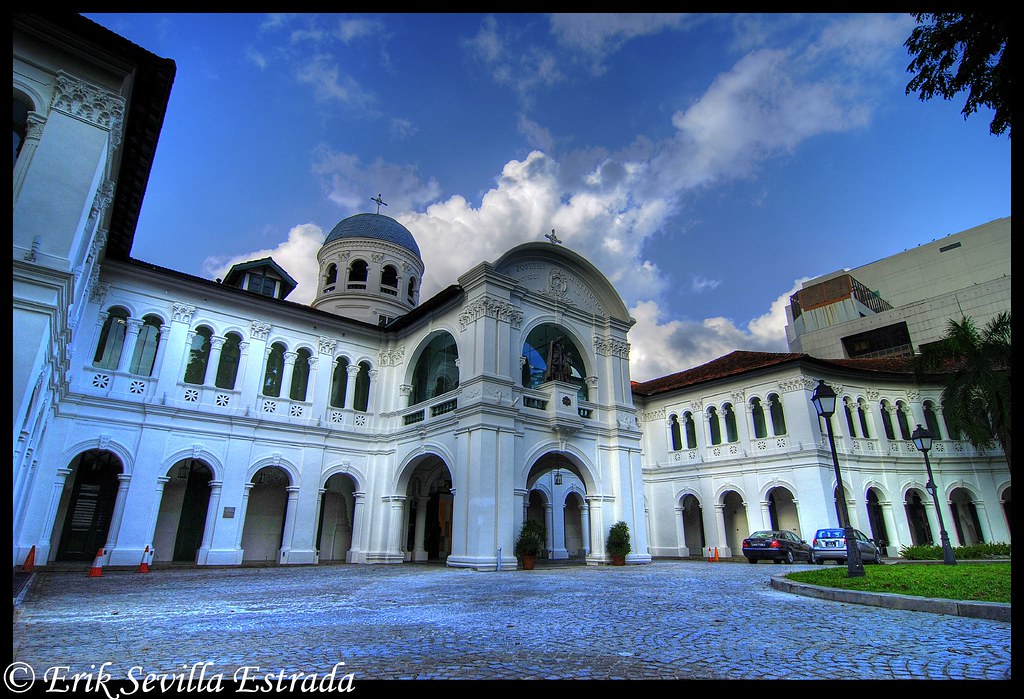
That being said, I came across an organizational tatic of which I am particularly fond recently on re:ACT, a blog run by a dozen architecture students in Singapore. Ronald Lim, one of the re:ACT bloggers, put up a post entitled "My Wishlist for Architecture in Singapore." It's short (five items), practical, and the objective is very clear even without being directly stated. That objective is to make Singapore into a more architecturally conscious city, to improve the quality of the buildings being designed there by improving public awareness of architecture and design. Lim calls for an architecture and design department at the Singapore Art Museum, an annual competition similar to PS1 or the Serpentine Gallery, and an interesting set of tax incentives (among other things).

The benefit of having such a list, as an individual observer of a specific city, is that a person can identify what it is they are looking for in terms of an area's strengths and weaknesses. It's a framing technique, really. But a wishlist is especially helpful, I think, because it gives a person something to look for when visiting other cities. Even more than framing how one sees one's own city or even one's neighborhood, it frames how one approaches the urban form in general. This is beneficial because it allows the observer to absorb information from one place and take it home with them, using it to enrich their own city.

I've always thought it'd be really interesting to see a neighborhood group do this kind of thing, collectively. The common perception of the Neighborhood Association or Block Group is that of a stodgy, reactionary coalition of anti-growth crumudgeons with pickett signs and way too much time on their hands. Rather than hearing moaning and groaning about the death of a neighborhood's precious, precious character every time someone so much as proposes to trim their hedges, it'd be fascinating to see how a group might impact their community by identifying what defined the character that they were trying to preserve and coming up with a wishlist of ways in which that character could be strengthened and enhanced, and maybe even improved. Imagine a neighborhood group that actually courted developers to help achieve their goals of enhancing the architectural character of a neighborhood, welcoming and even helping to speed a long the process of approval for a new building in exchange for architectural sensitivity and some streetscaping improvements.

I wouldn't be surprised, actually, to hear that this has been or is being done. In fact it would be great to hear stories of this kind of thing; a neighborhood threatened by the dreaded gentrification beast working with developers instead of against them. I wonder how that works out...are the neighbors better off in the end, or do they wind up getting screwed over time? I'd be willing to bet on the former, but I'm open to arguments for the latter...

***

By the way -- while we're on the topic of taking observing what other cities are doing right when traveling, if you haven't heard of Civic Tourism yet, check out the link below. It's a great concept, and it seems like the kind of thing that could really give some extra oomph to your next urban vacation.

(Photo from Flickr user Erik Sevilla Estrada.)


Links:
My Wishlist for Architecture in Singapore (re:ACT)

Civic Tourism