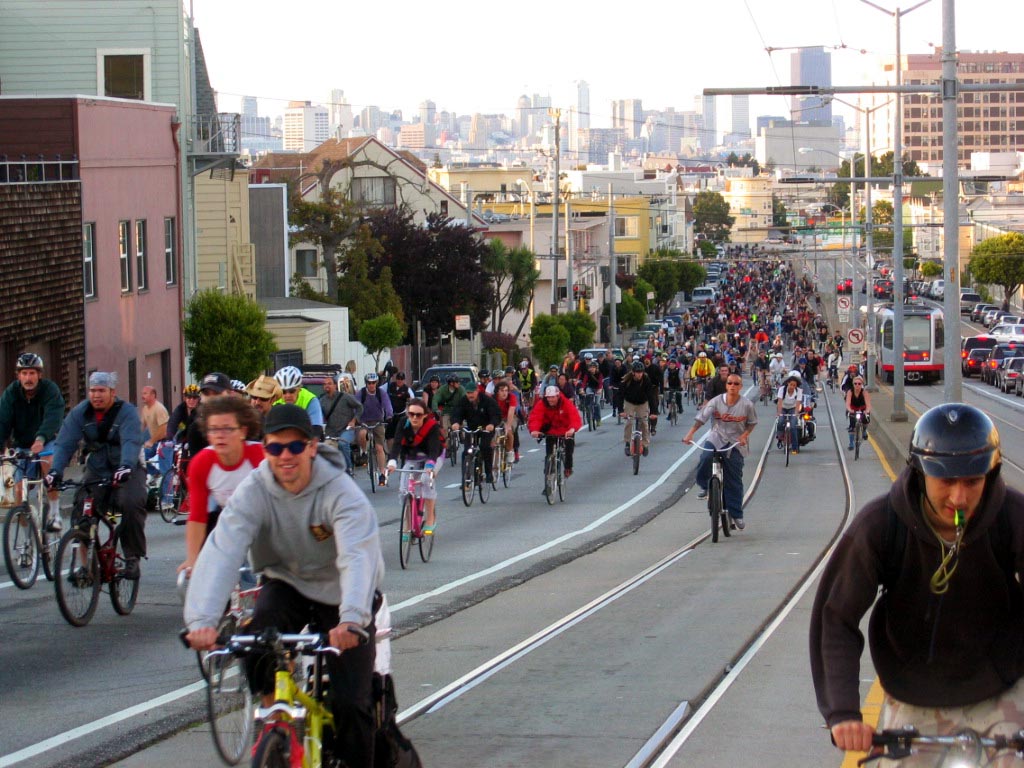
Every time I ride my bicycle around the town of Manokwari, I can see that most of the cyclists or bikers are elementary school children and teenagers. I seldom see adults riding their bicycles. We all know that riding bicycle is good for our health but we don't do it regularly or we never do it. The pro-car or pro motorized vehicles policy from the government is the main causal factor which makes cycling not a popular lifestyle in this country anymore. In one week, I could only see one or two adults riding their bikes. Because cycling around the town center is not favorable due to the traffic condition, I prefer to paddle my bike to Pasir Putih beach area. Cycling was introduced in Manokwari town and the whole West Papua region by the Dutch. This environmentally friendly lifestyle has been replaced by the use of motorized vehicles particularly motorcycles and cars in the last 40 years of the city's development. Yet, I still see a small number of people who ride bicycles in this town.
Back to the discussion of the above question whether bicycles are toys for children and teenagers? I see that most of us who live in Indonesia do not realize how important bicycles are for our health, environment and economy. We all are used to living in a country whose fuel is subsidized (even now!). When Indonesia entered its worst economic crisis in 1998, the subsidy was gradually reduced. People began to protest the government for this unpopular policy. We did not realize that the price of fuel oil is expensive in the international market. We did not invest enough money in renewable energy either. We have enjoyed cheap fuel for years and reluctant to teach our children how to ride their bicycles to school. The government also did not give enough pro-cycling policy in its national development strategy. Now most children in Indonesia do not go to school buy riding bicycles. They depend on ojek (motorcycle taxi), bus, or their parents to pick them up from schools. Only in rural areas children walk to school. When children in Indonesian cities go to school by ojek, children in the Netherlands and Denmark ride bicycles.
People in Indonesia might think that riding bicycles is only a kind of training before somebody rides a motorcycle. They think that bicycles are slow, and only old fashioned means of transport. Because there is no serious pro-cycling policy from the government, the promotion of cycling as a lifestyle or culture in Indonesia had not been aggressive enough until after the fuel crisis some two or three years ago when university students began demanding the democratically president of Indonesia to step down.
In the efforts of living an efficient life, maintaining good health, and fighting global warming, some people in Jakarta begin to revive the cycling lifestyle again. Bike to work community was established and now has branches in several cities and towns in Indonesia. In Manokwari city alone, as the newly established capital of West Papua province in the Republic of Indonesia, some people began to ride their bicycles to work. But this spirit is not fully supported by the government especially the department for transport and town planning agency through the creation of facilities and lanes that support bike to work campaign. As a result I can see that cycling or mountain biking in Manokwari is still considered as sport only.
To change people's paradigm of bicycles as children toys, a lot of efforts have to be done. Some of them are through the writing of articles both on the internet and on printed media about the importance of riding bicycles as ways to save money, maintain good health and preserve the environment. National TV stations haven't created special programs for promoting cycling culture. There are a lot of benefits that we can get from cycling. Bicycle manufacturers in Indonesia have to respond to this new movement by producing bikes that are suitable for working class society. The prices of bicycles have to be reduced to levels where they are more affordable to the whole population of this country.
In the eco-tourism sector, I personally am planning to provide cycling tour in Manokwari as a strategy to raise awareness among the local people that cycling is a healthy and environmentally friendly lifestyle. I also have planned to establish a special web-portal for promoting cycling in two languages, i.e. Indonesian and English. The content will consist of stories from cyclist in the streets, study or discourse materials about cycling, bicycle reviews, technical or manual articles and other contents that are related to cycling, sustainable development and environment. I am sure that this human powered vehicle will one day be seen as an important means of transport in Indonesia again, someday in the future. by Charles Roring
Also read:
Dirt jump mountain bike
Mountain biking in the Table Mountain
Showing posts with label bicycles. Show all posts
Friday, January 14, 2011
Monday, June 15, 2009
The Urban Path
Human navigation is a key component in the organization and form our cities take on. Whether we choose to walk, bike, take public transport, or drive, we are making choices that shape our experience of the city and that will transform the city itself over time. Two great examples of this are taking shape in New York right now: the opening of the High Line park and the pedestrianization of Times Square. Both show how infrastructure and space can be transformed over time based on the alternating use and neglect of transient spaces. As we move forward in a period of increasing transportation curiosity and alternate means of transport, these physical experiments become very relevant and thought-provoking. Everyone is eagerly anticipating billions of dollars for infrastructure investment and reconfiguration, but what kind of infrastructure changes should we really seek? Wider bridges and highways, more bike lanes, light rail, pedestrian access?
Alongside these physical experiments lie also a set of mapping or tracking statement experiments which aim to bring attention to the ways in which people use space and how they use that space. One is the Contrail project which aims to apply a line of chalk behind bikers, like a constant skidmark tracing their path throughout the cityscape. On a large scale this could reveal some very interesting patterns as well as draw attention to the number of bikes that actually occupy the roads. It might even encourage people to break out the old two wheeler and go for a spin. In addition to this hack like experiment there is an increasing amount of gps devices floating around our city sidewalks and roadways, all of which can generate useful information about how our current infrastructure is being used. Hopefully, when it really comes time to invest, the powers that be will heed these experiments and gather appropiate information to make informed decisions about the ways in which people will move over the next 50 years...
(Photo from Gothamist and Make. The original full-sized color version can be viewed by clicking the photo.)
Thursday, January 29, 2009
LaHood: Not a Disastrous Pick, After All?
I don't know about you, but after Ray LaHood was tapped to serve as Obama's Secretary of Transportation, most of what I read around the urblogosphere was bad-news-bears. Urban policy wonk Ryan Avent questioned the decision over at Grist, as well as his own blog; over at WorldChanging, Alex Steffen wondered aloud wether Obama had used the position as a throwaway to appease Republicans; and transit blog The Overheard Wire took a padded swipe at the new Sec. Interested in getting the opinion of someone in the transit policy arena from LaHood's home state (which, luckily enough, happens to be my own), I checked in with a friend who's on the board of the Chicago-based Active Transportation Alliance, formerly the Chicagoland Bicycle Federation. He pointed me to an editorial piece in the org's latest newsletter, ModeShift, which paints a much sunnier picture of LaHood than I've become accustomed to reading. According to the ModeShift article, LaHood is a strong and vocal proponent of rails-to-trails programs, and has been twice-honored by the League of Illinois Bicyclists for his efforts on biking issues. So his mass transit record is still murky, but it sounds like LaHood's not all bad news. Just a bit of food for thought. Edit: all that being said, I'm starting to wish that this Nadler fellow would have been given the nod.
Labels:
barack obama,
bicycles,
chicago,
public policy,
ray lahood,
transit,
urban politics
Thursday, January 22, 2009
Wherever you go, there you are.
Urban travel has long been a two-sided coin, with time in a new city being divided (in different ratios, depending on the tourist) between the standard landmarks like the Empire State Building, or the Forbidden City, and the day-to-day urban world that exists on the edges of guidebooks; think of Brooklyn back in the 1990s, or Beijing's fast-evaporating hutongs today -- places to which people are drawn to observe the day-to-day lives of other people, to experience the spectacle of the extraordinary-ordinary.
The Postcard City and the Real City are inevitably pitted against each other in a battle for the urban tourist's limited time. But as cities grow bigger and bolder on our increasingly urban planet, it seems fair to assume that greater and greater numbers of tourists will make their way down the streets of cities that they do not call home; as such, the traditional landmarks and attractions become more and more crowded, making the prospect of tooling around a lesser-seen part of the metropolis an increasingly attractive option for visitors.
The aforementioned trendblog has spotted some real doozies lately; a site that allows you to navigate cities by mood (Could Yelp-like testimonials about certain blocks, streets, parks, or even whole neighborhoods define or even change the mood of a given place?); another that uses personal data to create personalized guidebooks (Would the diversity of interests force travel publishers to re-think the meaning of the term "attraction?" I.E. cyclists' internationally competitive quests to speed up the steepest slopes could reboot the way a whole subculture navigates hilly cities like San Francisco, Pittsburgh, Guilin, and Lisbon); and yet another that helps you track down a hot scene at the last minute with crowdsourced GPS data (Anybody up for an impromptu, flashmob-style block party?)
But does this dispersal of small-time explorers legitimize or cheapen the Real City? It seems like an echo of the ongoing argument about gentrification; after all, while tourists themselves are a temporary presence in a given location, their combined influence can be very powerful over time. (You could make a strong case for the influence of tourism in speeding the process of gentrification, itself.) And, while the carving of initials into a famous landmark is a time-honored tradition (as old as the very idea of "landmarks"), the tourists of tomorrow could soon be able to carve their very presence into the city in the unpredictable paths that they cut through it, shifting not only the way that other visitors, but the very citizens of the city in question, navigate and experience a place.
(Photo from Flickr users LondonSLR and neiljs. The original full-sized versions can be viewed by clicking the photos.)
Posh to be Poor? Transportation
Posh to be Poor? Introduction
(Photo from Treehugger The original full-sized color version can be viewed by clicking the photo.)
(Photo from SFGate The original full-sized color version can be viewed by clicking the photo.)
(Photo from Wikipedia The original full-sized color version can be viewed by clicking the photo.)
Labels:
bicycles,
cities,
Marc Couillais,
messanger,
quality of life,
street life,
transit,
urban planning
Monday, December 22, 2008
Interstate Bike Trails

The above is a collaboration between the American Association of State Highway & Transportation Officials and the Adventure Cycling Association, who have created a transcontinental network of interstate bike routes out of more than 50,000 miles of existing trails. From the Baltimore Sun:
The effort relies on cartography instead of construction, signposts instead of earth-movers.
Working from a bewildering tangle of existing roads, planners mapped a web of corridors where the national bicycle system should go. They considered traffic volume, terrain, amenities and ways to link together lightly traveled byways, secondary roads, urban trails and already established transcontinental bicycle routes.
Each corridor on the map they approved is a broad swath 50 miles wide; the precise routes within each corridor are still to be designated, numbered and given signs.
The plan has been under development for four years now; I'm guessing that the AASHTO and ACA are glad to see the political tide turning the way that it is, since construction responsibilities fall to the states (though I'm guessing that the creators will be working hands on, lobbying hard to see things built, connected, labelled, and otherwise completed). Seeing the above makes the relative unanimity of the newly selected Transpo Secretary Ray LaHood, aka Ray LaWho? as most of the planning media has been calling him lately, seem more worrisome. Does anyone know LaHood's record on bike issues?
(Found via).
Monday, October 27, 2008
Cities Rising
Yesterday's Washington Post talks about the anti-urban bias of American politics:
Is Obama's ascent a further sign...that our cities are back and that the country is making peace with its non-agrarian side? And would a big-city president address as never before the problems of our urban cores -- blighted housing, shoddy public transit, dismal schools?Well, one can hope, but few of these problems have traditionally been considered national in scope -- the president doesn't build subways or set school curriculum for example. Of course, the federal government does play an important role in funding local projects, and with economic crisis potentially leading to mass transit cuts, among other things, this role is even more important.
This part is encouraging:
One of the first interest groups [Obama] met with after securing the Democratic nomination in June was an alliance of bicycling advocates.
(Photo from Flickr user glennharper. The original full-sized color version can be viewed by clicking the photo.)
Subscribe to:
Posts (Atom)