Showing posts with label beijing. Show all posts

Thursday, January 22, 2009

Wherever you go, there you are.

It struck me the other day, while reading one of Springwise's increasingly frequent posts on the mass customization of travel, that the types of travel apps and sites being developed right now to personalize the urban travel experience could have a profound impact not just on how we visit cities, but on how cities themselves function, as well.

Urban travel has long been a two-sided coin, with time in a new city being divided (in different ratios, depending on the tourist) between the standard landmarks like the Empire State Building, or the Forbidden City, and the day-to-day urban world that exists on the edges of guidebooks; think of Brooklyn back in the 1990s, or Beijing's fast-evaporating hutongs today -- places to which people are drawn to observe the day-to-day lives of other people, to experience the spectacle of the extraordinary-ordinary.

The Postcard City and the Real City are inevitably pitted against each other in a battle for the urban tourist's limited time. But as cities grow bigger and bolder on our increasingly urban planet, it seems fair to assume that greater and greater numbers of tourists will make their way down the streets of cities that they do not call home; as such, the traditional landmarks and attractions become more and more crowded, making the prospect of tooling around a lesser-seen part of the metropolis an increasingly attractive option for visitors.

The aforementioned trendblog has spotted some real doozies lately; a site that allows you to navigate cities by mood (Could Yelp-like testimonials about certain blocks, streets, parks, or even whole neighborhoods define or even change the mood of a given place?); another that uses personal data to create personalized guidebooks (Would the diversity of interests force travel publishers to re-think the meaning of the term "attraction?" I.E. cyclists' internationally competitive quests to speed up the steepest slopes could reboot the way a whole subculture navigates hilly cities like San Francisco, Pittsburgh, Guilin, and Lisbon); and yet another that helps you track down a hot scene at the last minute with crowdsourced GPS data (Anybody up for an impromptu, flashmob-style block party?)

The customization of the urban tourism experience not only makes wandering off the beaten path more common, but more enticing as well, and has the potential to distribute visitors more evenly around the city than old-school printed-paper guides, with their hyper-selective map insets and restaurant listings.

But does this dispersal of small-time explorers legitimize or cheapen the Real City? It seems like an echo of the ongoing argument about gentrification; after all, while tourists themselves are a temporary presence in a given location, their combined influence can be very powerful over time. (You could make a strong case for the influence of tourism in speeding the process of gentrification, itself.) And, while the carving of initials into a famous landmark is a time-honored tradition (as old as the very idea of "landmarks"), the tourists of tomorrow could soon be able to carve their very presence into the city in the unpredictable paths that they cut through it, shifting not only the way that other visitors, but the very citizens of the city in question, navigate and experience a place.

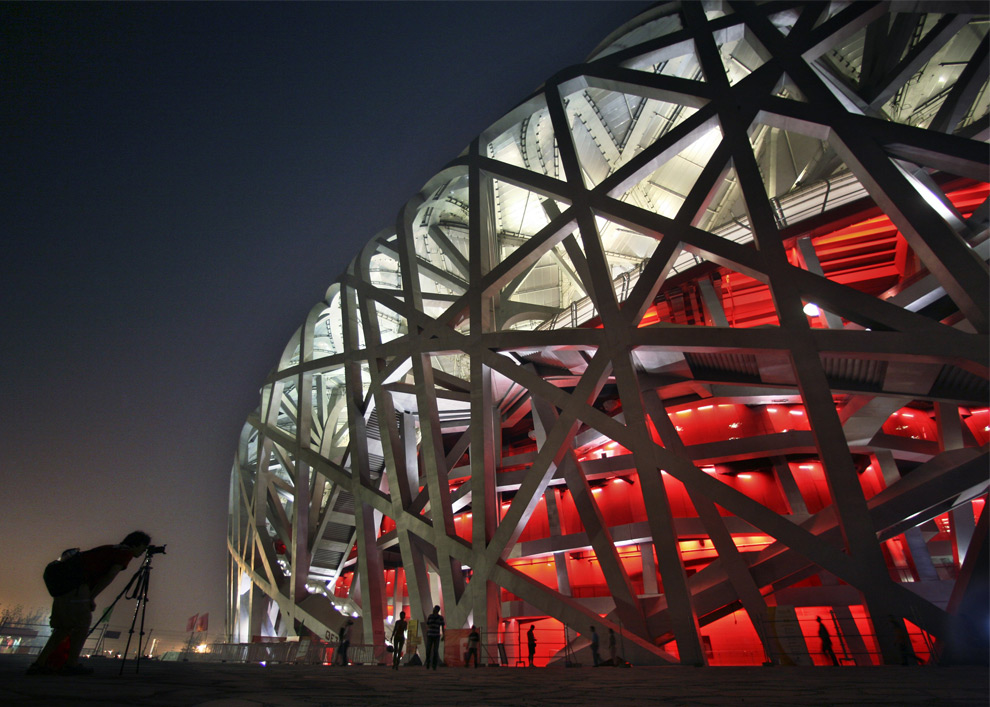
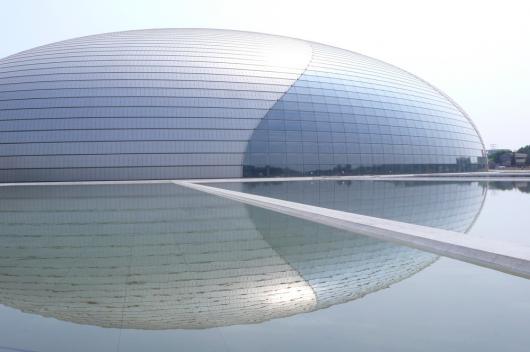
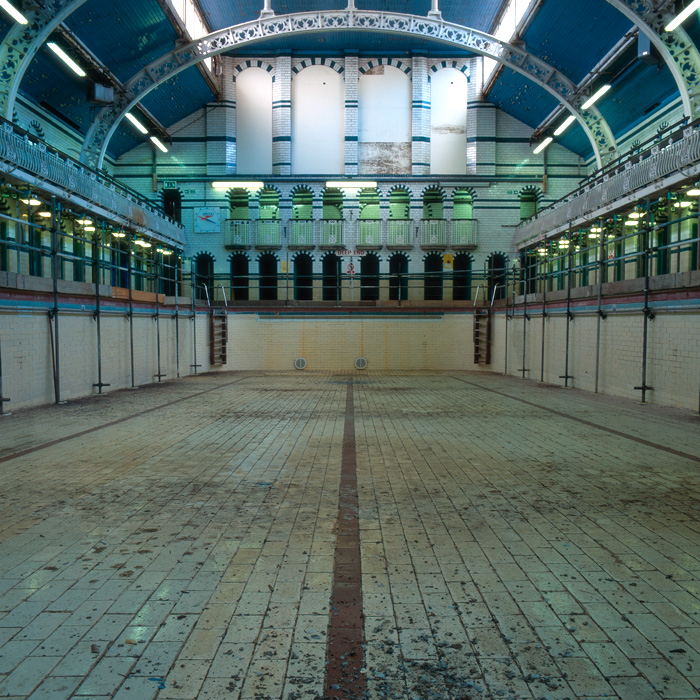
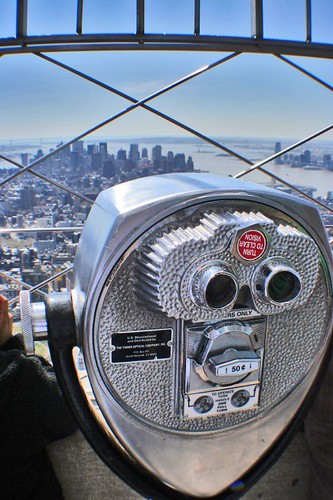
(Photo from Flickr users LondonSLR and neiljs. The original full-sized versions can be viewed by clicking the photos.)

Monday, December 31, 2007

Best of the Urblogosphere: 2007 Round-Up

I went back through all of the Weekend Reading posts from the past year and pulled what I thought were the very best of the best. I've divided things up into two categories: General Urbanism and Place-Specific posts. Descriptions of the selections are followed by their date on which they originally appeared in WR.

GENERAL URBANISM
ITEM ONE: BLDGBLOG on "terrestrial reorganization" during WWII. (April 20)

ITEM TWO: Celsias on why designing cities around cars is such a terrible idea. (May 18)

ITEM THREE: Harvey Feldspar's city-hopping geoblog of the future, from Wired's examination of the future of our mobile society. (June 29)

ITEM FOUR: London architecture criticHugh Pearman on the Tate's megacities exhibit -- a stunning critique of contemporary starchitecture. (July 14)

ITEM FIVE: This Airoots post explores a fascinating artist's village in Mumbai. Organic urbanism at its best. (August 24)

ITEM SIX: NY Mag sets the record straight on Jane Jacobs' legacy. (September 28)

ITEM SEVEN: The Next American City features an article about how violent foreign policy creates more violence at home. (October 12)

ITEM EIGHT: City of Sound reexamines cities as destructive systems. (November 2)

ITEM NINE: Fabulous imagery of re-imagined slums via Subtopia. (December 7)

ITEM TEN: Spacing Wire features this beautiful and concise argument for humanism in the environmental movement. (December 14)


PLACE-SPECIFIC
ITEM ONE: A New York Times feature on the evolution of Curitiba into a poster child for good urbanism. (May 25)

ITEM TWO: Built Environment Blog takes a bike ride through ever-fascinating Brooklyn. (June 1)

ITEM THREE: The Economist goes back to Beijing. (August 24)

ITEM FOUR: Fabulous article from Frieze on the Brazilian megacity of São Paulo. (August 31)

ITEM FIVE: The Lincoln Institute explores post-apartheid Johannesburg. (October 5)

ITEM SIX: BLDGBLOG's rather infamous paean to the wonders of Los Angeles. (October 19)

ITEM SEVEN: More great stuff from Spacing: an Angelino's take on Toronto's messy urbanism. (October 19)

ITEM EIGHT: And finally, an Airoots post on the architectural wonderland of Tokyo's retail scene. (December 7)


If there are any of these that you missed the first time around, I urge you to take a look...they're great reading, start to finish. Have a wonderful, safe, and happy new year! See you in 2008.

(Photo from Non-Photography.com. The original full-color version can be viewed by clicking the photo.)

Friday, August 24, 2007

WEEKEND READING: August 18-24, 2007

It seems like things are really hit-or-miss on the online urbanism media circuit. Some weeks are golden, and others about as interesting as watching paint dry. Luckily, this week was definitely the former.

ITEM ONE: Airoots has a great story on a pretty unconventional "artist village" development in Mumbai. (Photo at right)

ITEM TWO: Some great observations from The Economist on the past and present of one of the world's most fascinating cities, Beijing.

ITEM THREE: Want a unique way to tell your neighborhood's story? Life Without Buildings has found a fun example of how to do so...

ITEM FOUR: Want some geopolitics and developing world perspective with your architecture and urbanism? Check out Candyland, a blog from a former resident of Mexico City now living in Barcelona.

ITEM FIVE: Over at Plasticbag, one of the most interesting posts I've read on place branding.

ITEM SIX: Bill Fulton of the CPDR has no patience for Joel Kotkin. (Right on!)

ITEM SEVEN: New -- and pretty jarring -- info on the relationship between homeownership and economic success via CEOs for Cities.

ITEM EIGHT: Spacing Wire's post about psychadelic radio programs, urban soundtracks, and aimless Sunday strolls. (Conversation starter: What's the soundtrack to your city?)

So in a week overflowing with good stuff, this blogger would strongly recommend all of the above. But if you just have time to read one, make it either Item One or Item Five. And have a great weekend!

Tuesday, May 22, 2007

Conscious Urbanism: Slowing Down Our Cities


I grew up in Suburbia, and my mother once asked me, "Why on earth would you want to move to the city? It's so busy and noisy and crowded." To which I responded: "I love it when you answer your own questions."

Still, there are times when the urban environment can get a little overwhelming. While I love it dearly, I'll be the first to admit that the nature of a dense environment can be -- and is -- exploited on many levels. Take, for example, advertising. The high concentration of people in high-density city neighborhoods provides advertisers with a sizable market for visual ads. High-traffic transit lines and highways provide the same kind of mass viewership. Think, for a minute, about how many billboards you pass on your walk, ride, or drive to work each morning. Try actually counting them tomorrow.

This visual noise has been attracting a lot of attention lately, it seems. Beijing's mayor, for example, is speaking out against proliferating ads for high-end luxury goods in the growing Chinese capital. Meanwhile, on the literal opposite side of the globe, Sao Paolo made headlines by enacting an ordinance that forced the removal of all of the city's outdoor advertising. The massive billboards that once formed the city's urban landscape -- even served as its landmarks -- have fallen like scales from the city's eyes, to paraphrase one NPR commentator's description. Now, apparently, the city has been exposed to some of its more unsavory elements; the 'boards dispensed with, impoverished favelas have been exposed along high-traffic routes. (And you'll have to forgive me this indulgence, but knowing the very vertical nature of Sao Paolo, I keep picturing stacked slums sandwiched between office towers. It's a bit fantastical, and neither here nor there, but I wanted to share nonetheless.) According to one reporter from the city, it's like walking through an entirely new city.

The fight against excessive urban ad-age is taking place Stateside as well. Los Angeles' famously commercialized cityscape is littered with illegal ads that were recently legalized due to some shady political maneuverings. Meanwhile many of New York's rapidly gentrifying neighborhoods are seeing their historic charm "draped like a giant burrito in enormous vinyl signs" in the words of Kevin Fry, the president of Scenic America.

This brings us to the issue of visual noise, a highly potent but often overlooked piece of the overstimulation experienced in cities. Many of us take the sinage around us for granted; in a hypercommercial society, it's hard not to. But the effect of all of this sinage is a decreased capacity for independent thought. We are constantly bombarded by images of things that we should want, near-subliminal messages (thanks to the aforementioned taking-for-granted) that hold us in a state of distraction. The mayor of Beijing's argument illustrates the deeper problem associated with this phenomenon: increased advertising, especially for high-end goods and services, increases tensions between social classes, the haves and the have-nots.

Vinicius Galvao, the aforementioned Paulistano reporter, describes the current situation in his city thusly: "It's amazing, because people on the streets are strongly supporting that. The owner of the buildings, even if they have to renovate a building, they're strongly supporting that. It's a massive campaign to improve the city. The advertisers, they complain, but they’re agreeing with the ban." And while it's impossible to say for sure without being there, his description makes it sound like the urban pulse of the city has been calmed somewhat. Perhaps, even, slowed.

Part of the fear of density in people comes from a fear of intensity. Cities are busy, noisy, crowded places. And while some people will always thrive on that, modern cities are large enough to provide a wide variety of different environments. Density, however, is an extremely important part of creating sustainable, high-quality urban environments. Thus, it is inspiring to see support growing for "humane density." Neither Too Slow Nor Too Smart, a paper by Richard Bender and John Parman, calls for a sensible, regional approach to population density. Another quote for you: "[We need to] fall in love again with a region that, for many of us, captured our hearts when we first set eyes on it, tasted its delicious food, savored its wine, walked its captivating streets. We know what it is and what it can be. Something this beautiful demands our indulgence, our generosity, and our commitment. We know how to treat it well, and yet we have so often failed to do so. Time to change."

While these words were written about the SF Bay Area, they can easily be applied (perhaps with a few alterations) to most major cities in the world. People choose to move to cities for many reasons, but they generally have the same reason for staying (given the option to leave): they fall in love with the place. And while there will always be a high concentration of activity in urban centers, cities extend far beyond their cores. Residential neighborhoods could benefit greatly from a general calming; be it through the removal of visual clutter, or just more careful planning. There is no reason that density cannot be calm and enjoyable; we just have to slow it down.

(Photo from Flickr user H111.)


Links:
Beijing mayor blasts billboards promoting luxury (Breitbart.com)

Clearing the Air (NPR)

Billboards vs. A 'Greener' America (Washington Post Writers Group)

City of Panic (Occupied London)

Neither Too Slow Nor Too Smart

Friday, April 27, 2007

WEEKEND READING: April 21-27, 2007


It's Friday again (yipee!) and that means it's time for some more weekend reading. This week's first entry comes from Eikongraphia, where they've been so busy with those architecture blog rankings that it was especially refreshing to read this insightful post about Norman Foster's new Beijing airport. And if you don't like that whole "reading" thing (wink, nudge), the post is packed with snazzy, colorful renderings (as seen at right.)

Remember when you used to play The Sims and you'd create huge mansions for your characters and each room would have a different, kind of cheesy "theme" to the architecture and furnishings? Someone took that concept a bit too far.

This really doesn't have anything to do with urbanism or places or any of the stuffy in this blog's subtitle, but check out the coolest couch ever made. Those are nickels. I know.

Two weeks after my hope-for-humanity-inducing trip to Atlanta, the Journal-Constitution reports that not all is well in autopia. Apparently, traffic is so backed up on in-town roads that the congestion problem is as bad, if not worse, than it is for suburbanites. In response, the demand for walkable, New Urbanist-style developments continues to grow. That's mixed news, but I think that it leans in a good direction...

This one is actually more than a week old, but Jamais Cascio's Earth Day interview over at WorldChanging looks iiinto the fuuutuuure and imagines our planet as four very, very different places. (I love futurists.)

And finally, anyone who enjoys seeing doublespeak paragon "Reason" Magazine dressed down will love this Planetizen post about mass transit. While I'm a fairly opinionated person, I try to keep this blog relatively neutral when it comes to out-and-out politics...but I'll say this much: Libertarians freak me out.

Wait, I lied. One last thing: make sure to check out this Where post from yesterday...I'm still looking for someone who'll be willing to report back about this weekend's DisPlace Me event. Post a response on the blog, or email me; contact info is located in my profile, at left.