Showing posts with label los angeles. Show all posts

Wednesday, October 22, 2008

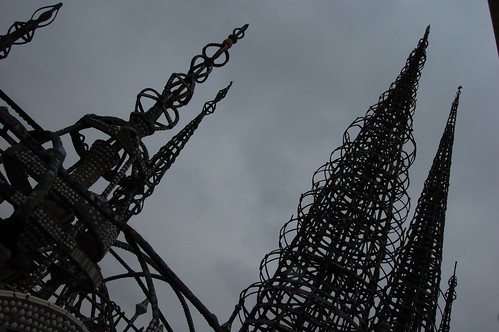
The Valley Does Watts

Pickle and Cake has this great video of a field trip of suburban LA residents to another suburb that happens to have this famous piece of outsider architecture. Of course, the trip is only noteworthy because of the "whites visiting the ghetto" angle, and the visitors to their credit are very honest about race and their perception of danger.

However, I was struck by something more trivial -- that as recently as 1994, when the video was made, people were still fascinated by light rail lines. So fascinated, that LA's (admittedly new) Blue Line shared top billing with the Watts Towers as the trip's main attractions. Even the ticket machines are an exciting and confusing part of the experience! And ticket machines, I think we can all agree, are really boring.

It's as if the scores of midwestern immigrants who settled in LA actually managed to produce children less urbane than they were. Reluctant metropolis indeed.


(Photo from Flickr user amycqx. The original full-sized color version can be viewed by clicking the photo.)

Wednesday, September 17, 2008

A F%@$ing Break: Give me one, Please

It seems like every couple of weeks there's another city ranking list, and the extremely flawed methodology of each one is ever more extremely flawed than that of the list before it. Add to the pile: Forbes' recently-vomited-up list of America's Most Stressful Cities.

Obviously, I'm being melodramatic. And obviously, this means that I have some emotional stake in the results. So let's be done with it: Chicago topped the list. Which...I'm sorry, I have to laugh at that. Hard. Just last week, I was talking to a close friend about my growing desire to head out East, because Chicago has such a relaxed atmosphere. It's very casual here, and thus harder to get things done. A bit of procrastination is built into the way of life. Thus, working on more than a couple of projects at once gets more difficult. You feel almost pressured, in a weird way, to do less.

The merits and problems associated with this way of life are fodder for another discussion, but help to frame my reaction to Forbes' list. How, I wondered upon reading the article this morning, could this possibly be? And then, there it was, in the list of reasons Chicago placed so highly: "rising unemployment rate, expensive gas, high population density and relatively poor air quality."

I'll give them the rising unemployment. I'll even toss in an E for Effort on the air quality, even though it's really not that terrible. Wind blows a lot of our air pollution up to my good ole' hometown to the north, Milwaukee, giving the metro of only 1.7 million some of the worst air quality for a city in its size range. Milwaukee, in turn, dumps sewage into Lake Michigan, which then floats down to Chicago and closes our beaches (though this has been happening a lot less in recent years thanks to the Deep Tunnel project...but again, I digress).

Rising gas prices I had to roll my eyes at, because crowding issues on the CTA and Metra have been evidence of the fact that people are taking advantage of alternate options here. If anything, transit ridership should have been taken into account for determining stress in Chicago. Though it appears that these are metro area rankings (something Forbes is continually foggy about with its lists), so whatever.

But density?? This is a negative factor in determining stress? For my official position on this criterion, please refer to the title of this post.

I will grant -- as any pro-density advocate worth their salt will -- that there is such a thing as an unhealthy level of density. Chicago, my friends, comes nowhere near that level. There are plenty of residential high rises springing up around town, but it's hardly anything that you can compare to, say, the high-rise blocks of Hong Kong. Chicago has wide streets, many of them lined with trees. There is plenty of parkland, much of it well-maintained and relatively safe. As a friend once noted when visiting from New York, "My God, you can actually see the sky here."

Forbes' list is blatantly skewed toward older, more densely-populated cities (more commonly referred to by those with sense as "real cities"). Chicago is followed by New York, Detroit, Los Angeles, and San Francisco, with San Diego, Cleveland, Salt Lake City, Providence (yes, seriously), and Philadelphia finishing things out. Only one of these cities, you'll note, is not located in the older, more highly-urbanized Northeastern and California Coast regions.

Density wasn't the only thing to play a part, but it had a noticeable effect on the outcome. At any rate, this seems to be a better indicator of stress levels. I'll take living in a high-rise over living on the freeway any day of the week. Now excuse me, I have to o relax.

Saturday, August 23, 2008

3000 Broadway

Sure, all major cities look big and dense at their cores. But how do they compare a bit further out? Where's got some (admittedly loose) comparative urbanism for ya's today: aerial images of the address 3000 Broadway in America's nine largest cities -- #10 San Jose has no like-named street. (For the record: Philly's is from 3000 Broad Street, and Dallas' is from 3000 Broadway in the suburb of Garland, since the address does not exist in The Big D proper).

New York City, NYLos Angeles, CAChicago, ILHouston, TXPhoenix, AZPhiladelphia, PASan Antonio, TXSan Diego, CADallas, TX

Tuesday, July 8, 2008

Kotkin Kabob'd

On principle, Where does not link to any article containing Joel Kotkin's canned, willfully ignorant whinnying about how cities suck and suburbs are, like, totally awesome, bro. But Where does link to Bill Fulton's skillful and thorough skewerings of said whinnying. In fact, it does so with great aplomb.

And now I'll stop writing about this blog as if it's a sentient being.

Monday, January 7, 2008

Vital Risk

The Ansari X Prize offered $10 million to whoever could pull off the first non-NASA manned space flight in the US. It worked, and Virgin (of Megastore fame) will soon be offering commercial space flights as a result. The X Prize's founder, Peter Diamandis, had this to say about his inspirational award in a recent post in GOOD Magazine's Big Ideas series: "The Ansari X Prize experiment worked, just like when Charles Lindbergh won the Orteig Prize for his transatlantic flight 80 years ago. We are genetically programmed to compete, and we do our best work, and take the highest risks when we go head-to-head for fame, fortune, or honor...X Prizes are one way to combat the risk-averse society that has developed over the last 40 years. As an American, I think risk-averse behavior is destroying our nation."

Diamandis, here, puts concisely into words what it seems like a lot of Americans are feeling lately: we have gone soft. The United States, one of the most dynamic and innovative nations in the history of human civilization, is falling behind other countries in many areas. Our telecommunications, internet, financial, and transportation industries -- among others -- are struggling to keep up with those in countries less tied down by byzantine policy and disturbingly well-established corporate hierarchies. The US is still a global economic leader, no doubt. Still, with China and India (not to mention little South Korea with its hyperfast 'net) nipping fervently at our heels, this country's position is not as assured as it once was. Our risk-averse behavior, which has manifested itself most blatantly in the nauseating wave of paranoia that has gripped Americans for the past seven years, is hampering our competitiveness in the global marketplace. At a time like this, visionaries like Diamandis are sorely needed.

That makes you wonder what the X Prize could do for American cities. As has been generally accepted as fact by now, the fortunes of contemporary nations are tied directly to those of those nation's major urban areas. In the United States, logic suggests that our lack of effective and innovative urban policy over the past half century (or more) has had more than a little bit to do with the US' threatened position at the top of the global economic heap. And with Scientific American recently having named the X Prize Foundation as the Policy Leader of the Year, it stands to reason that Mr. Diamandis might be able to do a lot of good by wielding some of his foundation's influence in urbanism-related fields.

As it turns out, he's one step ahead. The X Prize Foundation is currently sponsoring a competition to develop the world's most efficient vehicle -- with a minimum rating of 100 miles per gallon. Thanks to the auto and oil industries' ferocious lobbies, this kind of competition would have been unheard of just a couple of years ago. Now, the 43 entries are being prepared for the Detroit and New York auto shows. A 100mpg car -- designed and (hopefully) made in America -- is literally just over the horizon.

So take a minute, now, to imagine what the X Prize could do for the myriad of long-abused and misunderstood policy issues facing American cities. Private transportation is important in today's sprawling megaregions, but what might the X Prize be able to do to improve affordable housing, crime, or mass transit? The last of these was addressed in a recent op-ed piece in the LA Times (written, shockingly, by a policy analyst from the transit-loathing "Reason" Foundation), which asked: "The X Prize was just a $10-million purse, yet it helped induce the birth of private spaceflight as well as a host of technological innovations. Is it really so fanciful to think that it could conquer gridlock?" Here's the op-ed pitch for Los Angeles:

"The Metropolitan Transportation Authority carves out some of the $115 billion in transportation funding that's headed to the region over the next couple of decades to stage a contest....[and] creates two teams. Team A tries to lure as many motorists out of their cars as possible by building rail. (Note to referee: Ex-bus riders don't count as ex-motorists.) Team B must lure motorists to telecommuting. The team with the most ex-motorists after a set period of time wins the prize."

Game on!

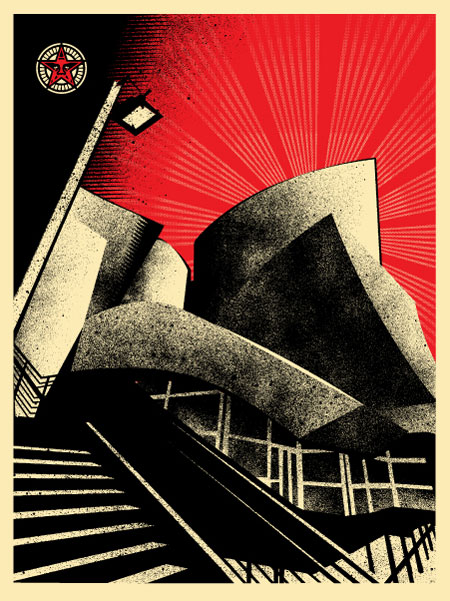
(Photo from Flickr user phamthanhk45. The original full-color version can be viewed by clicking the photo.)


Links:
X Prize (GOOD)

X Prize Foundation

Detroit 2008: Automotive X-Prize entries coming to Cobo (AutoBlog)

Create some healthy competition (LA Times)

Monday, December 31, 2007

Best of the Urblogosphere: 2007 Round-Up

I went back through all of the Weekend Reading posts from the past year and pulled what I thought were the very best of the best. I've divided things up into two categories: General Urbanism and Place-Specific posts. Descriptions of the selections are followed by their date on which they originally appeared in WR.

GENERAL URBANISM
ITEM ONE: BLDGBLOG on "terrestrial reorganization" during WWII. (April 20)

ITEM TWO: Celsias on why designing cities around cars is such a terrible idea. (May 18)

ITEM THREE: Harvey Feldspar's city-hopping geoblog of the future, from Wired's examination of the future of our mobile society. (June 29)

ITEM FOUR: London architecture criticHugh Pearman on the Tate's megacities exhibit -- a stunning critique of contemporary starchitecture. (July 14)

ITEM FIVE: This Airoots post explores a fascinating artist's village in Mumbai. Organic urbanism at its best. (August 24)

ITEM SIX: NY Mag sets the record straight on Jane Jacobs' legacy. (September 28)

ITEM SEVEN: The Next American City features an article about how violent foreign policy creates more violence at home. (October 12)

ITEM EIGHT: City of Sound reexamines cities as destructive systems. (November 2)

ITEM NINE: Fabulous imagery of re-imagined slums via Subtopia. (December 7)

ITEM TEN: Spacing Wire features this beautiful and concise argument for humanism in the environmental movement. (December 14)


PLACE-SPECIFIC
ITEM ONE: A New York Times feature on the evolution of Curitiba into a poster child for good urbanism. (May 25)

ITEM TWO: Built Environment Blog takes a bike ride through ever-fascinating Brooklyn. (June 1)

ITEM THREE: The Economist goes back to Beijing. (August 24)

ITEM FOUR: Fabulous article from Frieze on the Brazilian megacity of São Paulo. (August 31)

ITEM FIVE: The Lincoln Institute explores post-apartheid Johannesburg. (October 5)

ITEM SIX: BLDGBLOG's rather infamous paean to the wonders of Los Angeles. (October 19)

ITEM SEVEN: More great stuff from Spacing: an Angelino's take on Toronto's messy urbanism. (October 19)

ITEM EIGHT: And finally, an Airoots post on the architectural wonderland of Tokyo's retail scene. (December 7)


If there are any of these that you missed the first time around, I urge you to take a look...they're great reading, start to finish. Have a wonderful, safe, and happy new year! See you in 2008.

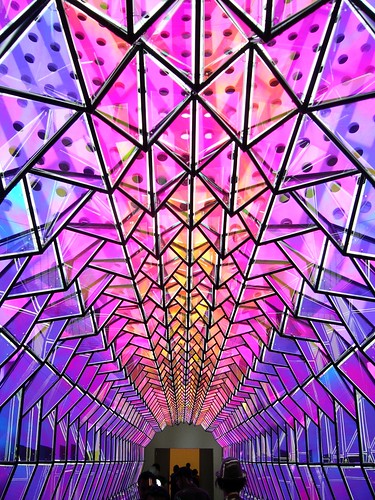
(Photo from Non-Photography.com. The original full-color version can be viewed by clicking the photo.)

Friday, November 2, 2007

WEEKEND READING: October 27-November 2, 2007

Colin will be taking over this feature next week...many thanks to him in advance. I'll be busy, novelling away until December.

ITEM ONE: City of Sound on Dresden, Los Angeles, and destructive urban systems. (Photo credit)

ITEM TWO: A great article from the NY Times City Room discussing society's inept politicization of Jane Jacobs.

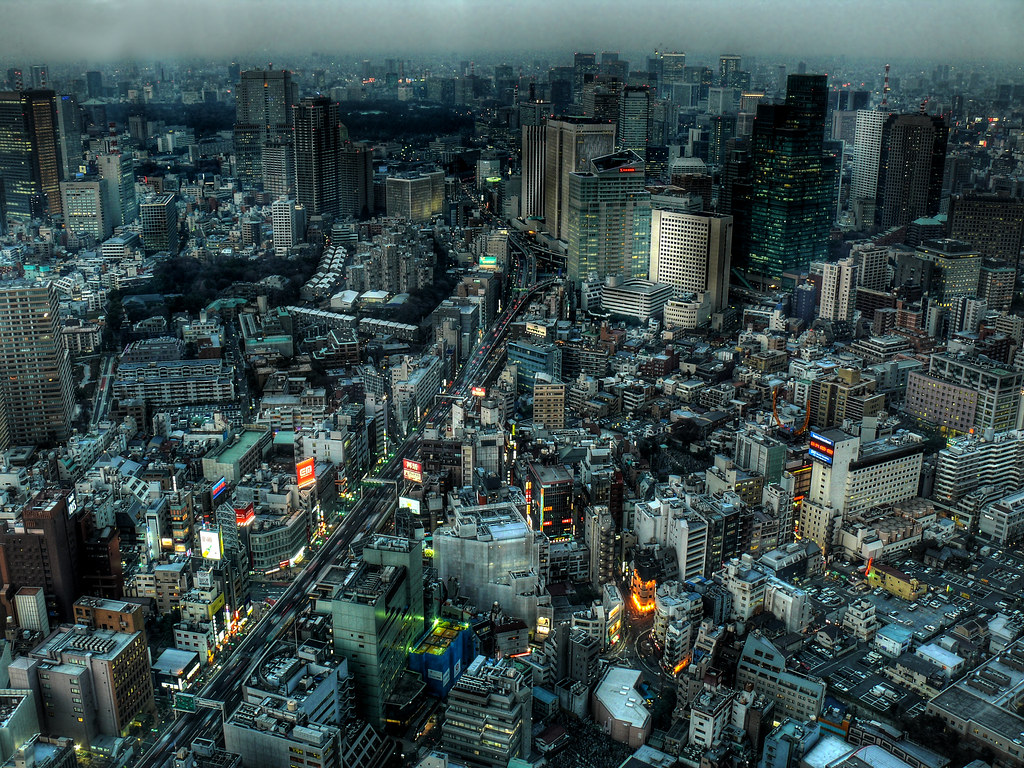
ITEM THREE: Airoots on the organic growth of outer Tokyo.

ITEM FOUR: Planetizen interviews Seattle neighborhoods guru Jim Diers, now sprinkling some urban pixie dust in Australia and New Zealand.

ITEM FIVE: Why do we travel? City of Faded Elegance on human curiosity.

ITEM SIX: WorldChanging examines the pressing need for a dramtic increase in green building practices between now and 2030.

ITEM SEVEN: Digital Urban maps the top 25 Web 2.0 companies -- 19 of which are located in the San Francisco-San Jose CSA.

Happy Friday, everyone!

Friday, October 19, 2007

WEEKEND READING: October 13-19

It has been a busy week in the blogosphere. That makes for a fat WR list!

ITEM ONE: Wikipedia's impressive list of urban squares ranked by area. This is the kind of thing that the internet was invented for.

ITEM TWO: A post at Line of Sight covering the delightfully wacky buildings of Argentine architect Francisco Salamone. (Photo credit)

ITEM THREE: BLDGBLOG's got a crush on Los Angeles...

ITEM FOUR: ...and over at Spacing Wire, an Angeleno has a crush on Toronto.

ITEM FIVE: Kazys Varnelis with an interesting take on the city vs. suburb debate.

ITEM SIX: Interesting post at IAdotO about Emotional Architecture (with the added bonus of a link to a free online version of the book The Emotion Machine).

ITEM SEVEN: Antonio Gaudi's got a Brazilian doppelgänger.

ITEM EIGHT: International Listings' take on the Top 100 Architecture blogs -- a good resource with lots of blogs both old and new. Where comes in at #100 thanks to good old-fashioned alphabetization. ;-)

Have a great weekend, everyone!

Wednesday, September 26, 2007

Empty Cities

Speaking of Singapore (as I was earlier today), the August/September 2007 issue of Polar Inertia features a series of photographs of momentarily abandoned commercial spaces taken throughout the island metropolis by Heman Chong. As the photographer explains: "The idea for this series is to document shops in shopping malls in Singapore at moments when they are completely empty. The eerie emptyness presented in the photos is a spectulative essay on the fantasy of walking through shopping malls and not encountering anyone. This photographs are taken without any prior consent from the owners or any kind of setup or planning. Considering the density of the city (4.5 million citizens on a really small island full of shopaholics), its practically an impossible feat at times."

The photos in "The Abandoned Singapore," as the set is titled, really do a wonderful job of capturing a very eerie, almost post-apocalyptic feel. After three or four pics, you start to feel uneasy...somewhere around ten or twelve, a shiver runs down your spine. By the time you reach the supermarket image above, you'll want to look out your window just to make sure that there are still people walking around; that you haven't woken up on a deserted planet.

That feeling reminded me of a post at Interactive Architecture dot Org that I read earlier today about digital architecture and "information pollution" (you would think there'd be a convenient portmanteau there...I've tried, though, and nothing quite rings true). The post made mention of the now near-legendary law passed at the beginning of this year in São Paulo which banned all advertising -- or what the mayor called "visual pollution" (much less interesting term, that) -- from the city's notoriously cluttered streetscape. IAdotO explained how "the city of approximately eleven million people, South America’s largest, awoke to find a ban on public advertising. Every billboard, every neon sign, every bus kiosk ad and even the Goodyear blimp were suddenly illegal."

I am thoroughly bemused with the way this event has been described in the media (where I'm guessing IAdotO picked up the language), as that is at least the fourth or fifth time I've seen the word "awoke" used in referrence to the day the law went into effect. Paulistanos were apparently came home after a night out celebrating the new year and were lulled to sleep by the buzzing of a thousand tubes of neon and argon, their rooms glowing dimly from the ambient light of a million backlit fiberglass logos filtering through the thin curtains...only to awake the next morning to find that the sinage had simply disappeared. Ad Rapture!! Millions of golden arches and blue half-torn movie tickets and silver apples snatched up into the clouds in a blast of white light, never to be seen again (or at least not until they land in a tech dump in Guiyu). É impossível!

My brain is wandering now, because it's late...but isn't that a fantastic image? I really do love it.

We end tonight with a more tangible image from another set from Polar Inertia; the zine has a compillation of photo collections from the LA/SoCal area, including a set from March of 2006 called "Oblivion." Photographer David Maisel depicts Los Angeles in unnerving inverted black and white. It gives the city a sort of desolate, alien appearance...and it's gorgeous. Maybe this is how LA was supposed to be viewed all along...


Links:
Polar Inertia
- The Abandoned Singapore
- Oblivion

MediaArchitecture - Media Urbanism (IAdotO) (Oh, do read this one! I sort of did it a disservice by pulling one tiny, irrelevant detail from a very solid post, so I am counterbalancing that by insisting that you follow this link).

Thursday, August 2, 2007

The Festival of Maps is Coming


"All maps are good, but they are all different."

Tonight's opening quote comes from Vladimiro Valerio, a Venitian historian, and was pulled from a fantastic little article over at the International Herald-Tribune on the politics of globe- and map-making. It serves, I think, as an excellent introduction to the first of a series of posts that will cover the upcoming Festival of Maps in Chicago.

The FoM is described on its website as "a citywide celebration of humanity's greatest discoveries and the maps that record our boldest explorations." Dozens of museums, galleries, universities, and other cultural institutions across the Chicagoland area will host special exhibits of maps from and of all periods and places. And Where is going to blog it all. Well...most of it, anyway.

Keep your eyes peeled in the coming months for the image at the top of this post, as it will mark all FoM-related posts. Things will get especially interesting in early November when the event officially kicks off, but a handfull of exhibits are jumping the gun and starting early. The earliest opened this past Tuesday at the Art Institute of Chicago.

The first of a two-part series (the second will begin near the end of September), the AI's exhibit is entitled "The Capital of the 19th Century: Paris in Maps." It's a small, no-frills collection of maps of the French capital at the height of its prominence (aka "the long nineteenth century") housed in eight glass cases in the museum's Ryerson Library. It's a simple, quiet start to what looks to be a very grand Festival...and that's about all there is to say.

If you go, don't miss the small exhibit on LA-based digital architecture troupe Xefirotarch, which runs through October 28th (all of the dates in this post are, of course, for 2007). Their daring, sinuous, and quite frankly frightening designs are some of the most innovative I've seen in years. Even if you don't like the architecture, you'll marvel at the fact that the models don't collapse.

That's all for now. Remember, keep an eye out for the Where/FoM logo in the future, and make your travel plans now...this is going to be the cartogeek party of the century.


Links:
In Mapmaking, Disputes Over Geography (via The Map Room)

Festival of Maps

The Capital of the 19th Century: Paris in Maps (Art Institute of Chicago)

Xefirotarch

Monday, June 25, 2007

Review: The City of the Future Exhibit


I mentioned in last week's edition of Weekend Reading that I'd be making my way down to the Museum of Science and Industry here in Chicago to see the City of the Future exhibit that displayed the winner (Chicago's own Urbanlab) and finalists from the History Channel's competition of the same name. Which I did.

I'm assuming, since this competition was centered around the US' three largest cities, that the exhibit will travel to New York and LA following its time at the MS&I (which ends on October 7th and features the finalist from each city and all of the Chicago entrants.) I have to rely on assumptions because it's next to impossible to find anything about the exhibit on the web -- it's not even mentioned on the museum's site, nor the History Channel-hosted site of the competition. While one might find such a lack of coverage to be a bit strange in an age of ubiquitous online publicity, I think that I have a pretty good idea as to why the exhibit is a bit quiet.

It is categorically awful.

I should start out by saying that I'm moderately idealistic about architecture- and planning-related exhibits, especially at publicly-funded museums like MS&I. I have this silly idea in my head that these exhibits should communicate the ideas they are intended to express in a way that can be comprehended by someone with absolutely no background in architecture or planning. I'm all caught up in the idea that museums are places for sparking dialog, for creating interest, for broadening horizons -- in other words, they're places of inspiration. I know, I know: how droll.

While the different competition entrants vary in the plausibility and originality of their ideas (checkered results are to be expected in a contest, after all, in order for there to be a winner) the true failure of this exhibit lies in its curatorial execution. The entry room plays a brief History Channel-produced video about the contest in which the people behind the finalists from all three cities (Urbanlab in Chicago, Eric Owen Moss in LA, and ARO in New York) talk about their proposals, and there is plenty of bland introductory text on the walls -- not to mention a few plugs for sponsors IBM and Infiniti. This setup fails to build much excitement (much less block noise from the corridor from flowing into the exhibit.)

Upon entering the main exhibit room just past the video kiosk, the visitor is greeted, to their right, by Garofalo Architects' competition entry. The model is a mildly interesting collection of images housed in plexiglass boxes, themselves organized into a skyline set in the familiar city grid. What this is supposed to represent, exactly, is lost to the casual museum-goer. The panel describing the entry is so vague that it could easily be mistaken for part of the generic ramblings in the antechamber. This, unfortunately, is more standard than stand-out. While Valerio DeWalt Train, Protostudio, and Dirk Denison Architects' proposals all wind up as focal points on the sheer strength of their creators' ability to communicate their ideas through their models and their own text, most of the other entrants fall short of accessibility due to an utter lack of adequate explanatory text. It is no secret that contemporary architecture favors the abstract when it comes to model-building; my annoyance with this fact aside, responsibility here fell to the curators to communicate the ideas behind the obtuse constructions on display. This was unfortunate.

The true mark of success for a public exhibit is the reaction of the people who are viewing it -- not in the sense of a positive reaction giving the subject merit or value, but in the sense of it provoking some kind of reaction, positive or negative. That being said, the general atmosphere at the City of the Future exhibit was that of confusion. The room was filled with people wandering about, utterly nonplussed. There were plenty of screaming children at the two tables of blocks that allowed the museum to deem the exhibit "interactive," but of the adults in the room I only heard a few speak. "So this is the city of the future, eh?" one asked. His partner responded, her disgust nearly palpable, "What is?"

This was easily the most disappointing aspect of the exhibit. Architecture and planning are both fields that are commonly viewed by the public as aloof and, often, as "the enemy." Planners scatter communities to replace beloved neighborhoods with stark and stale utopian visions. Architects are a major group within the artistic elite that cannot help but roll their eyes at the mere hint of a question about their brilliant design. These tropes, of course, are exaggerations (we hope.) Unfortunately, the opportunity provided by this exhibit for people within these fields to engage the public and generate excitement about the future has been totally lost. And that's a damn shame.

In the end, Urbanlab's proposal of a series of eco-boulevards that would "close Chicago's water loop" by allowing the city to recycle all of its wastewater was the clear and rightful winner of the competition. As was the case with Valerio DeWalt Train et al, Urbanlab's model and other visuals communicate enough about their ideas to actually be inspirational (though panels describing the winning concept again fall short of adding to the experience.) But in the murky sea of the City of the Future exhibit, this proposal looks even better by comparison. So while it does little to improve public opinion of or interest in planning, architecture, and the future of these fields, perhaps this exhibit is not, as I opined earlier, a total failure. Perhaps its accidental success is in its ability to highlight all the more brightly one truly brilliant concept.


Links:
The Museum of Science and Indusry

City of the Future (History Channel)

Weekend Reads (ArchitectureChicago Plus) (contains hard-to-find images of the Valerio DeWalt Train proposal.)

Urbanlab

Dispatches from a Post-Water Chicago (Pruned) (from whence I jacked the above image...I am not sure from whence they jacked it.)