Showing posts with label mexico city. Show all posts

Wednesday, May 6, 2009

Urban Afflictions. An Interview with Hilary Sample (Part Two)


Urban outbreaks: SARS 2003

Urban outbreaks: A/H1N1 2009

Following up on our interview with Hilary Sample on the subject of global health crises in urban contexts, we've moved from the backdrop of her research and the specific responses she's studied to a more speculative perspective on the issue. If you haven't read the first part, scroll down or click here.

Where: You've identified a combined research/corporate drive behind the Biomed City phenomenon (those of you who haven’t, go download and read Hilary’s short essay on the BMC here). Due to current political and economic events, we see a tendency towards a heavier and more direct government involvement (particularly in the U.S., but in other places as well) in the different areas that are the backdrop for BMCs: economic policy, health care and infrastructural development. Do you see this affecting the nature of the BMC? For the good or for the bad?

Hilary Sample: We can look to Singapore as an example of the government-driven development, specifically in the Biopolis project. The masterplan was designed by Zaha Hadid, which had an extensive landscape and programmatically included a lot of public functions, along with connection to the subway system-extending it into the Biopolis. Subsequently not much of the public components have been built, but the project continues to grow with frequent announcements of new corporations renting space. It is a private interest project supported by the government. Singapore’s government does not place any restrictions on scientists working with stem cells, and this is one factor driving the brain gain and science boom in Singapore. Interestingly, universities such as Johns Hopkins, which have space problems at their campus rent space in the Biopolis. In this case, we see branding of health taking on new structures.

In the United States, it seems difficult to think that the private sector would begin to support innovation in terms of adopting a clear social agenda with respect to urban health development, even though there are tremendous needs and opportunities to rethink the way our cities could function with respect to health. The current moment does seem like an opportunity for government action, not only in terms of providing access to a better health care system, but for a complete reframing of the idea of health, at least in this country.

I think this could be supported by both Federal and city governments and inspire private developments. In my opinion, we need radical change in the way health care is promoted and in the physical spaces in which treatments and care are given. I’m interested in how architects and designers can rethink the city as we know it and develop new systems and forms that are civic, not just expanding the existing hospital building by adding to it. The image of the hospital from what it used to be has become unrecognizable. Hospitals are often referred to as cities in their own right, but in my opinion, they take the worst situations from cities as their examples. We need new paradigms, especially with the super hospital being developed as a mega-scaled building.

Biopolis, Singapore

W: Another revealing aspect here is the geoeconomic breach one perceives between "prepared" and "unprepared" cities. With the exception of China, maybe, BMCs are apparently limited to developed countries. At the same time, the cities that are most vulnerable and more exposed to health threats of this nature are those in underdeveloped countries. What do you think?

HS: Largely, I believe this is true; we have a huge division between prepared and unprepared cities. But the idea that Third-World cities are always unprepared or that First-World cities are prepared isn’t always the case. The SARS outbreaks showed us this exact problem. For instance, Hanoi — one of the poorest and least developed cities in terms of urban health developments — actually had one of the best responses to the SARS epidemic. It was the first city to get a hold on the spread of the virus. They basically did this by isolating all SARS patients to two hospitals on the outskirts of the city. In Beijing we saw the construction of a hospital in 8 days.

I wouldn’t say it is a regional trend, but in this one instance it shows that at a local level spatial practices worked well. I don’t think we can say it is an either or situation. The SARS virus was identified through the collaboration between many scientists in many different countries. The virus itself spread quickly, but so did the effort of scientists to find an answer, which relied on a spatial network of laboratories and governing agencies. The spatial organization of both are extremely important.

W: Do you think a different version of the BMC could arise in cities that don't have the funds or the resources to build huge hospitals and research centers? Maybe one that opts for networked, flexible, mobile infrastructures that could be deployed whenever and wherever needed, including the poorer cities of the South?

HS: This has been the subject of a graduate research seminar I taught at Yale called Design and Disease. An amazing feature of our interconnected world is that we are learning more and more about situations of impoverishment, poor health, and the lack of establishing life-sustaining infrastructures.

In the seminar, the students made a kind of index of building types in cities around the world, looking at hospitals from Hong Kong to Soweto, pharmaceutical companies (Roche vs. Novartis in Zurich) and the performance of architecture.

One of the most surprising instances we learned about is in Soweto. The Bara Hospital sees more than 2000 patients a day, with a large population of AIDS/HIV patients. It claims to be the largest hospital in the world, but this is a hospital that has been built within an aging British Army barracks, and in the context of limited access to resources, including electricity. Here a complementary support system would be a good option to support what little infrastructure and physically working buildings there are. So maybe flexible and mobile structures are more economical or efficient when you have nothing better, but really what all cities need are both permanent and mobile health support.

New York City is an example that has both some of the leading hospitals in the world, but also significant mobile infrastructures, from asthma vans to PODS (points of dispensing systems in the event of an epidemic). It’s significant that cities with permanent, large-scale buildings also have equally and burgeoning mobile systems, suggesting that both are truly needed. But how can we make these decisions as designers? In my opinion, it all comes back to the practice of understanding how cities perform at the most detailed level, and examining the diseased city is essential. Mapping activities of urban disease is essential.

Baragwanath Hospital, Soweto, South Africa

W: This last outbreak in Mexico generated an enormous amount of activity on the Web: everything that we’re starting to grow used to now (real-time reporting on Twitter, constant updates on Google News and recommendations delivered directly from institutional web pages) but also some fascinating tools we really hadn’t seen before (I’m thinking of the Google Flu Trends project). Do you think we will see more alert systems, diagnostic means, protocols, open-source and web-based strategies in the future, or, we could say, a “smarter” response strategy?

HS: We see scientists working with a kind of virtual epidemiology, and they’re doing this more than any designer or spatial planner. For instance, I have a case in mind in which researchers studied a hypothetical outbreak of smallpox in Portland, Oregon, trying to identify social trends in an urban disease situation. The study included specific maps of the transportation infrastructure, and looked at how people moved in the city. This is an extraordinary spatial analysis that would be a powerful tool for architects, planners, and designers. Portland is a city that has made interesting urban decisions tied with how to better access its health-care infrastructure, including the Portland Aerial Tram designed by AGPS.

By comparison, there are actually very few studies or projects that I have seen looking at the contagious disease in cities by designers. I can think of two important works that shed light on the SARS outbreaks. The first is the “SARS Atlas” by Fabrizio Gallanti and Francisca Insulza published by Domus in 2004, which indexically mapped disease hot spots in cities. The other is Julie Rose’s essay in Log, a description of the urban spatial shifts that SARS produced in Hong Kong.

The spatial and social consequences of a disease reveal the performance of a given city. With the recent 2009A/H1N1 outbreak, just five years after the SARS outbreak, it seems likely that we are going to see more frequent events of this kind. In the end, if hospitals fail in an actual emergency, then suddenly subways are empty, people are in their cars or at their family’s house in the suburb, the city fails, the economy fails and it takes years to recover. The way we design our buildings and cities should be rethought to include social spaces that work.

W: This last question is probably more abstract (even emotional), but I think it's just as relevant in terms of spatial effects. I would like to discuss this recurring issue of fear, not only in terms of the outbreaks themselves, but regarding measures taken to deal with crises as well. You mentioned something about this regarding the resistance some of these public health projects have met in cities. It’s interesting to see how these developments might generate suspicion in themselves and cause a stir, like a high-security prison or a nuclear plant probably would.

There is also a whiff of mid-century paranoia about the whole situation, the fear of the looming dangers of density and the city core (you mentioned that many of the projects are built in secluded and distant locations). In Mexico City lots of people actually fled for cities nearby over the weekend when the crisis was announced. What do you think of all this?

HS: There is no question that fear, like the virus, is an epidemic. And it does seem like urban disasters are on the rise, Katrina, SARS, 9/11. There are patterns that we can now begin to study and understand, which would in turn affect the way we design both buildings and cities. In general there are two trends emerging regarding what we’ve been discussing here:

First, the building-up of the urban core with super hospitals and biosafety labs, new transit connections between these centers, and the location of research laboratories within the city rather in remote suburban parks. In the U.S. many developers in the sector are abandoning the model of suburban corporate park in favor of building in the city. Some cities have begun to build their own biosafety labs. Some of these laboratories test deadly viruses, like the Boston case we mentioned before. Ultimately, it winds up being housed in a non-descript building sited within a hospital district, but the surrounding neighborhood is considered to be a low-income area. This raised many questions at the time of its construction.

The second trend, which we see mostly in South East Asia, is the building of remote hospitals, far from the city core, with architectural renderings that show them surrounded by green spaces.

In the end, both of these urban strategies are driven by fear.

It isn’t surprising that people fled from Mexico City; this was the same reaction in Beijing during the SARS outbreaks. How people react to crisis is unpredictable, and so, at least for designers, it seems we can only study what has already occurred. Again, here I think that the most significant spatial studies are being developed by scientists or artists, not architects or planners.

In 2005, researchers Nina Fefferman and Eric Lofgren, examined the video game "World of Warcraft” and the introduction of a virtual virus within a controlled environment. The virtual virus quickly and unexpectedly corrupted the virtual world, and learned that there were many similarities between the virtual and real life scenarios.

Christain Nold, an artist, has been working on a bio-mapping project that tests emotional responses of individuals in urban contexts. These studies result in maps that give us a whole new geographic perspective of the city. What I appreciate about this study is that we see a range of emotional responses that correspond directly to the built environment. Again here there are lessons to be learned about the performance of our constructed environments.

Protest against biosafety lab, Boston

W: Thank you so much Hilary, it’s been great talking to you! I think we’ve covered a pretty good spectrum. Now let’s hope our Where readers out there have more to add to the discussion.


(Maps courtesy of Hilary Sample. Photo from Flickr users askpang, srippon, and steph ps. The original full-sized color version can be viewed by clicking the photo.)

Monday, May 4, 2009

Urban Afflictions. Global Health Crises in Metropolitan Contexts. An interview with Hilary Sample

Ice cream and influenza. Mexico City

The global crisis unleashed by the 2003 SARS outbreaks seemed all but forgotten in most parts of the world, until the threat of a global pandemic resurfaced in the media (old and new) only a few days after the appearance of a mysterious, unknown and presumably deadly virus in Mexico City. In a crazy turn of events, the megacity was practically shut down and brought to a standstill for days, with consequences that we are only beginning to come to terms with.

What have we learned from these massive public heath crises that are a product of our interconnected, now predominantly urban world? How are governments, institutions and organizations (at the local, national and global scales) reacting to these crises in terms of urban policies and design? We’ve asked Hilary Sample, Assistant Professor at the Yale University School of Architecture and partner of mos, to comment on these issues, taking her upcoming book, Sick City, as a point of departure.


Where: First of all, can you give us some insight on the subject of your book, Sick City? What exactly would you say is a "sick city", or a "healthy city" for that matter?

Hilary Sample: Sick City is a book project that began during the SARS outbreaks in 2003. I became interested in the sudden, urban shifts that took place as a result of the outbreaks while I was living and teaching in Toronto, and examining the post-event effects. The book is not only about SARS, it starts with SARS as the first major global health crisis event in the 21st century, but also focuses on other urban crises; looking at the problems and solutions that result from contagious disease situations or threats, from hurricane Katrina to AIDS. Essentially, I was interested in the unpredictable events that were not malevolent causes, and the urban remedies.

The SARS outbreaks became true public crises in March 2003, within weeks, if not days, of the start of the Iraq War. The media focus in North America was practically concentrated on the war up until the SARS outbreaks, which became a focal point of news coverage in Canada, and it seemed to me that this divide between terror and disease was significant in its own right. Each would have (and has had) a great effect in terms of socioeconomics, health and urbanism. It was interesting to see the difference between the U.S.’s concern regarding terrorism and Canada’s concerns about the spread of SARS. There is no question that war is so devastating because of its physical consequences, I think, but in the moment, disease outbreaks are no less significant, though the aftermath is usually subtler and as a result seems less significant. Still, the consequences of a disease like SARS have had major urban effects, such as the development of the Biomed City (we get into this further on in the interview).

In the terms of the book, a sick city is one that has undergone an unexpected change as a result of disease; a city whose life-sustaining infrastructures have been affected beyond their intended performance. The book also looks at the governance of world health, the agencies and foundations doing this work and the development of the health headquarter building, a new typology that emerged in the twentieth century, which defines the way worldwide health is organized. (An early paradigm is Le Corbusier’s Ministry of Health and Education building, in Rio de Janeiro.) Sick City looks at building types associated with health and examines their performance. It’s a kind of loop, looking at the sick city, its sick buildings and the organizations that renew and restore the city, and then looking at buildings that are meant to facilitate urban health.

Reforma Avenue. One of the main (usually crowded) throughfares in Mexico City.

W: What is your reaction to the current 2009 A/H1N1 flu affair? Where do you see our cities standing compared to the first SARS outbreak in terms of being prepared (or not) for this kind of public health crises?

HS: Disease is unpredictable, but there are social and spatial patterns that emerged with SARS and are emerging again now: school closings, hospitals restricting access to only the sick or even designating parts or entire hospitals for the infected, scanning at the airport. The big question will be how these events are handled and what they look like.

With SARS, everything happened so fast that hospitals, for example, were closed or cordoned-off, wrapped in yellow tape, limiting entrances, looking more like a crime scene than a hospital. These instances caused more fear and panic than were probably necessary; keeping individuals from going out in public, from doing normal activities like eating out or taking public transportation. This fear and resistance to going out in public has significant economic impacts on a city. Compounded with a weak global economy, this will raise new challenges to the operation of public health facilities. In the U.S. and Canada, there has been a great push to build new research space in cities for the purpose of identifying contagious diseases to pollutants.

Super Hospital. Birmingham, U.K.

W: Can you give us some examples of how these global health crises are changing our cities in terms of urban design and infrastructures? I imagine that certain building types (hospitals, quite obviously) would be almost immediately affected.

HS: The hospital is our most contested urban building type today. Unlike any other building type within the last fifteen years, hospitals have been the site of significant urban trauma, form war or terrorist targeting, to takeovers and quarantines. At the time of the SARS epidemic, the hospital was the place where most of transmissions of the disease occurred, as the virus often spread to health care workers, other patients and visitors. In the aftermath of Katrina, in New Orleans or Galveston, many hospitals closed and remain closed.

At the same time, we see different types of hospitals on the horizon, a new breed of “super hospitals”.

We see this idea of the super hospital establishing itself in the U.K., and plans are under way for this type of development in Montreal. There is a project under construction in New York City, the East River Science Park (ERSP), which is really anything but a park. It is a research institution that is being built adjacent to one of New York City’s most celebrated hospitals, Bellevue Hospital. Unlike its counterpart in Toronto, the ERSP has little space dedicated to the public. Toronto’s MaRS project, an addition to the original 1913 Toronto General Hospital building, includes a public atrium which links into the rest of Toronto underground system, a public auditorium, and even a food court. The hospital became too costly to repair for use as a hospital, and now has been renovated and added to for office and lab space. It really acts as a place for meeting in the city.

Even though both projects are being built by the same developer (not coincidentally) they are fundamentally different: MaRS promotes an exchange between the public and the user, where ERSP has strict entry controls and checks. Here we see the difference in mindset between the US and Canada, one city affected by 9/11 and the other by SARS. One would expect the opposite kind of spatial response — a prophylactic situation emerging where germs had been spread — but in fact Toronto’s MaRs development has public spaces and links to both the Toronto General Hospital and the Toronto underground system and subway.

SARS: Yesterday's news?

W: At an even larger scale, another extremely interesting concept in Sick City is the idea of the “Biomed City” you mentioned earlier. What exactly is a BMC? Does it actually exist somewhere, or is it only hypothetical?

HS: In the book, we see the BMC as a 21st-century urban paradigm emerging from New York, to Toronto, to Singapore. The term has been adopted by various cities, where certain areas — and in some cases entire cities — are adopting this “brand”, placing an emphasis on health and its industries as the new economic driver of the city. One interesting thing to note is that in cities less prosperous, such as Buffalo, New York, the health-care industry is now the largest employer in the city.

In response to the SARS epidemic, Toronto reworked its most visible hospital and introduced the program of rentable office and laboratory spaces dedicated to health research in the downtown urban core. Typically, this kind of work space was only seen in suburban corporate parks. With BMC strategies, we see unlimited configurations of health and work spaces converging.

In Toronto, there has been an all-out effort to build civic buildings at that heart of the city and the U of T, both of which converge at one corner of the city, with new buildings largely built of glass, emphasizing a literal transparency, housing new spaces for health research. There were three reports written after SARS in Toronto, all of which cite a lack of transparency in the health system. Certainly building transparent buildings doesn’t indicate that a city will be better prepared, but it does demonstrate that research related to health is no longer being done in opaque and distant locations.

The sites of these outbreaks are typically the city centers: this is where the capacity for care, research and a quick response is needed. New York, Toronto, Rotterdam, Beijing and Boston, among others, have all built their own biosafety laboratories, which means they don’t need to rely on sending disease samples to national labs and wait for a response. These tests can be performed in the heart of the city. The development of these labs — some of which house lethal viruses — has been strongly contested, particularly in Boston.

W: It’s really interesting to see how all of these factors you mention have resurged in the Mexico City outbreak: problems with lack of transparency and coordination, as well as the issue of immediacy and speed (since Mexico did not have the capacity to identify the new strain, it had to send samples of the virus to Canada and the U.S. before it could be properly detected, delaying the response for days).

HS: This reflects the importance of establishing critical life-sustaining infrastructures (hospitals, research laboratories and mobile care) that should all be available in any urban environment. After the SARS outbreaks, the cities that thought they were the most “prepared” in almost every case found short comings. Many of these cities had major plans on the drawing board, but I have no doubt that in the aftermath of SARS gave them an even stronger and urgent reason to update the city. I don’t think this suggests that we should adopt an emergency urbanism attitude towards designing in the city, it would not be practical to design for full-blown pandemics, but as we’ve seen in the trend of medicine to look to prevention, design can facilitate new methods of spatial organization. I think this is particularly true at the site of the hospital, and the way the general hospital and specialized hospitals are organized in the city today.

Riding the subway in Mexico City

W: We’ll keep discussing these and other issues (including government involvement, networked responses, flexible infrastructures, and the gap between prepared and unprepared cities) in the second part of this interview. Stay tuned. In the meantime, you can download a PDF version of "The Biomed City" from the Actar blog.


(Photos from Flickr users amegally, pvcg, seth trotman, zverina.com and eneas. The original full-sized color version can be viewed by clicking the photo.)

Sunday, April 13, 2008

And the Winner is...

"As a way of improving safety and bridging the gap between the city core and the bulging periphery, the city has launched a Defense of Modern Ruins program, stringing together blighted sights that range from industrial sights to downtrodden art-déco buildings to bureaucratic baroque whales. The program includes low-rent housing schemes, urban wilderness tours and itinerant party circuits."

Congratulations to H.B., whose entry in the Blogedanken contest recieved almost a full 50% of the public vote.

Many thanks to all of the participants for making this a fun impromptu blog-event. Note to the winner: shoot me an email and your copy of Hyperborder will be in the mail.

Tuesday, April 1, 2008

Blogedanken Public Poll

Here are my favorite entries from each of the six Blogedanken participants who submitted full responses. Take a quick read-through, pick the one you think is the most interesting, and vote in the public poll at the bottom of the post. One-two-three, and by April 10th we'll have a winner! That person will then recieve a copy of Hyperborder, courtesy of PA Press.

Patrixbanx
(Portland, Maine, USA)
It sure would be nice to have a suburban commuter rail network in southern Maine. It would be even nicer if the commuter rail stations weren’t sited in the middle of vast parking lots, especially closer to the urban core. So why not allow development to cluster around those stops, like say Morrill’s Corner? And by development, I mean dense development. We’ll need to reform our zoning to encourage such growth, of course – not just by creating incentives for density but by creating disincentives for sprawl as well. Oh, and remember – this is Maine, a land that get’s pretty damn cold over the course of our long winters, and global warming hasn’t turned us into South Carolina just yet. Yet I hear tell of other cities even further north that are colder and get more snow than us, yet still manage to have a vibrant street life even in depressing old February. We gots to have that. I don’t know how exactly but if we’re going to discourage driving so we can have more walkable and transit oriented neighborhoods, we might as well make the streets of Portland a pleasant place to be in the depths of winter – bike and pedestrian friendly snow clearance, warm transit shelters, fun festivals, whatever it takes.

Medea
(Medellin, Colombia)
24 hour public transportation makes shifts easier to stagger, so bus drivers are not competing with each other in hazardous maneuvers. Every bus and taxi driver will receive mandatory drivers ed and courses on politeness and good manners. If they are rude or customers complain, their punishment won´t be a fine, but they´ll have to do public service hours cleaning the riverbanks.

M.B.
(Mexico City, DF, Mexico)
As a way of improving safety and bridging the gap between the city core and the bulging periphery, the city has launched a Defense of Modern Ruins program, stringing together blighted sights that range from industrial sights to downtrodden art-déco buildings to bureaucratic baroque whales. The program includes low-rent housing schemes, urban wilderness tours and itinerant party circuits.

T H Rive
(Victoria, BC, Canada)
Wireless capable crosswalks.
Edit: *apologies for the absolute shortness of mine. explanation: The crosswalk I was requesting was the ones that go green on ALL sides so that diagonal crossing is validated. It's quicker. The wireless part was more outdoor, cafe oriented Etc green wireless spaces. The result of the mixup?>> Wireless Crosswalks. Still a good idea. (4/1/08 5:38 PM)

Dan Lorentz
(Lexington, Kentucky, USA)
Organize a strong city-wide neighborhood group to promote mixed-use planning that supports street-level vitality, and make the first priority of that group the reweaving of the city's street web to create more corners for mixed-use development.

Petersigrist
(Cambridge, England, UK)
Hovering leisure boats with transparent roofs and floors, which hover about twenty feet in the air and provide lifts around town above underwater gardens with glass walls at street level as well as terraces, balconies, shops, and restaurants that open onto the streets and river


Remember: vote or die! (Hah. Always wanted to use that in context).

Monday, February 18, 2008

The Endless City Q&A

After a tiny bit of prodding, the folks at Phaidon sent over a review copy of the recently released book The Endless City, edited by Ricky Burdett and Deyan Sudjic, and containing essays by the likes of Saskia Sassen, Enrique Peñalosa, and the indefatigable Rem Koolhaas. Where will feature a review of the book soon, but first, another treat from Phaidon; the editors were asked a series of questions. The following is a selection of the highlights from the record of this Q&A.

What are the main issues that you think people should be concerned about when it comes to city growth?
The book has a section titled ‘Issues’ that we hope synthesizes the complexities of urban growth. In it, a number of the contributors outline key issues but approach them from a variety of viewpoints. For example, Richard Sennett argues that ‘over determination’ can kill the vitality and growth of urban centers. Cities need to be dynamic and its physical forms and functions need to be endowed with the capacity to respond to indeterminate, unpredictable forces. Frank Duffy applies a similar idea when explaining the urban office, so ‘adaptability’ is the central issue they both cover. Another issue the book clearly prioritizes is sustainable development. The contributions from Guy Battle and Nicky Gavron, along with the Knoflacher, Rode and Tiwari essay, all detail urban growth strategies that respond to the environment and the challenges of climate change. Another central issue summarized by the three essays by Gerald Frug, Enrique Penalosa and Geetam Tiwari is governance and civic participation – cities need to allow for a multiplicity of voices and actors as well as a variety of experiences but there needs to be an agent or authority that can intelligently negotiate this multiplicity and still get something done. Tiwari explains this with particular reference to the forces dominating the informal sector. Both Anne Power and Sophie Body-Gendrot elaborate on this as well as some of the other pressing sociological concerns that urban designers, policymakers and the general public confront in the act of city making. Of course it goes without saying that quality design is the ingredient that delivers a truly remarkable city and allows individual places to flourish. The essays by architects Rem Koolhaas, Alejandro Zaera-Polo, and Jacques Herzog and Pierre de Meuron all contribute various reflections about how to reconcile a variety of factors and perspectives enmeshed within the city’s physical reality. It should be noted that many of the essays in the Cities section resonate with the broader themes in the Issues section as well. The result is a cross-sectional analysis between the six cities [New York, London, Shanghai, Johannesburg, Mexico City, and Berlin] and the global world with issues finitely referenced to specific urban conditions.

What world cities do you expect to go through the greatest changes in the 21st century?
The fastest growing cities are in Africa and across Asia and its up to the next generation to make sure their development does not repeat the mistakes of cities in the developed world – this means Lagos and Kinshasa, Mumbai, Deli and Dhaka, as well as Shanghai and Jakarta. It is projected that by 2030, over 4 out of every 5 urban dwellers will be in the developing world so this will have huge implications for the global economy. At the same time, mature cities such as London and New York City, Berlin and Mexico City need to ensure that their future growth reconciles their layered history of planning mistakes and prioritizes sustainable transport and inclusive, contained growth.

The book talks about the importance of cities learning from each other. Can you explain that? For example, what can NYC learn from Shanghai? Can small cities learn from big cities?
There are countless examples of cities looking to other cities when deciding how to invest in their future growth and health. Congestion charging in NYC wouldn’t be a viable option had London not demonstrated how it could be done, and Mexico City’s Metrobús is a stunning success modeled on the Transmilenio in Bogota and of course Curitiba. Ideas must be partnered with implementation strategies and learning often is a matter of scale. So yes, small cities can learn from big, and vice versa. The essay by Knoflacher, Rode and Tiwari describes how small cities can serve as incubators for innovation precisely because of their scale. Understanding how cities implement large projects such as the Olympics in London, doing it with the right amount of investment in public space, has a lot to do with acknowledging how the city and individual neighborhoods have developed over time and how open space serves to socially integrate people from disparate backgrounds. The contributions of both Saskia Sassen and Enrique Peñalosa emphasizes this learning, especially in the latter how urban centers in developed countries are recovering from their love affair with the car, delimiting the access of automobiles in favor of public transport. Cities in developing countries could learn a lot from this. Most importantly, in order for ideas to transfer from one city to another, there needs to be a complementary understanding about how policies, decision making and funding align to facilitate implementation. Frug’s essay explains how the power structures of the six cities vary and what impact permutations to each city’s existing systems could have on local and regional planning mechanisms.

What are the key ideas that you want people to take away from reading this book?
The 34 contributors to the book – along with the hundreds of policymakers, politicians, academics, architects, planners, and urbanists involved with the Urban Age project which forms the basis for The Endless City – all believe that cities can offer a better social and economic life for its citizens. Now that half the world’s population live in cities, there is an urgent need to take stock of the new urban condition and find an approach to dealing with it. City sprawl should be contained and there are innovative strategies for creating high density, highly liveable environments. We want to help those charged with running and making cities understand the relationship between the socio-economic and spatial characteristics of cities – and we want the general public to understand how sustainable urban development can actually improve the physical form of their cities and the quality of their lives.

Are you hopeful for the future when it comes to our cities?
Enrique Peñalosa, the former mayor of Bogotá, offers an incredible explanation for why we should all be hopeful for the future of cities. Cities offer the potential for ‘quality of life equality’, i.e. access to green, open space and social and economic mobility as well as physical mobility. Across the world, people are moving into cities at an alarming rate – and not just mega-cities but smaller cities comprising an overall urbanized region. Most importantly, the twenty-first century will be increasingly focused on reducing both the overall sum and per capita production of carbon emissions, and as emitters of 75 per cent of the world’s pollution, cities are the battleground on which the future and health of our planet will be determined.

Is there any way for ordinary people to make change in their own cities? Do you have any recommendations for someone who wants to get involved?
Ordinary people make change in their city everyday. They do this by opting for public transport instead of a private car, by holding their government officials responsible for the quality of the built environment, and by advocating for equal access to green, open space. Ensuring that there is investment in sustainable forms of transport, and that access to healthcare, education and community services does not depend on how much money you make or the wealth of your locality. Most importantly, if you don’t know what your community is doing locally to advocate sustainable urban development, then join a forum and find out. Participate.

(Thanks, Faye!)

(Photo from Flickr users thequickbrownfoxjumpsoverthelazydog and howzey. The original full-color versions can be viewed by clicking the respective photos.)

Friday, August 24, 2007

WEEKEND READING: August 18-24, 2007

It seems like things are really hit-or-miss on the online urbanism media circuit. Some weeks are golden, and others about as interesting as watching paint dry. Luckily, this week was definitely the former.

ITEM ONE: Airoots has a great story on a pretty unconventional "artist village" development in Mumbai. (Photo at right)

ITEM TWO: Some great observations from The Economist on the past and present of one of the world's most fascinating cities, Beijing.

ITEM THREE: Want a unique way to tell your neighborhood's story? Life Without Buildings has found a fun example of how to do so...

ITEM FOUR: Want some geopolitics and developing world perspective with your architecture and urbanism? Check out Candyland, a blog from a former resident of Mexico City now living in Barcelona.

ITEM FIVE: Over at Plasticbag, one of the most interesting posts I've read on place branding.

ITEM SIX: Bill Fulton of the CPDR has no patience for Joel Kotkin. (Right on!)

ITEM SEVEN: New -- and pretty jarring -- info on the relationship between homeownership and economic success via CEOs for Cities.

ITEM EIGHT: Spacing Wire's post about psychadelic radio programs, urban soundtracks, and aimless Sunday strolls. (Conversation starter: What's the soundtrack to your city?)

So in a week overflowing with good stuff, this blogger would strongly recommend all of the above. But if you just have time to read one, make it either Item One or Item Five. And have a great weekend!

Thursday, August 16, 2007

WEEKEND READING: August 11-17, 2007

This edition of Weekend Reading is all sorts of random. It's like urbanism salad!

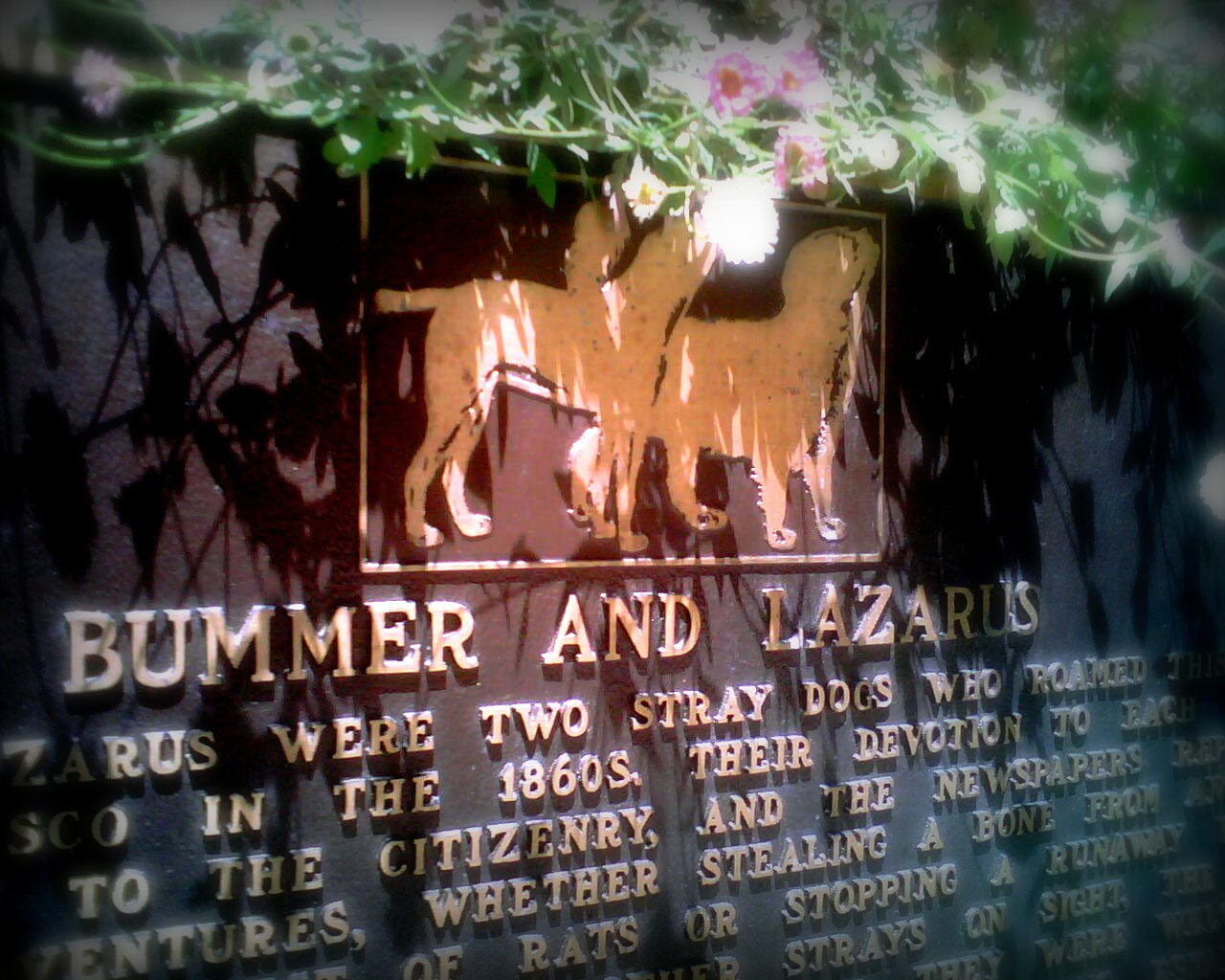
ITEM ONE: The story of Bummer and Lazarus, San Francisco's most famous pooches.

ITEM TWO: The "informal settlement"-watching blog Squatter City, written by the author of Shadow Cities.

ITEM THREE: Mexico City's mayor tries to push vendors off of the streets, but meets opposition from "a 63-year-old ex-con and great-grandmother."

ITEM FOUR: More radio hijinx from BLDGBLOG and DJ/rupture.

ITEM FIVE: The Washington Post asks "can globalization for for the world's slums?"

ITEM SIX: Will South America's first eco-city be built in rising-star Bogotá? Chances are good.

ITEM SEVEN: More from Colombia, where the previously mentioned HiperBarrio project continues to improve the city. For more on that resurgent city, click here.

See? Urbanism salad. Just like I promised. Check back over the weekend, as more of the Neighbor's Manifesto will be posted.

(Photo from Flickr user Dunstan Orchard.)

Friday, August 3, 2007

WEEKEND READING: July 28-August 3, 2007


Ok, so...I have, like, somewhere in the neighborhood of 20 articles in my Google Reader that are basically doomsday predictions for American infrastructure. None of them will be linked to in Weekend Reading. Short list, though...

ITEM ONE: A great piece on Xanadu in the Middle East and the American dust bowl. How are they connected? Oh, just follow the link and you'll see...

ITEM TWO: Planetizen Interchange features a great post from Ali Modarres about the severe abuse of the word "community" in contemporary planning and architecture.

ITEM THREE: The world is shrinking, y'all. Or it's going to soon, anyway.

ITEM FOUR: There are two great articles on superurbanist Charles Landry in the news this week.

ITEM FOUR AND A HALF: Here's the other one.

ITEM FIVE: Mexico City joins the list of Latin American cities (Curitiba, Bogotá, Medellin) aiming to re-define the image of urbanism in that region. (via CEOs for Cities)

ITEM SIX: Newsweek's feature story says everything I've ever thought about Dubai. Only it's about Abu Dhabi. Go figure.

ITEM SEVEN: Finally -- and this isn't really related to urbanism -- the FCC has proven, once again, that it's clueless. Or well-bribed. Either way, it's disgusting and disappointing.

That is all. Have a great weekend!

(Photo from Flickr user James_Ting.)