Showing posts with label disaster. Show all posts

Monday, April 27, 2009

Black Swans and Redundant Cities


Swine flu: legitimate global emergency or 24-hour Internet culture’s flavor of the weekend? Regardless, the story suggests that it’s getting easier and easier to view cities through the lens of risk and disaster preparedness. The past decade’s biggest news events—Hurrican Katrina and 9/11—both revealed key weaknesses in our most beloved cities’ infrastructure. Furthermore, Where has recently examined the nature of urban disasters and the importance of mitigating their impacts, along with the need to guarantee the provision of urban food and housing.

Cities and the people who inhabit them are inherently vulnerable. Urban environments depend on the basic means of survival—food and other resources—coming in from their hinterlands, while large populations living close together amplify the impacts of natural and manmade disasters (as Peter pointed out).

Faced with these risks, cities need to be more redundant. That is, critical urban systems like transportation and public health must become as reliable as possible by depending on more than one component. If one road goes out in an earthquake, there should be alternate routes. If one levee breaks, there should be multiple backups to protect a city from flooding. If a primary water source becomes contaminated, an alternate source should be ready to start pumping. In many cases, cities already achieve this. Modern road networks, for example, are among the most redundant systems in existence.

Redundancy is widely considered necessary in certain fields, like civil engineering, but it’s shockingly neglected in others that are equally vital. Nassim Nicholas Taleb has recently blamed the financial system’s meltdown on a lack of redundancy—everything depended on rising home prices and easy credit, and when those fell short of expectations the failure cascaded throughout the economy. There was no backup plan.

Taleb’s best-known metaphor is the Black Swan (also the title of his last book). Black Swans, Taleb writes, are fundamentally unpredictable based on past events but have potentially huge impacts. 9/11 may have been the quintessential Black Swan—it could not have been more catastrophic, and lacked any precedent that might have facilitated preparedness. Our civilization can best prepare for the Black Swan, Taleb says, by grasping our limited ability to predict and by making decisions that account for the unknown.

For the urbanist, this means building and maintaining resilient and redundant cities. It may have been impossible to predict the exact circumstances that caused New Orleans to flood. It’s not impossible, however, for urban citizens, communities and city officials to understand the vulnerabilities particular to their own city and to build a more resilient urban environment on the basis of that understanding.


(Photo from Flickr user mariemassacre.)

Friday, April 10, 2009

Response to Disaster

Monday's earthquake in central Italy brought disaster back to the forefront of international attention. Disasters take many forms, but are related in their unpredictable and severely disruptive effects. What does the threat of disaster mean for cities?

In many ways, urbanization increases our vulnerability to large-scale disaster. It multiplies damages associated with contagious disease, violent conflict, extreme poverty, environmental harzard, and loss of cultural heritage. As settlements become more concentrated in fewer places, threats to these places pose greater risk to stability at national and international levels.

Photo of people in front of the Taj Mahal Hotel in Mumbai after the terrorist attacks of November 30, 2008At the same time, cities hold advantages for disaster prevention and recovery. In comparison with rural areas, they are more connected to global support and information networks. Public services, while not always dependable, offer some protection against the most devastating effects of disasters. Cities are also repositories of knowledge and resources that can be applied towards reducing vulnerabilities. Urban disasters don't always bring chaos, and can even inspire a sense of shared purpose, as evident in the resilience of Mumbai's population after the terrorist attacks last November.

Cities can prepare to mitigate disaster through coordinated governance and policy. Less concentrated settlements are worth considering, though population distribution isn't something to be forced. In most cases, I think we're better off strengthening the places where people choose to live. As the world's urban population grows rapidly, managing the threat of disaster to cities will be increasingly important for development and stability.

(Photo of a damaged house in Castelnuovo, Italy from Komonews.com; Photo of people in front of the Taj Mahal Hotel in Mumbai from Chinaview.cn)

Monday, December 15, 2008

Best We Can

Nothing gets people talking like a shared grievance. Misery, as everyone knows, loves company, and anyone who has ever been laid off or evicted, or even had to cut back on groceries has found quick solace in the similar complaints of their friends and neighbors. Stories of the run-down neighborhood that rose from the ashes when residents banded together to fight crime, or repair abandoned homes for resale, or convert empty lots into gardens are far from uncommon. Indeed, the hard-knock neighborhood lifting itself up through a communal sharing of the burden is an archetype of urban development.

There's a lot to be worried about these days. There's a lot to complain about. But we can believe that things are going to get better; in fact, it's doubtful that they can until we do.

The Project for Public Spaces published an article on their most recent newsletter entitled How Your Community Can Thrive-- Even in Tough Times, that made the blunt but wisely-worded case that cities, now more than ever, have to use what they've got. As financial markets collapse and leave perpetually cash-strapped city governments scraping by or knee-deep in red ink, expensive programs, high-profile redevelopments, and frivolous policies can no longer be relied upon to distract any attention from the most deeply-seated problems that face their communities. "What They've Got," for cities, is suddenly much less than it was.

Jonah Lehrer, speaking recently about the late Studs Terkel's book Hard Times, made this important point: "While a depression or steep recession is a terrible thing, it does lead to a few less Rolexes. And if the Terkel interviews are any indication, it was that diminished sense of disparity - the fact that everyone was going without - that made the time bearable." One thing that cities have got, today, is an economic mess on their hands; luckily, just about anything can be seen as an opportunity in the right light, and Lehrer's comments suggest a critical urban asset that should not be overlooked in these hard times: shared struggle.

A note to all those people who have been worrying about the collapse of traditional community structure in urban neighborhoods: now is your chance to change the course. It is somewhat rare that an economic crisis hits so hard that even the relatively wealthy are genuinely hurting; at the risk of sounding overly opportunistic, it is the depth of this recession that could provide a rare chance to get neighbors talking to neighbors, and sharing the burden of hard times in the community. As stated at the outset of this post, nothing gets people talking like a shared grievance. If awkwardness or ignorance have ever been reasons for avoiding a chat with the folks next door or down the hall, everyone now has something to talk about, to share, and to help each other with.

The effect that the current crash (we can call it that, right?) is having on our economic system will undoubtedly be extreme. The fundamental building blocks of our society will change, whether we like it or not. But if you're smart, you'll make what you can of hard times, and get to know what's going on in the lives of the people around you. When something shatters The Way Things Work like we're seeing them shattered today, there are small but invaluable shards of opportunity scattered all around. To some, it might look like a mess; to the wise, it is the start of a newer Way that will be stronger than what came before it.

(Photos from Wooster Collective and Flickr user Scott Haefner. The original full-sized color version can be viewed by clicking the photo.)

Monday, September 15, 2008

A Letter to Barack

Dear Senator Obama;

Of America's four largest cities, Houston and Chicago are partially underwater, and New York's financial heart is having a coronary. Los Angeles seems to be in the best shape right now, and when you can say that, you know that we have a very, very serious situation on our hands.

Meanwhile, Senator McCain and his moose nugget continue to their banshee screeching about your lipstick on a pig comment in an effort to move the election further and further into their party's most familiar territory: the character assassination campaign.

For over a year and a half, you have promised us a different campaign. You have promised us that you would rise above the pettiness and catscratching that usually passes for political discourse in this country. You gave us your word that, this time, things were going to change. You practically trademarked the word.

Senator Obama, the idea that Americans don't want to hear about actual issues, that the last thing they want to hear is policy talk -- this is the most insidious lie that has been told. True, there are those in both camps that would follow their party out of a plane in flight without a parachute. They are of little concern.

You can run the same campaign that we have seen time and time again. You can continue to get caught up in the scuffle that the GOP is so desperate to get you caught up in. When they will launch an attack ad that oh-so-coyly (tee hee, tee hee) suggests that you just might be a pedophile, what line is left for them to cross?

There is no winning, here, sir. The deeper you get into their fight, the less energized your base will be. The more of us young, tech-savvy folks who launched you past Senator Clinton into the position where you now sit will feel duped, cheated, and used.

Our greatest cities are on their knees. What will you do, Senator, to rectify the situation on Wall Street? In the plainest of terms (because no one loves wonk but a wonkette), tell us what happened, and how you intend to address it if you are elected. What can be done for Houston and Chicago, and other waterfront cities, to protect them in the future? Yes, the current relief efforts are important, but what will you do, specifically, to address the problems that are creating these increasingly dangerous storm systems that travel further inland each year?

Senator Obama, you are at a crossroads, and the current polling information has little good to say about the way that you've responded to Senator McCain's attacks thus far. If you cannot live up to your promise of change on the campaign trail, you have little hope of winning this election, because it speaks very poorly of your ability to affect change once you are in office.

We are still holding our breath. Change the conversation.

Monday, August 4, 2008

A bit of color...

Tonight's storm in Chicago:


And, oh god...Tokyo is on Google Street Views...


Thursday, July 24, 2008

The Worst Cities...?

While Monocle and Forbes and everyone else in the mainstream media argues about what cities are the best to live in, Where was recently introduced to a site that's coming at urbanism from a slightly different perspective. Worst-City.com is home to what appears to be an entirely subjective (and often absurd) list of the sixty worst cities to live in on the face of the earth. The intro paints a pretty accurate picture of what to expect from the rest of the site:

"The world is very, very, very big. There are some wonderful places on its surface. Fabulous sun-kissed beaches with miles of golden sands. Wonderful mountains with crystal steams cascading down into tropical paradises. There are also some horrendous cities populated by a subculture of thugs and gangsters. Sadly this website is about the latter locations. Here you will discover some of the most vile and violent places to leave. So read on and be prepared to be shocked."

The list ranges from the obvious (Chernobyl, Brazzaville, Baghdad) to the completely befuddling (Paris, Seattle, Barcelona), and takes a whack at everything from Milwaukee to Bangkok in between. The site is filled with bons mots like "When it was built most Parisians hated the Eiffel Tour - that's why they named it Eiffel - means Awful in French!" and is entertaining as long as it's read with several large grains of salt and a hefty suspension of disbelief. All in all, it's a mind-bending international adventure that's worth a lazy afternoon.

Enjoy the ride...

Friday, December 28, 2007

WEEKEND READING: December 21-28, 2007

Check back on Monday for a round-up of the past year's most interesting Weekend Reading Items. But for now, check out the current crop:

ITEM ONE: WorldChanging on the importance of voluntary simplicity. The article is not directly about cities, but the ideas that it presents are certainly integral to the reimagining of cities as sustainable places.

ITEM TWO: AHI's blog examines a decidedly different vision for the city of the future.

ITEM THREE: Jay Walljasper's new blog, The Ecopolitan, kicks off at National Geographic's site.

ITEM FOUR: TNAC on The Independent's recent list that names London as the current World Capital.

ITEM FIVE: GPS message-in-a-bottle locative art. Pretty cool stuff.

ITEM SIX: The City Room on Hollywood's fascination with the destruction of New York, which Ed Koch cheekily refers to as "edifice envy."

ITEM SEVEN: Lots of dreamy, really wonderful images of the UK over at BLDGBLOG - like the one pictured above.

Have a wonderful weekend, everyone!

Friday, November 2, 2007

WEEKEND READING: October 27-November 2, 2007

Colin will be taking over this feature next week...many thanks to him in advance. I'll be busy, novelling away until December.

ITEM ONE: City of Sound on Dresden, Los Angeles, and destructive urban systems. (Photo credit)

ITEM TWO: A great article from the NY Times City Room discussing society's inept politicization of Jane Jacobs.

ITEM THREE: Airoots on the organic growth of outer Tokyo.

ITEM FOUR: Planetizen interviews Seattle neighborhoods guru Jim Diers, now sprinkling some urban pixie dust in Australia and New Zealand.

ITEM FIVE: Why do we travel? City of Faded Elegance on human curiosity.

ITEM SIX: WorldChanging examines the pressing need for a dramtic increase in green building practices between now and 2030.

ITEM SEVEN: Digital Urban maps the top 25 Web 2.0 companies -- 19 of which are located in the San Francisco-San Jose CSA.

Happy Friday, everyone!

Thursday, October 25, 2007

Dear Blogosphere...

I miss you.

Things with the laptop aren't going so well. There is hope that the information on the hard drive can be salvaged, but it looks like the machine itself is pretty much shot. I have been cursing and and gnashing my teeth quite a bit these past few days.

So Where is still out of commission, at least for a few more days. I will hopefully be able to get repaired or new hardware by next Thursday, when I'm supposed to start National Novel Writing Month. Luckily, since I had planned ahead for that absence, there will be a number of guest bloggers and other exciting fun things coming up at Where in November. More on that next week.

In the meantime, if you are looking for some fun bloggy reading, a few new links have been added to the Otros Blogos feature on the sidebar. Take a look:

Civic Nature

deputydog

Global Voices Online (Development Page)

The Contemporary Grand Tour

The Creativity Exchange (aka Richard Florida's daily musings)

There will be Weekend Reading tomorrow. Along with death and taxes, it's one of the only constants in this crazy world. Hah.

Monday, October 22, 2007

Water + Laptop = Bad

The wind was kind enough to knock a glass of water onto my laptop while I was out yesterday. There is hope that it may still work, but it's going to need a few days to dry out. So Where will be going dark for a few days. Best case scenario is that regular posting will resume on Wednesday. Worst case scenario is that...never mind, I don't want to think about it.

In the meantime, might I suggest some archive-diving? I'm preparing to add several new menus to the sidebar, one of which will be an Archive Highlights list. Here are links to the past posts that I am planning on adding to that list. Suggestions are welcome. ;-)

Centers of Stuff
Don't Touch the Art
A True Alternative
Everyone is Watching You
What's in a Name? (Or: Car-free on the High Seas)
Possibilities of the Post-Retail City
(re)Building Intellectual Infrastructure

Adios, compadres. See you soon (I hope).

Monday, September 24, 2007

Why Do We Build Cities?

Against all odds, more than half of the citizens of New Orleans returned to their broken city after Hurricane Katrina to try to repair their homes and their communities. The process has been notoriously difficult, as the media continues to report, yet New Orleansians press on, living in FEMA trailers or under tarp roofs and trying to make sense of the legal nightmare of applying for aid.

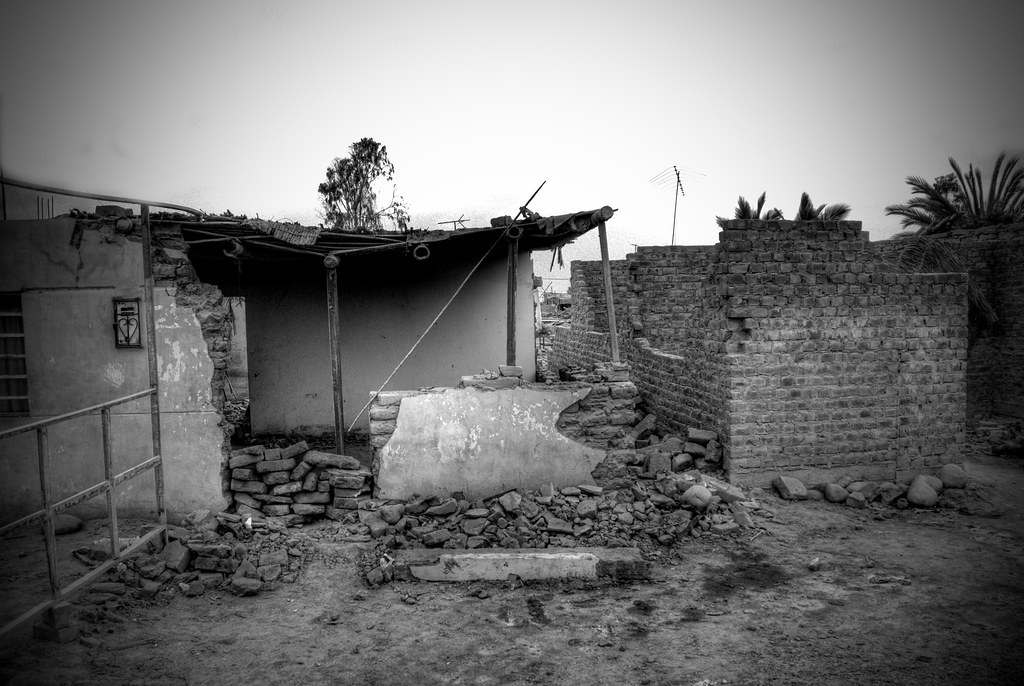
Meanwhile, down in Pisco, those who lost their homes in the recent earthquake are starting to rebuild their adobe houses without any kind of supervision or safety regulations, Peruvian officials worry. At least part of the motivation is economic, as one can only build on the land that one owns or can lay claim to. These people need shelter, and they're addressing that need. But with the government promising aid and training for people rebuilding their homes, there is the suggestion that there is some other motivation, something below the surface, that is causing people to rebuild so quickly.

In fact, the rebuilding processes in both New Orleans and Pisco raise some interesting questions about the nature of urbanism. Why do these people rebuild instead of moving elsewhere? And if a city must be rebuilt, why start over in the same place? Why not build a new city in a place less prone to, say, flooding or earthquakes? What's the reasoning behind trying to rebuild a city that has been knocked down?

There is a social aspect to urbanism that underscores all of the other motivations for urban development. People, as has been well-documented by sociologists, generally like to be around other people (at least in close proximity, even if there is no direct interaction). Still, we generally think of cities merely as concentrations of power (both economic and militaristic) instead of what they are, literally: concentrations of people.

If our settlements can be leveled by natural forces regardless of size, and if their economic structures can be so easily toppled, why don't we all live in small towns or villages? They'd probably be easier to rebuild. They wouldn't be such a hassle to manage. In fact, one could make a convincing argument that a society made up of small towns, even operating with current technology, would be more sustainable than one composed of large cites.

So why the heck do we build cities, anyway?

A few weeks back, a research consortium with participants from Harvard and Cambridge Universities (among others) shared some interesting new findings from the excavation site at Tell Brak -- findings that seem to tell us a lot about the origins of urbanism. The researchers have found, by analyzing fragments of pottery scattered around what was essentially a core city, that the urban area around Tell Brak was developed in an organic way that suggests an entirely different reason for the founding of mankind's earliest cities.

Traditionally, the founding of these early cities has been attributed to various kings and religious authorities. In an article about the new findings, Scientific American quotes researcher Jason Ur: "Kings were quick to take credit for founding cities...We're taking royal inscriptions at their word, which could be a bad thing to do."

The informal growth of Tell Brak seems to suggest that, at their very beginnings, cities were founded because they provided a strong social network. This undoubtedly created economic and military power as early cities grew, but the original impetus was simply for people to gather in one place in order to improve their lives in some way (the researchers acknowledge that individual motivations were likely diverse). So Tell Brak illustrates at least one compelling argument for why we build large, impressive urban centers: we just like to be around each other.

In wrecked cities like New Orleans and Pisco, the large majority of citizens don't return because they look forward to the immense challenges of cleaning up environmentally devastated lots, tearing down the shards of their old homes, and rebuilding from scratch. They return because they are looking to rebuild the social places that existed before their city was ruined. They rebuild for the same reason that anyone builds in the first place.

They just like to be around each other.

(Photo from Flickr user mateollosa.)


Links:

Pay Heed to New Orleans' Plight (Associated Press)

Citizens in Pisco, Peru Informally Build Adobe Houses after Earthquake (LivinginPeru.com)

Ancient Squatters May Have Been the World's First Suburbanites (Scientific American)

Researchers rewrite origins of the urban sprawl (University of Cambridge)