Showing posts with label communication. Show all posts

Monday, December 15, 2008

Best We Can

Nothing gets people talking like a shared grievance. Misery, as everyone knows, loves company, and anyone who has ever been laid off or evicted, or even had to cut back on groceries has found quick solace in the similar complaints of their friends and neighbors. Stories of the run-down neighborhood that rose from the ashes when residents banded together to fight crime, or repair abandoned homes for resale, or convert empty lots into gardens are far from uncommon. Indeed, the hard-knock neighborhood lifting itself up through a communal sharing of the burden is an archetype of urban development.

There's a lot to be worried about these days. There's a lot to complain about. But we can believe that things are going to get better; in fact, it's doubtful that they can until we do.

The Project for Public Spaces published an article on their most recent newsletter entitled How Your Community Can Thrive-- Even in Tough Times, that made the blunt but wisely-worded case that cities, now more than ever, have to use what they've got. As financial markets collapse and leave perpetually cash-strapped city governments scraping by or knee-deep in red ink, expensive programs, high-profile redevelopments, and frivolous policies can no longer be relied upon to distract any attention from the most deeply-seated problems that face their communities. "What They've Got," for cities, is suddenly much less than it was.

Jonah Lehrer, speaking recently about the late Studs Terkel's book Hard Times, made this important point: "While a depression or steep recession is a terrible thing, it does lead to a few less Rolexes. And if the Terkel interviews are any indication, it was that diminished sense of disparity - the fact that everyone was going without - that made the time bearable." One thing that cities have got, today, is an economic mess on their hands; luckily, just about anything can be seen as an opportunity in the right light, and Lehrer's comments suggest a critical urban asset that should not be overlooked in these hard times: shared struggle.

A note to all those people who have been worrying about the collapse of traditional community structure in urban neighborhoods: now is your chance to change the course. It is somewhat rare that an economic crisis hits so hard that even the relatively wealthy are genuinely hurting; at the risk of sounding overly opportunistic, it is the depth of this recession that could provide a rare chance to get neighbors talking to neighbors, and sharing the burden of hard times in the community. As stated at the outset of this post, nothing gets people talking like a shared grievance. If awkwardness or ignorance have ever been reasons for avoiding a chat with the folks next door or down the hall, everyone now has something to talk about, to share, and to help each other with.

The effect that the current crash (we can call it that, right?) is having on our economic system will undoubtedly be extreme. The fundamental building blocks of our society will change, whether we like it or not. But if you're smart, you'll make what you can of hard times, and get to know what's going on in the lives of the people around you. When something shatters The Way Things Work like we're seeing them shattered today, there are small but invaluable shards of opportunity scattered all around. To some, it might look like a mess; to the wise, it is the start of a newer Way that will be stronger than what came before it.

(Photos from Wooster Collective and Flickr user Scott Haefner. The original full-sized color version can be viewed by clicking the photo.)

Wednesday, June 25, 2008

Chicago El Stories

So here's an interesting art project: Chicago El Stories is an installation at the Armitage Brown Line stop in Lincoln Park that pairs photos of seemingly unimportant sites around the city with audio files of peoples' memories and stories about the places. It's an interesting way of showing how the urban environment is littered with personal experiences, and how the city can be so many different things to so many people.

Tuesday, April 29, 2008

The Next Street Art

Say there was a place that had some special meaning to you. It could be the alcove where you had your first kiss, the alley where you were mugged, the square where you participated in an important rally, or the location of an historic uprising. Good or bad, we all infuse places with our memories. This is what makes physical places so powerful, and why peoples' opinions and experiences of the same place can be vastly different. Places are what people make of them. Now, technology could be making it easier for tech-savvy street artists to etch their own experiences and opinions onto physical places, communicating the artists' own sense of a place to others who pass through it.

Barcodes are most commonly used in retail environments, but their size and informational storage capacities make them ripe for adaptation for more inventive uses. In Japan, barcodes are now being applied to gravestones to store and transmit information, when scanned, about the deceased. The idea here is that family members will, through videos, photos, and stories, be able to reconnect with the deceased in a less mournful, more celebratory way. Imagine "a sort of gravestone based, family fueled, wiki of the dead."

This technology could easily be used in public spaces to represent a political viewpoint or a historical event. Imagine walking down a street for the first time and noticing a bright green barcode sticker affixed to the facade of a building. Using a scanner-enabled mobile device, you could access a website loaded with the history of the building site, or a series of short stories about the surrounding blocks, or photos of a lifechanging event that a stranger experienced in the very spot where you are standing. Reading or viewing material like this would give the place a new gravitas, and would change your perception of what might otherwise be a mundane stretch of asphalt and brick.

RFID tags are another method of remote-storing information that, thanks to increased range, provide the opportunity for a bit more mischief. With the technological know-how, a clever street artist could program a chip to send a text message or photo to any wi-fi enabled mobile device passing by. Imagine again: you're walking down a street and you pass a hidden RFID tag; your phone rings. You answer. An audio recording plays, recounting a woman's personal account of a riot that took place across the street a decade earlier. Later, walking through a park, your text alert sounds. You open the message to find a set of coordinates and the time of an upcoming event, perhaps a flash mob or a constructive riot. Or, perhaps, a photo of the view from the very place that you are standing, hyperlinked to a database of stories and photos of places around the city (along the lines of Invincible Cities, linked below).

While they would only be accessible to those with the proper devices to read the information that they stored, RFID tags and barcodes have distinct advantages over more traditional forms of street art like posters, graffiti tags, and murals. For one thing, they are smaller, and less intrusive. While this could be seen as a weakness (especially for barcodes, which require direct interaction), it is also a strength in that RFID tags and barcodes are less likely to prompt their own removal than more readily noticeable artistic interventions. These tiny storage units can also provide more vivid, personalized accounts of events or viewpoints, and have the potential to be more impactful on their viewers.

RFID and barcode street art has the potential to turn the urban environment into a virtual minefield of information. While the potential for abuse by malicious hackers or marketing drones is there, the idea of being able to literally "tag" a place with multimedia information is an exciting one. Perhaps it's already being done. Anyone know of some examples?

(Photo from Flickr user cloverst. The original full-color version can be viewed by clicking the photo.)


Links:
Barcodes on tombs to connect with the dead (The Inquirer)

Invincible Cities (Thanks, Pete!)

Friday, February 1, 2008

WEEKEND READING: January 26-February 1, 2008

Bienvenidos a la fin de semana. Let's get to the good stuff:

ITEM ONE: I can't bring myself to link directly to "Reason" Magazine, so here's a post from the Center for Global Development on a very interesting interview on immigration policy with economist Lant Pritchett.

ITEM TWO: Strange Harvest visualizes what wireless communication technology might mean for the urban environment.

ITEM THREE: Pigs Will Fly examines the importance of local green economies.

ITEM FOUR: A beautiful piece from the NY Times on the art of decay in gardening. (Photo credit)

ITEM FIVE: TNAC lambasts Forbes' pathetic, poorly-executed disgrace of an article on the "10 most miserable cities in America"...

ITEM SIX: ...and we'll follow that up with a hilarious and spot-on column from Mark Morford of the San Francisco Chronicle entitled "Study says many studies suck." WORD.

ITEM SEVEN: Another good blog to add to your Reader -- Landscape Urbanism. Check it out!

Go have a party and then wake up at two in the afternoon tomorrow and read some of this stuff. Or something.

Thursday, January 31, 2008

Coexisting and Coworking

Contrary to naysayers' and pessimists' early warnings, distance in the wired world is decidedly not dead. In fact, as has been pointed out a gazillion times already, the revitalization of many urban cores in the US and around the world has coincided with the miraculous rise of the internet and wireless technology. But why have people not retreated to mountaintops as was feared at the onset of the internet era? If you can have a creative and fulfilling career from anywhere, why not work from a rustic cabin overlooking a placid lake in a bucolic wood?

Blech. Boring.

A recent post on coworking (a trend that I am particularly enamored with) at Coroflot's Creative Seeds Blog inadvertently highlights why the internet has pushed people closer together rather than pulling them apart. Coroflot's lays out the options for those who don't have a formal office -- temporary cubicle, cobbled-together home office, isolating coffee shop -- and then explains that none of these environments has "the most important quality of the ideal creative workspace: other creative workers with whom to interact. It's well understood that good ideas and good creative work flow almost never flourish in a vacuum, and yet increasingly we are asked to make them do so."

Cities are more diverse, active places. They are larger and thus, by default, contain more possible answers to any question of location. Thus, for someone who is free to work anywhere, cities provide the most enticing environment. By living in a city, a creative worker has the opportunity to change up their daily workspace. There is always the option of moving out to The Sticks, but when The Sticks compete on a level playing field with the urban core, guess which one usually wins out?

There's another fact that's been repeated a gazillion times over the past few months that may provide a hint: for the first time in the history of civilization, half of the world's population now lives where?

(Photo from Flickr user MathieuCoste. The original full-color version can be viewed by clicking the photo.)


Links:
Your Dream Office is Just Over There: Co-Working and the Instant Creative Community (Coroflot's Creative Seeds Blog)

Tuesday, January 15, 2008

Bite-Sized City

The bite-sized book is an idea being pioneered by a site called DailyLit, where, according to Trendwatching.com's blog Springwise, "books are sent by email or RSS in individual instalments on the days and times selected by the reader—for example: every weekday at 7:45 a.m.—and each instalment is small enough to be read in less than 5 minutes."

This format strikes me as a particularly interesting (and easy) way for a person to explore the urban environment. Imagine that you've just moved to a new neighborhood. You go to the neighbors' association's website and subscribe to a free daily mini-tour. Each Saturday at 1:00 pm, you receive a text message with a starting point. Once there, you open a temporary audio file on your Blakberry or iPhone or whatever wired mobile device you're carting around, and you're talked through a 15- to 20-minute exploration of another corner of your new surroundings. The tours could even be recorded by a variety of people who are active in the given neighborhood, and could seamlessly integrate opportunities for community involvement into what might otherwise be aimless walks by highlighting local events, organizations, and landmarks.

Now imagine that you're a tourist on a first-time trip to New York. Subscribe in advance to a feed like this and have bite-sized neighborhood tours sent to you every three hours. These tours could even be sequentially linked to start you off in each neighborhood, allowing for a few hours of independent exploration between tours. Heck, with the ubiquity of GPS technology, you could download a series of geo-coded tours in advance that would be triggered when you passed from one neighborhood to the next. As you walk north across Houston Street from SoHo to the Village, your phone rings. You answer, and a voice suggests that you walk three blocks east to Houston and Thompson to begin the Greenwich Village tour.

With this sort of technology, unfamiliar territory becomes a bit less intimidating. Recent transplants get out and meet more of their neighbors. Tourists get a boost in confidence that would likely encourage them to cover more ground and venture farther off the beaten path than if they were wandering about with nothing but a street map and a dated copy of Fodor's New York. Perhaps part of the reason that there are so many people in Times Square is that people can recognize where they are; they understand their position in the city. For the intrepid urban explorer this may seem superfluous, but any city hoping to increase tourism or revitalize a neighborhood is woe to underestimate the power of the sense of disorientation.

Making cities and neighborhoods more friendly, inviting places -- for visitors and locals alike -- is an important step in the struggle to improve urban conditions. People naturally avoid places where they feel uncomfortable. Encourage them to expand their understanding of their surroundings, and half the battle is won.

(Photo from Flickr user morethanreal. The original full-color version can be viewed by clicking the photo.)


Links:
DailyLit

Books in bite-sized portions (Springwise)

Wednesday, January 9, 2008

Conscious Urbanism: The Game?

I'm toying with an idea for a new feature, and I'm hoping for some reader feedback. If you're a regular, an occasional reader, or even a drop-in checking out Where for the first time, I hope you'll weigh in on this concept, as the reader response will determine its future.

I read posts on two blogs recently that have started my brain a-thinkin' about how effective a good game can be. (Monday's post on the X Prize, and the value of competition, served as part of the inspiration as well). The first post, over at Inhabitat, talks about a new board game called Play Rethink, in which players use a spinner and product cards to create a variety of environmentally-friendly design challenge scenarios which they must then address. The intent is to get normal people (non-professionals) thinking about eco-design and issues like local vs. imported materials, sustainability, and adaptive re-use. It does so, rather ingeniously, I think, by making the process fun and entertaining. It's public engagement through play.

Play is a powerful method of communication. When we are playing (on a playground, a sports field, a computer, etc.) our guard is down. We are having fun, and that makes us more receptive to the ideas that we are being exposed to through the game. Thus, it seems like play would be an excellent way to address seemingly intractable urban problems. Make policy and urban design fun, and we might start coming up with some interesting answers to exhausting questions.

Enter inspiration #2: a recent post at Brand Avenue spotlights a 100-day-long game called "Future City," being facilitated by the Hamilton Spectator, a newspaper in the city of Hamilton, in Canada. In the game, the paper poses scenarios in the city's imagined future and asks readers to vote on the outcomes. There's a fun interactive map of the evolved version of the city that Spectator readers are creating, and the whole thing seems to be quite the little success. It's getting Hamiltonites actively thinking about and participating in their city's future, which will (hopefully) translate to these citizens becoming more politically active and aware at the local level.

Where's "Conscious Urbanism" series has, for whatever reason (I suppose I should know, but I can't come up with anything solid), fallen by the wayside over the past several months. I find this unfortunate, since the discussion of active citizenship and innovative neighborhood-based solutions was part of my original inspiration for starting this blog. As stated in the inaugural post, I have always hoped that Where might be able to spark some interesting conversations about urbanism, but I have admittedly had little success in encouraging such activity thus far.

Thus, Conscious Urbanism provides us with a possible jolt of conversational energy. I would very much like to create some sort of game, as a recurring feature at Where, that takes urban problems found in news items or submitted by readers and challenges readers to create, discuss, and debate potential solutions. The idea is, of course, to start something constructive -- and fun. (It is intended to be a game, after all). But I'm not yet sure exactly what form the game should take...there would need to be some framework of rules and instructions -- nothing too limiting, but enough to give the game some direction. And, certainly, there would need to be a clarification of what, exactly, "Conscious Urbanism" really is. (Admittedly, it's been a bit vague in the past). Whatever it is, it's about people working together, socially, to solve urban problems, so it seems logical to re-think the feature in a more participatory way.

So this brings us to a crossroads, and to an invitation. I hope that you'll sound off on this little seed of an idea. If you have an idea for how the game might be structured, or how participation might be encouraged, or even if you just want to voice your interest in participating once the thing gets off and running, I do hope you'll take a moment to contribute. If you think this sounds utterly inane, say that, too. I'm open to suggestions as to why it shouldn't be done. At this point, I'm open to suggestions, period.

Of course, if there is no response, I'll let this one slip quietly by. There's no need to push the idea if there's no interest in participation, as reader involvement would be critical to this feature's success. Of course, if you have nothing to say, by all means, say nothing! :-) I do hope you'll participate, though. We'll see where things go from here...

(Photo from Flickr user colampearson. The original full-color version can be viewed by clicking the photo.)


Links:
Play Rethink: The Eco-Design Game (Inhabitat)

Dreaming Big (Brand Avenue)

Wednesday, November 14, 2007

Medellín: a City Planned for the Other 90% (Guest Post by Juliana Rincon)

Medellín, Colombia, is a city that I've fallen in love with, and it loves me back. Whenever I walk its streets, ride the metro, or take a bus, I feel that the city was planned with me, and with all the thousands of others who, like me, don't own a car and depend on public transportation to move around, in mind.

An example: Carabobo used to be a chaotic avenue full of seedy joints and the constant rumble of old buses expelling diesel fumes. The beautiful art deco buildings along the avenue were left unnoticed as people rushed to their destinations enclosed in the safety of a vehicle. At the far end of the street was a no-man's land where you could see homeless people warming their hands with bonfires made in steel drums, and where everything and everyone had a price. Beautiful buildings were abandoned, scavenged and then abused as crack houses, businesses where struggling to maintain customers, and something had to be done.

Nowadays, no buses run through this main avenue; only people are allowed here. Instead of the sky being overcast by clouds of combusted fuels, it is shaded by trees and palms. The former crack house is a cultural and educational center, and the architectural jewels along the way are lit up to showcase their details, while thriving businesses inhabit their spaces. It is a complete pleasure to travel up and down this public space, designed to be fully accessible for every type of citizen.

Walking down the paved walkway, you can see people sitting on park benches and resting their tired feet, bags and bags of purchases from a variety of stores sitting beside them. Textured bricks mark pathways for the blind to follow with their canes, traffic lights with sound and vibrations assist the pedestrians who might not be able to hear or see the lights change color. You don't need to step off the curbs and onto the street -- they are both at the same level, making it easy for people in wheelchairs to enjoy this space as well. No bicycles are allowed, but riders are welcome to dismount and walk their bikes through this area if they wish to.

It seems that common sense solutions are usually completely ignored by governments in Latin American cities, and it is refreshing to see that this isn´t the case with Medellín. The government is rebuilding its city for the inhabitants: they have discovered that when people have public spaces they can enjoy and where they can relax, breathe in clean air, and stretch their legs, they work harder, better, and are generally happier. The poorer inhabitants of the city don't have time or money to take vacations to the rural areas; they don't have the means to visit beaches and certainly don't have membership to country clubs...so the city decided to give them spaces where they could take their families, where they could lay on the grass, sit on a bench and kick back on a Sunday.

The city has placed trust in the people, with the firm belief that if you make citizens take ownership of these new spaces, they'll take care of them and make sure others respect the spaces as well. Store owners and workers down Carabobo street signed an agreement stating that they would take responsibility in keeping their surroundings clean, reporting uncivilized behaviors and vandalism if, in exchange, the city would do maintenance and have enough policemen in the area to ensure shoppers' safety. These store owners now thank this project for their new situation: they have a lot more clients and shoppers now that people can walk at their leisure and window shop; they have met other store owners in their block; they don't have to deal with car fumes and the noise from honking vehicles and motors; and they have come together as a community, united with one goal: to keep Carabobo looking clean, safe and beautiful for many other generations to enjoy.

However, this didn't happen overnight. The business owners in Carabobo at first were terrified that once no vehicles could come by and park in front of their stores, sales would plummet. They didn't want to deal with the months of construction, not knowing if their businesses would survive this metamorphosis. The government decided to include these concerned entrepreneurs in the discussion and planning process so they could become involved with the project and take ownership of it. On October 27th 2006, an agreement was signed, and they first saw the butterfly emerge from its cocoon.

Last week the Hiperbarrio team headed downtown to record a little bit of our experience walking down Carabobo. We took pictures, shot videos and then sat down on one of the many benches to enjoy the day. It was a wonderful way to spend a Saturday morning, and if you ever come to Medellín and visit, I would definitely recommend for you to do the same.

If you want to learn a bit more about Carabobo, you can see the government's plan for Carabobo Street with pictures of the transformation, before, during and after, or look through the pictures we took that day with the Hiperbarrio team. Below, you can watch a YouTube video where the Carabobo community celebrates one year since the cooperation agreement was signed. (The narration is in Spanish).


------------------


Big thanks to Juliana Rincon, one of the organizers of Medellín's HiperBarrio project, for writing this guest post! Photo credits go to her group and the government plan sited in the post, in that order.

Thursday, October 18, 2007

Speculative Urban Blogging

I came across two great new blogs this week that do what you might refer to as "speculative urban blogging" in two very different (if equally innovative) ways. So consider tonight's post sort of an in-depth lead-in to Weekend Reading, if you will.

Audacious Ideas takes a look at how things are going in Baltimore and makes some rather audacious suggestions as to how these problems might be addressed more effectively. Here's the catch: the entries are written by Baltimore professionals who work in fields that deal directly with the problems that they are writing about. Audacious Ideas takes big questions and provides answers sized to match. And even with only five posts (not including the introduction), AI has provided audacious[ly pragmatic, in most cases] suggestions for policy reform in the areas of public health, the city budget, childrens' safety, drug treatment, and education.

Even better, the audacity is apparently just what the doctor ordered, so to speak. Every topic has spurred a discussion at least a dozen posts long. Baltimoreans are taking inspiration from this new public forum, and from everything that I've read the readers are taking the discussions seriously -- a rare occurence on the internet. It certainly helps that these discussions are being started and led by community leaders with experience and wisdom. Online conversations almost always benefit from having a curating presence, and as this blog continues to build a body of posts and public discourse, it stands a better chance of becoming a real engine for change in Baltimore. Speculating on the future of the city opens up possibilities and puts some 2.0 juice into public policy.

The Blurgh looks at Pittsburgh's future from an entirely different angle: the writers are already living in it. Written in an imagined 2027, The Blurgh is a rather audacious blog, itself. "Frank" and "Gretchen" are two twentysomethings, a student and a writer, making their way in the now-resurgent Steel City. Written as a simple journal-style blog, The Blurgh is coy. The bloggers mention massive changes in the city's physical and economic environments -- Pittsburgh's status as a hub of sustainable technology, the city's impressive literary scene, an über-extensive mass transit system -- in passing, stopping only occasionally to do a sort of "gee, whiz" look back at the past (aka our present) and comment on how glad they are to be living in the "new" Pittsburgh (aka the one in 2027).

It's the realism that is so clever. If this very blog were being written in 2007, it would be wholly unremarkable, another drop in the massive bucket of naval-gazing public journaling that has earned the field blogging its currently somewhat uneven reputation. Well, okay...it is actually being written in 2007, but you get what I mean. The writer(s) of The Blurgh seem to know exactly what they're doing and, while it's too early to tell, they could turn this blog into a very important forum for the discussion of Pittsburgh's future, and how the city got/could get there. At the very least, it will be interesting to see how The Blurgh -- and its community of readers -- evolves.

So much of urblogging is focused on keeping tabs on what's going on right now in a neighborhood or a city. The local everyday politics of potholes, homelessness, new construction, and Starbucks are important to local discourse, and this is not a knock against of-the-moment urblogs. But it certainly wouldn't hurt, I don't think, if bloggers in a few more cities took on the challenge of trying to imagine a better and brighter future for the places they live. The hyperlocal movement is very much tied to the immediate present, and sometimes this means that urbloggers can't see the forest for the trees. A better future for our cities is something worth speculating about, and blogging provides those interested with the perfect medium to address rapidly-changing problems. As Audacious Ideas and The Blurgh show us, there are many different ways to use this technology to speculate on a brighter urban future.

(Photo from Flickr user joey kennedy. The original full-color version can be viewed by clicking the photo.)


Links:
Audacious Ideas (via CEOs for Cities)

The Blurgh (via The Burgh Diaspora)

Thursday, October 11, 2007

Public and Private Spaces

While they are best known for Park(ing), San Francisco group Rebar recently completed another interesting project called COMMONspace in which they visited POPOS (short for Privately-Owned Public Open Spaces) around San Francisco and staged some bizarre stunts in order to highlight the fact that these places were, despite common perception, open for public use, whatever the public determined that to be (within the law). Their self-described objective was to ask of these public places, "How public?"

From a recent article on the project in The Next American City: "'We partnered up with [performance and activist group Snap Out Of It] and said, 'Let’s just get in there and energize these spaces,' which appeared to us to be underused by the public and constrained by the psychogeography of downtown,' says [Rebar member] Blaine Merker -- in other words, the very fact that these spaces are located in the business district gives the public the idea that access and certain behaviors are prohibited."

Security guards, surveillance cameras, and the business attire of the crowds of office workers in San Francisco's financial district had all created the illusion of exclusivity in these decidedly un-exclusive places. POPOS were the result, after all, of a law that aimed take advantage of new commercial construction by requiring developers to include public areas for the enjoyment of all San Franciscans. But citizens were not enjoying these spaces because the physical environment, while perhaps attractive, was hardly welcoming in the way that a park or plaza might be.

I have to wonder, reading this, what effect corporate advertising has on public spaces. This is largely due to a recent post at Spacing Wire that pointed out the absurdity of Canadian communication megacorp Rogers spraypainting advertisements for Myspace Mobile onto sidewalks in public parks.

"Big businesses like Rogers (and the ad company responsible for implementing the campaign) should act like responsible corporate citizens. Sadly, these companies take advantage of [the City of Toronto's] over-stretched staff. They are fully aware that City will not invest the time or energy to prosecute them. But when teenagers get caught with a spray-paint can in hand, they’re arrested and eventually ordered to take part in community services."

The Spacing team also pointed out that this was the same park where Audi placed advertisements thinly veiled as sculptures earlier this year. Rogers and Audi are certainly not alone when it comes to corporations willing to bend the rules in public places in order to create "authentic" or edgy advertisements for their products. (While I can't comment on their legality, I have seen multiple "graffiti ads" around Chicago for various companies). But what do these infringements say about the role of corporations in the public realm?

Whether they are spraypainted on random surfaces or screwed onto fake art, logos undoubtedly have some effect on the psychogeography of a place that is supposed to be the unfettered domain of the common citizen. In the same way that cameras and guards create a "you are being monitored" feel in POPOS, logos and advertisements that encroach on public places seem to say "you are still on our turf." When private corporations take over public spaces and undermine the legal entities that care for those spaces, they claim the public for the private. These seemingly harmless infringements say some disturbing things between the lines.

I'm not trying to sound paranoid, and I am aware that this is a small problem at present. But it is certainly something worth keeping an eye on. After all, when private entities claim psychological domain over public spaces, we start down a slippery slope.


Links:
Challenging the Commons (The Next American City)

Rogers thinks the sidewalk is my space (Spacing Wire) (Photo credit)

Wednesday, October 3, 2007

(Re)Building Intellectual Infrastructure

Richard Florida, Dr. Creative Class himself, spent a good deal of time in a post today on his blog responding to some of the concerns raised in yesterday's Where post on questioning the logic of the CC. I'll admit that I haven't yet read Rise of the Creative Class (yesterday's post was about the phenomenon, not specificlly the book that started it), so reading his thoughts taught me a lot that I didn't know about his argument. As it turns out, I agree with him on more than I had originally thought. From Dr. Florida's post:

"My bottom line is that every human being is creative. And the creativity cannot be forced into the social categories we have imposed on ourselves...The real task is to build pathways to a creative society in which all can contribute and be rewarded [and] in which all engage their creativity at a much fuller level, thereby contributing to economic growth...The key to the future will be to extend the creative force into the service and manufacturing economies - across all segments of the population. The logic of the creative economy is such that the further development of the economy requires the further development of human creative capabilities. We need to shift from a creative economy and a creative class to much fuller and broader creative communities and a creative society."

This plays directly into the follow-up I had planned to last night's post. If cities hope to strengthen the creativity of their citizens in order to secure their economic futures, the officials holding the purse strings need to realize that coffee shops and bike paths aren't going to cut it -- they're the icing, not the cake. As illustrated in the Slate article referrenced yesterday, the creative class will seek out existing creative societies. Cities looking to invest in their creative infrastructure, then, should focus on building up the skills of those who already live there instead of looking to bring new folks in. To paraphrase City Comforts, brilliance innovates, genius follows.

Cities looking to build a creative populace can do so if they are willing to invest in what we'll call their intellectual infrastructure. Civic leaders' first step here would be to create the strongest school system possible -- a major responsibility that many cities illogically refuse to take seriously. That sadly overpoliticized issue aside, cities must find innovative ways to encourage their citizens to develop their own creative skills. It's time that politicians stop looking at citizens as "constituents" (read: votes) and start seeing them as what they are: the city's greatest assets.

In a recent post at atlas(t)'s Galleon Trade Edition, blogger Claire Light waxed nostalgic about the proverbial days of yore: "Once upon a time, before art was professionalized (insofar as people are willing to pay artists, that is to say) folks stayed at home a lot and made art themselves. Every middle class home had a piano, every working class one a fiddle, or a jew's harp. Young ladies drew each other for sport. Young men drooped from the forks of tree branches shouting, 'Beauty!' Jigs were danced, and danced well, on homemade wooden heels, family theatricals taught children the fine art of crying at will, [and] a blank wall was excuse enough for interpretive dance..."

As Dr. Florida (and several readers who commented on yesterday's post) pointed out, creativity is about a lot more than what we traditionally think of as the arts. Creativity and innovation, especially in terms of economics, must be valued in all fields and industries. What the atlas(t) post illustrates particularly well is the way that art used to be intregrated into society; these kinds of activities were much more accessible to the general public. Art-for-fun had no social stigma; it was just something that everyone did. In this way, artistic endeavors served as both social activities and intellectual stimulation. When you gathered around a piano and sang songs with your friends, you got some beneficial social juju and you gave your brain a workout. While you may not have been able to use your piano-playing skills or your ability to sing a high G at work the next day, your musical exploits sent you to the office or the factory with a fresh and slightly-stretched mind.

So what policies or public projects could a city undertake to try to rebuild this kind of intellectual infrastructure that makes creativity a common civic value? One idea comes from a recent airoots post (them again!) about a kind of dwelling in the Dharavi area -- best known as Asia's largest slum -- in Mumbai known as the "tool-house." When is a house a tool-house? "When every wall, nook and corner becomes an extension of the tools of the trade of its inhabitant. When the furnace and the cooking hearth exchange roles and when sleeping competes with warehouse space. A cluster of tool-houses makes for a thriving workshop-neighbourhood and its public spaces emerge as a dynamic by-product of such an auto-organized habitat."

To attempt the transformation of a contemporary Western (or Westernized) city into a tool-house city would be both disingenuous and impossible. What we can learn from these places is a social principle, not a building practice. Tool-house cities are innovative by necessity, but they illustrate "the relationship between production, livelihood and spaces." This relationship is vital to creative cities, where production -- not consumption -- is the primary economic mode of the citizen (think "prosumer").

Cities, then, should invest in projects and policies that reinforce the production-livelihood-space relationship and encourage citizens to apply the skills that they learn on the job to the world around them in new ways. Citizens should also be encouraged by civic leaders to build off-the-job skills as well, as these can also be applied to urban problems and will likely be more potent and flexible when combined with work-related knowledge.

But what, physically, might this kind of thing look like? Perhaps cities could organize and/or facilitate neighborhood skill-shares or tool-sharing programs, sponsor a job-shadow program for adults, or subsidize classes that could teach arts and trade-related job skills (how about a graffiti club that teaches teens masonry skills so that they can learn to build walls to paint on -- and how to clean them off) There are ten times as many solutions as there are problems. Any ideas?

(Photo from Flickr users pbo31 and Soumik.)


Links:
Creative Class Debates (Creative Class Group)

Manalo Juan (atlas(t) Galleon Trade Edition)

Urban Fictions: The Toolhouse (airoots)

Monday, October 1, 2007

Opening Planning

"[A] problem I think we have in the arts is the over-professionalization of art. What I mean by that is, it is the ethos of the professional artist to present the final piece, with no warts, no rough edges. This is the art. We do not allow you backstage to see the process. I think Americans, and people in every culture, want to see the creative process. And I think professional artists have alientated their publics by not allowing them in...You don't have to change the art form, but the audience should know how hard it is to perform a new piece of orchestral music, and they should see the first violins struggling, having to do it over and over again. There has to be a way to allow our artists to be more vulnerable and to open up the creative process and invite people in." -- Steven Tepper on Smart City Radio

Hearing this quote from the September 13th edition of SCR (I'm a bit backed up on my podcasts this month) made me recall an art project I'd read about in dezeen a while back. The project, called If Gio Only Knew..., was a design/build-reuse-performance-art thingy (if you will) in which the artist (Martino Gamper) took classic pieces of Gio Ponti-designed furniture and took them apart to refashion them into new pieces of furniture. The results were uneven and sometimes downright ugly, but the project stayed in the back of my mind.

It was hearing Tepper opine about the overprofessionalization of art that made me realize what I had really liked about Gamper's little adaptive reuse experiment: he let his audience backstage. Even if you weren't at Design Miami/Basel, where the Pontis were refashioned into Gampers, you can watch a video of the re-design process. Even while the results of each reconstruction may not have been aesthetically pleasing, someone who is interested in furniture design can watch the video and learn about Gamper's creative process, and try to come to some better understanding of how and why he rebuilt the pieces as he did.

Of course, my brain started to try to translate this Aha! moment into urban design, which is one of the most underappreciated artistic fields. How cities could benefit from a more open planning process was obvious; people who understand why something in their neighborhood is changing are more likely to approve of it and, if they don't, are able to offer more focused critique of why the change is inappropriate. But how could such understanding be achieved? Even with public hearings and meetings and partnerships, there still seems to be a very negative attitude toward planners, at least in the US.

It's a public relations problem, when you boil it down. Not the evil kind of PR that tells lots of happy little lies to obscure a big ugly truth, but plain old-fashioned direct communication. It has been well-lamented that civic engagement is lacking in the twenty- and thirtysomething crowd that carries the bulk of the weight of gentrification on their shoulders. Whole groups have been formed to address this very problem (see Neighbors Project in the sidebar for a good example). The PR issue is twofold, then: older urbanites know too much about old-school planning from the 1950s and 60s to trust contemporary planners, and younger urbanites (often suburban imports with little to no understanding of how cities are shaped) who know too little about planning to care.

Planetizen's Interchange blog had a great post last week from Scott Page, a planner himself, that discussed the urban planning field's apparent identity crisis of late. In it, he laments what is essentially the overprofessionalization of the planning field. "In this process of defining who we are, are we not" he asks, "leaving out people that are, in fact, planners but not trained as such?...Let’s champion planning as an art that merges vision with pragmatic thinking. And let’s find a better way to define our community which, ironically, is precisely what we are trained to do."

The need for a more inclusive and open planning community -- in which there is plenty of room for professional planners -- is apparent as cities begin to acknowledge that, in the face of increasingly complex problems, solutions must come from all corners. But what can break down this overprofessionalization? How does the audience (the citizenry of a given metropolis) understand how planning works, and how small changes (and even inconvenient ones) can contribute to a larger solution? How do planners "open up the creative process and invite people in?"

(Photo from Flickr user seanfrom.)


Links:
Urban Innovations (Smart City Radio)

If Gio Only Knew... (dezeen)

Our collective identity crisis (Interchange)

Thursday, August 16, 2007

WEEKEND READING: August 11-17, 2007

This edition of Weekend Reading is all sorts of random. It's like urbanism salad!

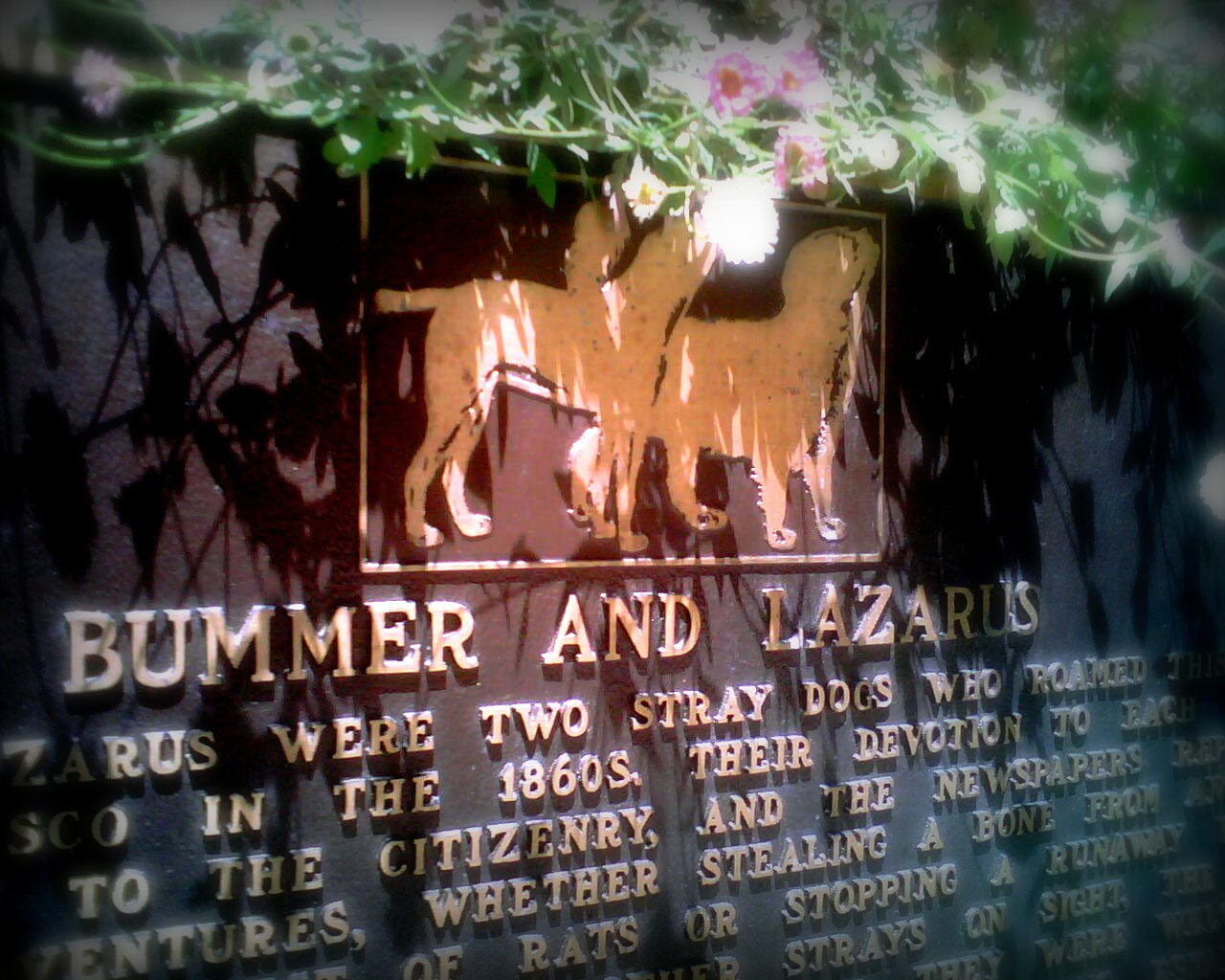
ITEM ONE: The story of Bummer and Lazarus, San Francisco's most famous pooches.

ITEM TWO: The "informal settlement"-watching blog Squatter City, written by the author of Shadow Cities.

ITEM THREE: Mexico City's mayor tries to push vendors off of the streets, but meets opposition from "a 63-year-old ex-con and great-grandmother."

ITEM FOUR: More radio hijinx from BLDGBLOG and DJ/rupture.

ITEM FIVE: The Washington Post asks "can globalization for for the world's slums?"

ITEM SIX: Will South America's first eco-city be built in rising-star Bogotá? Chances are good.

ITEM SEVEN: More from Colombia, where the previously mentioned HiperBarrio project continues to improve the city. For more on that resurgent city, click here.

See? Urbanism salad. Just like I promised. Check back over the weekend, as more of the Neighbor's Manifesto will be posted.

(Photo from Flickr user Dunstan Orchard.)

Friday, August 3, 2007

WEEKEND READING: July 28-August 3, 2007


Ok, so...I have, like, somewhere in the neighborhood of 20 articles in my Google Reader that are basically doomsday predictions for American infrastructure. None of them will be linked to in Weekend Reading. Short list, though...

ITEM ONE: A great piece on Xanadu in the Middle East and the American dust bowl. How are they connected? Oh, just follow the link and you'll see...

ITEM TWO: Planetizen Interchange features a great post from Ali Modarres about the severe abuse of the word "community" in contemporary planning and architecture.

ITEM THREE: The world is shrinking, y'all. Or it's going to soon, anyway.

ITEM FOUR: There are two great articles on superurbanist Charles Landry in the news this week.

ITEM FOUR AND A HALF: Here's the other one.

ITEM FIVE: Mexico City joins the list of Latin American cities (Curitiba, Bogotá, Medellin) aiming to re-define the image of urbanism in that region. (via CEOs for Cities)

ITEM SIX: Newsweek's feature story says everything I've ever thought about Dubai. Only it's about Abu Dhabi. Go figure.

ITEM SEVEN: Finally -- and this isn't really related to urbanism -- the FCC has proven, once again, that it's clueless. Or well-bribed. Either way, it's disgusting and disappointing.

That is all. Have a great weekend!

(Photo from Flickr user James_Ting.)

Wednesday, July 18, 2007

Planning Cultural Values?


We all know that cultural values can influence urban planning...but can urban planning influence cultural values? Last week's post on Resident Experience Master Planning suggested that, with significant technological advances, it can. But that is, at least, several years down the line. Is it already possible to re-direct the combined energies of an urban populace by the way that you plan their environment? Datuk Seri Najib Tun Razak is betting that it is.

Najib, the Deputy Prime Minister of Malaysia, recently gave a speech at the International Symposium on KnowledgeCities in the city of Shah Alam. In it, he was insistent that the rapidly-developing nation invest in informational infrastructure that will not only allow Malaysia to compete in the global economy, but will create what he referred to as a "learning culture" that makes knowledge acquisition one of its core cultural values.

The Malaysian media outlet, The Star, reports that Najib suggested that "city planners [need] to plan for full broadband coverage along with cellular and wireless capabilities to facilitate the flow of information over and above the basic communication infrastructure...[and] policy-makers [must] formally incorporate knowledge acquisition and the learning culture in every area of policy planning and implementation and provide incentives to private companies that promote the learning culture."

The Star again: "Najib said Malaysia had placed knowledge as its top priority in economic and social development and this emphasis was evident in the Ninth Malaysia Plan."

The thunderstorms here in Chicago are messing with my internet connection and making the Ninth Malaysia Plan's site run like molasses, so I'll have to cut it off here for tonight. More on this topic tomorrow...

(Photo from Flickr user EL@Seattle.)


Links:
Build Smart Cities, Says DPM (The Star)

Ninth Malaysia Plan (In case you want to get a head start.)

Monday, July 2, 2007

Everyone is Watching You


Reality TV has been decried as death of American culture, entertainment for our most base and unflattering instincts, and one of the four horsemen of the Apocalypse. At the onset of the Reality TV era there was no lack of color when writers aimed to describe the medium's potential effects on our society. Despite this valiantly verbose effort, it is now difficult to find someone who, when pressed, won't admit to liking at least one or two Reality programs. Over time, even the medium's loudest detractors just got used to it.

But what no one has called Reality TV yet, to my knowledge, is a critical part of the mass indoctrination of society into a culture of constant surveillance. This thought came to me as I was reading about a new art installation/publicity stunt/marketing campaign/reality show from HBO that "illustrates the underlying truth that sometimes the most revealing stories are the ones you weren't meant to see." Via images projected onto the walls of a Lower East Side apartment building in Manhattan, passersby can look into the private homes inside, watching as the inhabitants move about their "daily lives". It's yet another evolution of the Reality TV form, this time taking down yet another wall: the one provided by the explanation that what we are watching is merely "a show". (I have to admit: it's pretty engrossing, especially considering the total absence of dialog or any form of explanation for what one is watching.)

Our defenses are being broken down, slowly. As our culture becomes increasingly comfortable with Reality TV that moves more and more toward presenting actual reality as a form of entertainment, we are being lulled into a false sense of security with the surveillance of our own lives. Manhattan provides another perfect example thanks to the Institute for Applied Autonomy's iSee project, which has mapped all of the CCTV cameras in the city (as well as several others.) In a recent interview with WorldChanging.com, an IAA representative (members are anonymous) had this to say: "It's true that many people are comfortable with surveillance of public space, especially when confronted with the usual choice between privacy and security. With iSee, we tried to subvert (or at least complicate) this binary." The resultant maps certainly achieve this: seeing the shockingly large range of the streets under constant surveillance, one wonders whether these cameras, "put up by individual building owners [with] their data...increasingly managed by third-party private companies" (IAA again), provide security or eliminate it entirely.

Privacy, after all, is commonly equated with security. But in an urban environment, when we are surrounded by so many other people, our expectation of privacy is lowered. In a densely populated place, safety replaces privacy as the central focus of security efforts. So in the city, we are especially vulnerable to surveillance efforts -- and the thwarting of the London carbombings by the large network of CCTV cameras in the West End only increases this vulnerability. I left the question of how to deal with increasing surveillance open at the end of last week's post on digital urbanism. Now, I'd like to look at some possible answers.

Perhaps the most disturbing piece of tech news I've read lately comes from Smart Mobs, where the authors highlight efforts by Cornell University researchers who are injecting microfluidic sensors into unborn insects. "Of course, when they grow," Smart Mobs exposits, "these insects still carry the sensors. And if this works, they'll be used for monitoring and security surveillance." Apparently, this is something that the US Military has been working on for a while now (not in conjunction with Cornell). And with the promised advancement of nanotechnology over the coming years, it's not hard to imagine a future in which every airborne insect is a "bug" in more than just a literal sense. In 1984, George Orwell (hard not to mention him when writing about surveillance) described a world in which people were perceived to be under constant surveillance. In Orwell's imagined future, even the threat of being watched by the walls was enough to keep the masses in line. And a world in which even the insects can't be trusted is a world in which subversion is next to impossible.

In what is certainly most representative of the present situation [of the ideas discussed in this post], blogger Glenn Weiss offers up a less dire, if not exactly inspiring idea on his blog, Aesthetic Grounds. Weiss describes a Parisian film festival that highlights films made with and for cell phones and marvels at how some of these mini-films reclaim the device that has bound everyone so closely by providing the viewer with a moment of quiet immersion: a sort of imagined privacy. "Is this the future?" Weiss wonders. "Even with some private territory in an apartment, will only mental privacy survive in the megacities? When the cell phone provides an avenue for almost anyone to enter your space, are these short mental moments of isolation the new reality of intimacy?

Perhaps the most upbeat perspective on the future of surveillance is in one of last Friday's Weekend Reading topics: Harvey Feldspar's [fictional] Geoblog, from Wired. In it, author Bruce Sterling imagines the life of a so-called geoblogger in the near future (2017, to be exact). Feldspar is voluntarily monitored at all times thanks to his constant blogging and a GPS tracker installed in his Moleskine-sized computer/phone/everythingelse, the Sensicast-Tranzeo 3000. This futuristic jet-setter shows us one way of dealing with increasing surveillance: embrace it. Learn to control the system before it controls you.

As surveillance becomes ever-more pervasive, people will determine how to deal with it on an individual -- or even local basis. Perhaps paranoid subdivisions filled with houses featuring lead-lined walls and airtight mirrored slat windows will spring up in and around cities. Or maybe features like Helio's Buddy Beacon (which seems so disturbingly invasive right now) will become the norm, with everyone being able to find everyone else, and some innate desire for privacy will force us to form some kind of new social honor code. To paraphrase that famous line: when everyone is a watcher, who's watching the watchers? Everyone.

So is mass surveillance a good thing? A bad thing? The most probable answer is that it is neither. Like Reality TV, it's just another thing we'll have to get used to.

(Photo from Flickr user Semi-detached.)


Links:
HBO's "Voyeur" Projected On NYC Building (CitySkip)

Interview With the Institute for Applied Autonomy (WorldChanging.com)

iSee (IAA)

The hunt for the London Terroristsm (The Independent)

Autonomous insect cyborg sentinels (Smart Mobs)

The New Cell Phone Privacy in the City (Aesthetic Grounds)

Dispatches From the Hyperlocal Future (Wired)

Helio Buddy Beacon

Thursday, June 28, 2007

The Dawn of Digital Urbanism


Blog Like You Give a Damn put up a great post last month on recent advances in online urban cartography (like Google's über-controvertial Street Views) and how these new digital reinterpretations of the world are moving us toward William Gibson's vision of cyberspace as a physically inhabitable place. From BLYGAD:

"Unlike the cyberspace that Gibson describes in [his book] Neuromancer:

'...a graphic representation of data abstracted from banks of every computer in the human system. Unthinkable complexity. Lines of light ranged in the nonspace of the mind, clusters and constellations of data. Like city lights, receding...' (69)

this new cyberspace will be much more familiar to us. It will look and behave in ways we understand - dangerous because the line between real and virtual will be that much more hazed. As the possibilities for exploration, learning, and knowledge building expand - so too will the potential for surveillance, misuse, and abuse."


Cyberspace is Shangri-la for the internet generation: a mythic miracle of a place that we are sure exists just over the horizon, within a whisper's length of our grasp. Each person has their own idea of this place painted in their mind, but I think the truth about an inhabitable Cyberspace is that it will be very much like Gibson's fantastical vision. It will also be very familiar to us, as BLYGAD predicts. In fact, our physical reality is already merging with its virtual counterpart. For, as the hyperconnectivity brought on by the rise of the internet becomes integrated into the urban fabric, understanding of one's physical environment is becoming more inextricably tied to one's understanding of the web itself. The melding of the physical and virtual (cyber) worlds is already taking place on both ends, with each side moving quickly toward the other. Eventually, of course, they'll meet somewhere in the middle.

We can see this trend online as the "clusters and constellations of data" described by Gibson are being harnessed to create a sort of digital urbanism, recreating various aspects of the physical world for Cyberspace. Akamai recently launched a tool -- Visualizing the Internet -- that has been described as a weather report for the web. Meanwhile, an online art project called We Feel Fine (profiled in the June issue of Metropolis) mimics the richly frenetic atmosphere of a busy public space without actually replicating any of the recognizable features of physical places. If the aforementioned Google Street Views is representational digital urbanism, We Feel Fine is the presentational version, capturing the essence of public space in a wholly new way, reorganizing the traditional tokens of public spaces (trading visual diversity for emotional diversity) into a "place" that could only exist online.

Good old-fashioned bricks and mortar urbanism, meanwhile, is getting a digital overhaul as handheld, web-enabled devices and wireless internet for laptop users takes the edge off of some this system's perennial problems. I'll take any chance I can get to highlight Urbanspoon, a site that catalogs every restaurant in several major US cities (DC was recently added), aggregates reviews from major websites, allows for user ratings and reviews, and provides neighborhood breakdowns via kickass "nighttime" maps that show the locations of all of the cities' eateries. Finding a great restaurant has never been so easy. Another genius web service, recently covered on Springwise, is MizPee, a San Francisco-based service that allows users to access a list of nearby public restrooms, eliminating one of the chief drawbacks of pedestrianism.

As cities become more digitally enabled, they are also starting to bleed together. Geographic constraints have been removed from art and culture in the same way that they were from commerce. Even street fashion has crossed over into the digital realm. As the David Report...well...reports, cities across the globe will be represented in "Street Clash," a blog where the tragically hip artkids from dozens of cities will go head-to-head in an effort to determine which city has the ultimate street style. The irony of this is that, while individuals can rep their hometowns in a token sense, they are still independent human beings free to change their geography at any time. That is to say that what is happening here is the formation of an international street style, as a handful of people cannot be representative of an entire urban population. Hipster fashion has been globalized. Whether this is good, bad, or just hilarious is still a question mark.

As BLYGAD's post points out, the transition of the physical world into the Cyberspace of the future could open a Pandora's Box of new social, ethical, and safety concerns. Pittsblog reported yesterday on a proposal from the city of Pittsburgh for a massive urban surveillance system. Mike Madison, who writes the blog, had this to say: "Hopefully the public will respond...to the proposal's Benthamite implications...It's one thing (though it's not necessarily a good thing) to be watched when you know that you're being watched. It's something else entirely -- and rarely a good thing -- to be watched all the time, when you don't necessarily know it" (emphasis his). Madison then asks the age-old question, "who will watch the watchers?" This, I think, will be the most fundamental challenge of Cyberspace: in a universally connected world, the unwatched watcher has more power than ever, as they will have unprecedented access to the masses.

As the internet becomes increasingly ubiquitous and reality moves toward the virtual, the emergent Cyberspace will almost certainly take on an urban form -- though it remains to be seen whether it will lean more heavily on the physical or virtual world. Either way, geography will become less and less binding as cities learn to connect in ever more complex ways, and we will likely come to understand urbanism as something very different from what it is now. Shangri-la is upon us.

(Photo from Flickr user 3views.)


Links:
New Urban Cartography (Blog Like You Give a Damn)

Visualizing the Internet (Akamai)

We Feel Fine

Urbanspoon

Mobile Loo Locator (Springwise)

Street Clash (David Report)

The Pittsburgh Panopticon (Pittsblog)

Sunday, May 13, 2007

Community 2.0 and the Built Environment: An Introduction


Ours is a hyperlinked reality. As technology-enabled connectivity increases, we marvel at how our world seems to be shrinking before our very eyes. For decades now, if not longer, people have spoken of this phenomenon with a mixture of apprehension and bemusement. The apprehension comes from the fact that geography, one of the fundamental building blocks of our reality, is seemingly being relegated to a sort of background status -- an attractive desktop image for life, if you will. The bemusement is likewise rooted in the concrete nature of the physical environment: it never ceases to amaze us each time communicating with people on the other side of the world gets a bit easier because we understand physical distance on a very personal level. Thus the idea that we can communicate instantly with someone in China while sitting in a library in Boise, Idaho, by simply clicking some underlined text is...well...amusing, no matter how tech-savvy we happen to be.

Much as the automobile and its promise of increased physical mobility captured the public's imagination at the turn of the last century and rallied the masses around infrastructural and legislative capacity-building to enhance the automotive experience, the internet has transfixed the global community at the turn of this century by flashing us a future of greatly increased psychological mobility. China, now, is not nearly as far away -- nor as mysterious -- as it once was. Neither is Uraguay, or Romania for that matter. Physical and political boundaries are beginning to fade; the modern world is ours for the taking in a way that is much more immediate than it was twenty years ago.

As a result, it can sometimes seem like humanity is hurtling forward, with new technology (or at least new uses for existing tech) is developed and introduced to the public on an almost daily basis. And just as each technological revolution has had to prove its mettle over time, so has the internet; at first, there was a great deal of fear surrounding the dot com revolution, with people fearing that the world of online communities -- chat rooms, message boards, webcams -- would keep people locked away in their homes, glued to computer screens. Physical communities, we feared, would become a thing of the past. But now, it seems, we have reached the critical point at which people trust the web -- trust it enough to really take control of it.

The "Web 2.0" movement has become a pretty monumental phenomenon in a fairly short period of time. And it comes as no surprise, at least to me, that the interactive nature of collaborative media sites like Flickr, digg, Technorati, Myspace, and the like is not erasing, but re-shaping the way that we build communities. Special interest groups have evolved into social action coalitions. The Blogosphere (a phenomenon of which I am personally quite fond) has passed through its awkward, melodramatic LiveJournal stage and, aided greatly by user-generated media sites like YouTube, become a genuine media powerhouse credited with fundamentally altering political processes around the world. And social networking sites, while still in their own narcissistic adolescence, are slowly starting to show themselves to be, quite possibly, the most promising prospect on the e-horizon through sites like Idealist.org.

So how does this massive shift in the way that we experience life translate to the built environment? "Community 2.0," the communal side of Web 2.0 technology, is growing stronger as you read this, simply by virtue of the fact that you're reading it. Still, it is a young movement, and it is just now starting to show signs of how it will affect the physical landscapes of our cities and towns.

Over the coming week, I'll be using Where to look at what I consider to be the most intriguing and promising aspects of the web-enabled communities of the future. I'll be writing about the way that the internet is changing the way that we use and think about public space; the way that Community 2.0 sites are cutting through crap known as "infotainment" to shed light on some real problems -- and solutions; and the ways in which real estate and the very future of traditional urbanity will be affected by an increasingly mobile public. The series will culminate on Friday with an interview with Phil Tadros, an untraditional Chicago businessman who is applying the people-oriented, localized focus that made his "third place"-style coffee shops into community institutions to the social networking movement in a way that could change how we look at the relationship between electronic communities and our physical neighborhoods.

(Photo from the Internet Mapping Project.)

Series Posts: The New Agora; Communeconomics; Neighborhood Futurism; The Phil Tadros Interview