Showing posts with label global community. Show all posts
Showing posts with label global community. Show all posts
Saturday, July 5, 2008
Colbert on Skyscrapers
"We need to build big buildings with high asses and huge tits!"
Architectural commentary at it's most entertaining...possibly ever.
(via)

Sunday, March 16, 2008
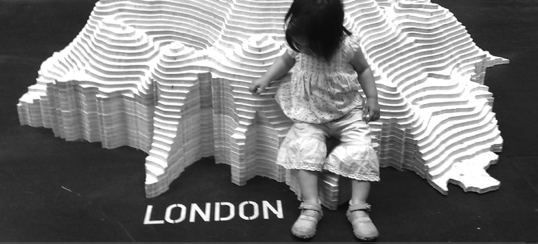
Joie de Vivre Urbaine
 "...And joie de vivre [joy of living] may be seen as a joy of everything, a comprehensive joy, a philosophy of life..."
Long ago, writers disparaged cities like London, New York, and Paris, labeling them as hives of disease and destitution. But over time, industrialization and economic growth powered by these urban centers lifted hundreds of millions of people out of poverty, creating a prosperous and secure middle class like the world had never seen. Over the past few decades, we have seen this happen again in China and India. With the rise of ideas like common wealth and the urban planet, it seems less naive each day to believe that this trend could continue moving upward, creating a globalized standard of living (not to be confused with a singular global culture, which would be intensely boring).
But the current model of urban living, with its sprawl, auto-dependancy, and tokenization of nature, is unsustainable at best. If economic development in developing world-cities is to diminish poverty at any notable rate, everyone -- in worlds both "first" and "third" -- must work to bring about the evolution of their cities into healthy, green, globally-minded places. The City As Solution to Climate Change and Globalization Pains has been a popular topic of conversation of late. But how can people in developed countries be persuaded to agree?
As we step into this new Urban Age, those of us arguing for the City As Solution must focus on the joie de vivre urbaine. For cities to reach their full potential as engines for change, the urban chorus will need to grow louder and brighter. The masses should be reminded of the joys and conveniences of living in vibrant, eqitable urban neighborhoods, not guilt-tripped out of their McMansions and driven into gentrifying neighborhoods to exacerbate socioeconomic inequality. Only when a person believes that they will enjoy something -- and that they deserve to -- will they make a real effort to change their way of life.
This week, as Where wraps up its first year in the urblogosphere, each day will feature a post that celebrates the excitement, promise, and possibility of the urban environment. It's Urbanism For Fun (but no profit). A preview:
Monday: EXPLORE
We'll start off by looking at how Google Earth and online mapping sites are making urban places more exciting by helping urbanites develop a better understanding of their cities, and how this type of technology could affect urban culture and society in the future.
Tuesday: PLAY
Taking another look at mixed-reality gaming, Where will consider this emerging form of entertainment as a possible catalyst for economic development in the near future.
Wednesday: IMAGINE
If you could rethink how cities are built, how would you do it? It's a question many of history's most famous architects have taken on with relish. In a guest post by SOM design associate Ella Peinovich, who participated in an architecture studio that took on this very daunting challenge, we'll learn more about what it's like to go through the process of radically reimagining the urban form.
(This has been edited to reflect a change in content).
Thursday: LEARN
Thursday will feature Where's full review of the buzz-heavy book The Endless City, compliments of Phaidon.
Friday: CREATE
March 21st marks the 365th day since Where's first post. To celebrate this blog's "birthday," a special edition of Weekend Reading will look back on the top ten posts of the past year.
--
DON'T FORGET
The Blogedanken game will be open to entries through 11:59pm CST, this Saturday, March 22nd. Go play and submit your favorite results for your chance to win a copy of PA Press' Hyperborder.

(Photo from Flickr user Shimrit&Yaar. The original full-color version can be viewed by clicking the photo.)
Links:
Joie de vivre (Wikipedia)
Hyperborder (Princeton Architectural Press)
Wednesday, December 19, 2007
Chicago vs. Pittsburgh: Conclusion
 Tonight's post is the last of three in a blogging debate, in which Jim Russell of The Burgh Diaspora, who guest posted at Where last month, and I will discuss the relationship between Pittsburgh and Chicago, and which city relies more heavily on the other.
After Monday and Tuesday's conversation between Where and The Burgh Diaspora, Richard Florida became an impromptu (but welcome) third party to the debate; responding to my conjecture from yesterday and Dr. Florida's musings on Chicago's inherent geographical disadvantages in the globalized marketplace, Jim Russell came up with the following nugget of vocabularial wonder:
"Pittsburgh's bet on Chicago might be a bad one. The network economy springing from the migration of human capital could result in a cul-de-sac for global connectivity...both cities should seek to diversify their connectivity portfolios. No city is a standalone cash cow. Chicago is not a world onto Pittsburgh, nor should it be." (Emphasis added)
Tonight, we wrap up the "blog duel" with some conclusions; what have we learned from this exchange?
The concept of the "cul-de-sac for global connectivity" strikes me as a key takeaway here. The world has always, to some extent, operated regionally. The size of the regions that we are expected to follow and respond to has changed dramatically over the course of human history; where mankind's regional interests were once tied directly to the changing seasons and animal migration patterns, we now take in news at all times from across the globe. We belong to multiple tribes that move in different directions, at different speeds. We follow our neighborhood, our state or territory, our country, and our specialized circles of interest around the world.
But as cities become more closely woven through globalization, it is regionalism that becomes a threat to places like Chicago. I found Dr. Florida's suggestion that Chicago maintains no global geographic advantage particularly interesting because that very point highlights the exact problem posed by the rise of the global city: it has become very easy, in contemporary culture, to assume the inevitability of places like Chicago, which have in fact gained their prominence for very regional reasons. The loss of importance of physical regions and the diminished need for literal proximity represent a very basic but worldview-altering paradigm shift; Chicago is important in terms of American and especially Midwestern economics -- it rose as the transportation and distribution hub of the country -- but without increased efforts toward economic and connectivity diversity, it might just wind up as the Pittsburgh of the global megacity hierarchy.
Thanks again to Jim Russell for proposing this week's debate. Make sure to check out The Burgh Diaspora -- a must not just for Pittsburghers, but for anyone interested in learning more about diasporic networks in the global urban age.
(Photo found on FFFFOUND!. The original full-color version can be viewed by clicking the photo.)
Links:
Chi-Pitts Globalization (The Burgh Diaspora)
Chi-Pitts, or Vice-versa (Richard Florida and the Creative Class Exchange)
Diasporas, In and Out (Richard Florida and the Creative Class Exchange)
Tuesday, December 18, 2007
Chicago vs. Pittsburgh: Round 2
 Tonight's post is the second of three in a blogging debate, in which Jim Russell of The Burgh Diaspora, who guest posted at Where last month, and I will discuss the relationship between Pittsburgh and Chicago, and which city relies more heavily on the other.
Yesterday and today, in arguing Pittsburgh's heavier reliance on Chicago, The Burgh Diaspora made the following points:
(1) "Pittsburghers are using their extended network and doing all the heavy lifting concerning the connectivity between the two cities. On the other hand, I suspect that a Chicago located firm looking for opportunity discovers Pittsburgh through Pittsburghers, not via transplants to the City of Bridges."
(2) "Chicago needs the talent developed in Pittsburgh...However, Chicago is also an impressive producer of human capital. If Chicago retained all of its local graduates, then would the city need Pittsburgh at all? Like Pittsburgh, Chicago's research universities are world class. Furthermore, Chicago attracts global human capital in ways Pittsburgh has not...Chicago does not actively seek Pittsburgh talent, but Pittsburghers still move there as a result of established migration patterns[.]"
But these two passages, when read together, play off each other in a way that suggests that Chicago's reliance on Pittsburgh and other domestic second-tier cities plays a very major role in Chicago's establishing itself as a global city in the first place.
Let's start by looking at the second statement. Assuming that it were able to retain the talent developed at universities like U of Chicago, Northwestern, Loyola, and UIC, Chicago would indeed be sitting pretty. So would Pittsburgh, if it were able to retail all of the graduates of Pitt, CMU, and Duquense. This is, especially in a fluid global economy, impossible. As sociologists have recently documented, a new phase is being added to the life cycle for young people in developed countries: the odyssey. Young people have a tendency, once they have their diploma in hand, to strike out into the world, seeking their proverbial fortunes.
This creates a diasporic network of people across the country and the world with strong roots in a community other than they one in which they are living. As its title suggests, this is exactly what The Burgh Diaspora covers in depth: Pittsburgh's diasporic population, often considered to be one of the most extensive such networks. This is where cities like Pittsburgh, Cleveland, and Milwaukee, traditionally viewed as demographic "losers," gain a foothold. As the process of globalization continues to make centralization less of a necessity and more of a luxury, second-tier cities not only provide the cheaper business climate than their megacity counterparts (though, ironically, Pittsburgh is currently burdened by byzantine economic policies), they also become the default choice for smaller start-ups, making second-tier cities even more important incubators for the kind of talent needed to keep a megacity economy chugging along.
Back to the first of Burgh Diaspora's points: Pittsburgh's network, now, provides it with a unique opportunity to lift smaller businesses looking for a less overwhelming (read: risky) market in which to develop their product. Pittsburgh is able, through its extended diasporic network in Chicago, to earn free word-of-mouth advertising from its expatriate sons and daughters that could potentially drive these smaller companies east to the Appalachians. In the end, the Pittsburgh market is not as important to Chicago companies as the Chicago market is to Pittsburgh companies; I'll concede this. But in a global marketplace, Chicago's larger companies do need Pittsburgh's smaller ones to stay ahead of the international competition.
(Photo from Flickr user scoobyfoo. The original full-color version can be viewed by clicking the photo.)
Links:
IntoPittsburgh: Chicago (The Burgh Diaspora)
IntoPittsburgh: Chicago II (The Burgh Diaspora)
Monday, December 17, 2007
Chicago vs. Pittsburgh: Round 1
 Tonight's post is the first of three in a blogging debate, in which Jim Russell of The Burgh Diaspora, who guest posted at Where last month, and I will discuss the relationship between Pittsburgh and Chicago, and which city relies more heavily on the other.
Nowadays, anyone following urbanism, economics, public policy, or related fields will have certainly heard of the theory that we are entering into an age of global urbanism where cities all over the world will be competing directly with each other for talent. Talent, we are told, will be more and more valuable as society becomes more technologically advanced, shifting even more heavily toward an international information economy. What you know, essentially, will become what you're worth. In this economic environment, megacities like Chicago will no longer merely be competing with New York, Washington DC, and San Francisco for talent; soon (already, many would say) Chicago will have to go head to head with London, Paris, Buenos Aires, Cape Town, Mumbai, Tokyo, Shanghai, Sydney, and on and on.
This is a fairly logical progression of events. The major city has always acted as a magnet throughout its history in human civilization. People come to the city to get a job, to prove themselves, to make their fortune. The individual reasons are myriad, but the inspiration is the same: people come to the city to improve their quality of life. It doesn't always work out that way, but that's the basic impetus. Chicago, then, has long needed Pittsburgh -- and other cities like it -- to sustain itself. The larger the city, the more daunting it is to dream-chasers and immigrants. Medium-sized cities, then, are a prime source of population for larger cities.
Without Pittsburgh, in the literal sense, Chicago would not crumble and blow away; to think so would be naive. But Pittsburgh is a part of a group of cities that, together, have allowed Chicago to experience its recent -- and rather stunning -- revival over the past two decades. As post-industrial Western megacities like Chicago, New York, or London began to try to pick themselves up after losing manufacturing jobs in the 1970s and 80s, they began to rely on what you could call innovation-intensive fields like biomedicine, design, information technology, and (of course) the arts. These are highly specialized fields, and ones that many traditional middle class workers were not trained or educated to particpate in. Megacities, then, needed to draw in new talent from surrounding smaller cities.
Here's where Pittsburgh gets the upper hand over Chicago. As a mid-sized city, Pittsburgh is large enough to provide a genuinely urban lifestyle while not overwhelming the newcomer. As a bonus, the city also happens to be an important center of higher education, with two of the nation's best colleges (U of Pitt and Carnegie-Mellon) located in the Oakland neighborhood of the city. Generationally speaking, this works in the city's favor because it becomes an excellent place for people to move from a smaller city to start a family, where the parents can take advantage of the lower cost of living and provide for their kids, who can then more easily take advantage of nearby educational resources. Pittsburgh is, for all intents and purposes, a creative class factory.
This happens around the country. Pittsburgh, Cleveland, Cincinnati, Milwaukee, Minneapolis, Saint Louis -- all of these mid-sized cities have traditionally fed job-seekers into Chicago. Today, the competition is national, and Chicago draws more than ever from Seattle, Portland, San Antonio, Birmingham, San Diego, Denver, et. al. As the stakes are raised in coming decades, Bordeaux, Liverpool, Fortaleza, Adelaide, Fukuoka, Busan, Medellin, and Alexandria will all enter the mix. And not in the sense of traditional immigration, which creates ethnic communities, but in the sense of global creative class migration, which could create massive gentrified (or at least economically stable), internationally diverse areas in cities around the world.
Western society already operates as a sort of imperfect meritocracy. As this becomes more true, Chicago will need places like Pittsburgh more and more as it works to maintain and build its competitive creative core. Pittsburghers have the option to stay put; Chicago needs to convince them not to. It has to prove, however possible, that it can provide a better life. The burden lies with larger city.
(Photo from Flickr user -Nicole-. The original full-color version can be viewed by clicking the photo.)
Links:
The Burgh Diaspora
Sunday, November 4, 2007
Maps: Finding Our Place In the World @ The Field Museum
 About a fifth of the way through the Field Museum's Maps exhibit, I started to feel a bit giddy. As a long-time lover of maps, I'd been looking forward to this -- the centerpiece of Chicago's Festival of Maps -- for months, and it was clear early in my time at the exhibit that I knew that I would not be disappointed. Now, after having a day to reflect, I can honestly (and emphatically) say that Maps: Finding Our Place in the World is one of the most impressive museum exhibits I have ever attended.
Those are strong words, I know, so let that be my one burst of enthusiasm. Henceforth, I'll try to be as objective as possible...I'd hate to do that thing where I puff something up so much that it can't live up to my description. Not that I think it's possible to overstate -- oops, sorry. Almost gushed again.
Divided into seven sections, Maps begins by addressing what is probably the most common use of its subject matter: wayfinding. The content of this section is subdivided into two groups, the Itinerary (one route depicted) and the Network (many routes depicted together). The maps on display set the tone for the rest of the exhibit; there is a great variety of mediums, styles, and time periods represented. Highlights include a section of an ancient 60-foot Japanese scroll depicting the road from Kyoto to Edo (now Tokyo), a 1940s road map of America with road trip routes taken by an anonymous family highlighted and annotated, and an original print of Harry Beck's revolutionary redesign of the London Tube map.
The second section of the exhibit displays maps that give structure to the world. While many maps may not be used directly for getting from A to B, they help us to develop a concept of the vastness of the world around us. The exhibit charts the evolution of mankind's understanding of the planet through maps, showing how they were used to record progress and redefine the world as our knowledge grew. The undisputed centerpiece of this area is a set of two large (about 4 feet in diameter, but I'm guessing) wooden globes -- one that depicts the earth as it was believed by cartographers to look (curiosities include the island of California off of North America's west coast and the near-absence of Australia and New Zealand, though overall it's surprisingly accurate) and the other showing the celestial dome above, with full-color representations (i.e. a scorpion for Scorpio) of the constellations.
Maps are also used, as shown in the third and fourth sections of the exhibit, to show important places and "bear witness to and shape history," in the curators' words. These two collections expand quite nicely upon the logic of the first two; the most obvious uses of maps are to chart the world and the routes that people use to move around it, but with a heightened understanding of the larger world, it makes sense that people started using maps to break the larger world down into smaller parts. Privatization and land division become central foci here. Several important names pop up up in a subset of the fourth section focusing on historical maps of the US: Lewis and Clark's map of their route is here, as are land surveys by George Washington, Thomas Jefferson, Abraham Lincoln, and Benjamin Franklin.
Even more sophisticated maps make up the fifth section, which highlights maps that make the invisible visible. These are highly detailed creations that detail intangible or hidden details about places. One of Jane Adams Hull House's famous maps of Chicago blocks broken down (and color-coded) by ethnicity and income is on display (a print of the same map is included in the Chicago History Museum's Mapping Chicago exhibit). So is a huge, vividly-colored map of the geology of Great Britain, one of the first maps of its kind. Another first here is a small, unassuming map of northern Italy that is believed to be one of the first uses of shading to depict topography, pre-dating its common use in recent times by several centuries. A closer look at the plaque describing this piece reveals that its creator was none other than Leonardo da Vinci. Another of his quiet pieces, a plan to canal-ize the Arno, is nearby.
The sixth area is a showcase of maps that depict imaginary places. L. Frank Baum's map of Oz is here, along with several of J.R.R. Tolkien's hand-drawn maps of Middle Earth. This section contrasts nicely with the seventh, which shows maps in rather mundane use in everyday life. A RISK board, a needlepoint map of Great Britain, a kiosk showing mapping technology on modern cell phones -- these examples point out the many ways in which maps seep into our daily routines. This last section culminates in an interactive wall of video maps where you can touch cursors on large screens and navigate satellite imagery and zoom in on your hometown. (It can be a bit tricky to get these to work -- try holding your fingers a few centimeters away from the screen).
If there is one opportunity that is really missed here, it's that Maps does not spend any time on the way that the internet is currently democratizing the field of cartography. There is no mention of mashups or group maps or even Mapquest, the launch of which really was revolutionary moment for mapping technology (though Mapquest's prominence in online mapping has since been usurped by Google and Microsoft). In fact, I kept expecting to see this theme threaded throughout the other sections of the exhibit, but it never even made an appearance.
Overall, Maps: Finding Our Place in the World is a suitably rich and creamy center to the FoM's gourmet chocolate. It's an exhibit that keeps you moving, looking forward to the next map even before you've finished reading about the last. If you don't live in the area but you've been looking for a reason to visit Chicago, this exhibit would even make a good excuse to come. If you live within driving distance and have even a passing or newfound interest in cartography, you have no excuse not to make the trip.
IF YOU GO
Maps: Finding Our Place in the World is on display at the Field Museum until January 27th, 2008. The museum is open 9:00am-4:30pm, seven days a week; the entry fee for the museum and the special exhibit is $19 for adults, $14 for students and seniors, and $9 for children under 12.
Links:
Maps: Finding Our Place in the World (Field Museum of Natural History)
Tuesday, July 10, 2007
An Homage to Things
Due to my mostly net-less vacation last week, I am seriously behind on my posting, so there are quite a few excellent (dare I say totally rad?) articles that I know I'm never going to get around to writing about. I have always liked things magazine, so to help clean out my Google Reader, I'm basically going to ape their style. Because I can.
If humanity simply vanished tomorrow, what would happen to our cities? Scientific American thinks that, at least in Manhattan, the subways would quickly fill with water, causing the streets above to buckle, effectively becoming rivers. Why? Apparently the island was once home to 40 different streams, though all water runoff is now diverted underground. “There are places in Manhattan where they’re constantly fighting rising underground rivers that are corroding the tracks. You stand in these pump rooms, and you see an enormous amount of water gushing in. And down there in a little box are these pumps, pumping it away." (via CitySkip)
In other water-related news, a quarter of a small Kansas town was wiped out by an oil-enhanced flood. It's like the Exxon-Valdez in the middle of the Great Plains. Up on the Great Lakes, however, things are clear and blue out at Azkaban, the forlorn perch from which Built Environment Blog surveys the Chicago skyline as one takes in Earth from the moon. Meanwhile, atlas(t) has kicked off its Galleon Trade Edition, planning stops in Mexico, California, and the Phillipines.
Time for a Conscious Urbanism triple shot. A DC blog, Rebuilding Place in the Urban Space, writes about a New York effort to convert schoolyards into public parks / New York's Streetsblog, meanwhile, is writing about London's potential street-decluttering, which sounds an awful lot like what happened Sao Paulo / Speaking of London, the BBC reports that the UK government is planning to allow locals to have a say on where public funds are spent...which, coincidentally, is being modeled after a Brazilian program. / Dickens could not have come up with a better name than Hazel Blears.
In Seattle, urbanism guru Jim Diers laments the city's move away from the more neighborhood-focused way of planning he helped jump-start / Where are the Star Planners?, wonders Robert Goodspeed over on Planetizen's Interchange blog / The LA Times (they had a good week) asks why starchitects are shunning socially-conscious design / Prosper lets loan-seekers join online communities in a rather innovative way.
Speaking of innovative, UC Berkeley journalism professor Paul Grabowicz is developing a video game to help locals learn about the rich history of Oakland's 7th Street jazz and blues club scene. Grabowicz: "Our game defines an important local community and focuses on a very important aspect of that community. In essence, we have used a video game to recreate this community." / With all the recent talk about digital urbanism, I completely forgot to mention Digital Urban, a blog that covers the recreation of the physical world in virtual reality.
Steven Varnelis' blog, "the longest running single-person blog in architecture," has a new feature called Netlab Dispatches / Inhabitat covers the fabulously whimsical Cumulus Light Canopy by Steven Haulenbeek / With its new LED display, the CN tower can be seen over 100 miles away in Rochester, NY (via Architectural Record) / Philly has 60,000 vacant parcels (the highest per capita in the country) / The Tate's Global Cities exhibit features super-high-density urbanity (via Spacing Wire / Cities as Innovation Engines at the CEOs blog / Alive in Baghdad gives voice (and video coverage) to the war zone metropolis' citizens (via WorldChanging.com)
If humanity simply vanished tomorrow, what would happen to our cities? Scientific American thinks that, at least in Manhattan, the subways would quickly fill with water, causing the streets above to buckle, effectively becoming rivers. Why? Apparently the island was once home to 40 different streams, though all water runoff is now diverted underground. “There are places in Manhattan where they’re constantly fighting rising underground rivers that are corroding the tracks. You stand in these pump rooms, and you see an enormous amount of water gushing in. And down there in a little box are these pumps, pumping it away." (via CitySkip)
In other water-related news, a quarter of a small Kansas town was wiped out by an oil-enhanced flood. It's like the Exxon-Valdez in the middle of the Great Plains. Up on the Great Lakes, however, things are clear and blue out at Azkaban, the forlorn perch from which Built Environment Blog surveys the Chicago skyline as one takes in Earth from the moon. Meanwhile, atlas(t) has kicked off its Galleon Trade Edition, planning stops in Mexico, California, and the Phillipines.
Time for a Conscious Urbanism triple shot. A DC blog, Rebuilding Place in the Urban Space, writes about a New York effort to convert schoolyards into public parks / New York's Streetsblog, meanwhile, is writing about London's potential street-decluttering, which sounds an awful lot like what happened Sao Paulo / Speaking of London, the BBC reports that the UK government is planning to allow locals to have a say on where public funds are spent...which, coincidentally, is being modeled after a Brazilian program. / Dickens could not have come up with a better name than Hazel Blears.
In Seattle, urbanism guru Jim Diers laments the city's move away from the more neighborhood-focused way of planning he helped jump-start / Where are the Star Planners?, wonders Robert Goodspeed over on Planetizen's Interchange blog / The LA Times (they had a good week) asks why starchitects are shunning socially-conscious design / Prosper lets loan-seekers join online communities in a rather innovative way.
Speaking of innovative, UC Berkeley journalism professor Paul Grabowicz is developing a video game to help locals learn about the rich history of Oakland's 7th Street jazz and blues club scene. Grabowicz: "Our game defines an important local community and focuses on a very important aspect of that community. In essence, we have used a video game to recreate this community." / With all the recent talk about digital urbanism, I completely forgot to mention Digital Urban, a blog that covers the recreation of the physical world in virtual reality.
Steven Varnelis' blog, "the longest running single-person blog in architecture," has a new feature called Netlab Dispatches / Inhabitat covers the fabulously whimsical Cumulus Light Canopy by Steven Haulenbeek / With its new LED display, the CN tower can be seen over 100 miles away in Rochester, NY (via Architectural Record) / Philly has 60,000 vacant parcels (the highest per capita in the country) / The Tate's Global Cities exhibit features super-high-density urbanity (via Spacing Wire / Cities as Innovation Engines at the CEOs blog / Alive in Baghdad gives voice (and video coverage) to the war zone metropolis' citizens (via WorldChanging.com)
Sunday, May 13, 2007
Community 2.0 and the Built Environment: An Introduction

Ours is a hyperlinked reality. As technology-enabled connectivity increases, we marvel at how our world seems to be shrinking before our very eyes. For decades now, if not longer, people have spoken of this phenomenon with a mixture of apprehension and bemusement. The apprehension comes from the fact that geography, one of the fundamental building blocks of our reality, is seemingly being relegated to a sort of background status -- an attractive desktop image for life, if you will. The bemusement is likewise rooted in the concrete nature of the physical environment: it never ceases to amaze us each time communicating with people on the other side of the world gets a bit easier because we understand physical distance on a very personal level. Thus the idea that we can communicate instantly with someone in China while sitting in a library in Boise, Idaho, by simply clicking some underlined text is...well...amusing, no matter how tech-savvy we happen to be.
Much as the automobile and its promise of increased physical mobility captured the public's imagination at the turn of the last century and rallied the masses around infrastructural and legislative capacity-building to enhance the automotive experience, the internet has transfixed the global community at the turn of this century by flashing us a future of greatly increased psychological mobility. China, now, is not nearly as far away -- nor as mysterious -- as it once was. Neither is Uraguay, or Romania for that matter. Physical and political boundaries are beginning to fade; the modern world is ours for the taking in a way that is much more immediate than it was twenty years ago.
As a result, it can sometimes seem like humanity is hurtling forward, with new technology (or at least new uses for existing tech) is developed and introduced to the public on an almost daily basis. And just as each technological revolution has had to prove its mettle over time, so has the internet; at first, there was a great deal of fear surrounding the dot com revolution, with people fearing that the world of online communities -- chat rooms, message boards, webcams -- would keep people locked away in their homes, glued to computer screens. Physical communities, we feared, would become a thing of the past. But now, it seems, we have reached the critical point at which people trust the web -- trust it enough to really take control of it.
The "Web 2.0" movement has become a pretty monumental phenomenon in a fairly short period of time. And it comes as no surprise, at least to me, that the interactive nature of collaborative media sites like Flickr, digg, Technorati, Myspace, and the like is not erasing, but re-shaping the way that we build communities. Special interest groups have evolved into social action coalitions. The Blogosphere (a phenomenon of which I am personally quite fond) has passed through its awkward, melodramatic LiveJournal stage and, aided greatly by user-generated media sites like YouTube, become a genuine media powerhouse credited with fundamentally altering political processes around the world. And social networking sites, while still in their own narcissistic adolescence, are slowly starting to show themselves to be, quite possibly, the most promising prospect on the e-horizon through sites like Idealist.org.
So how does this massive shift in the way that we experience life translate to the built environment? "Community 2.0," the communal side of Web 2.0 technology, is growing stronger as you read this, simply by virtue of the fact that you're reading it. Still, it is a young movement, and it is just now starting to show signs of how it will affect the physical landscapes of our cities and towns.
Over the coming week, I'll be using Where to look at what I consider to be the most intriguing and promising aspects of the web-enabled communities of the future. I'll be writing about the way that the internet is changing the way that we use and think about public space; the way that Community 2.0 sites are cutting through crap known as "infotainment" to shed light on some real problems -- and solutions; and the ways in which real estate and the very future of traditional urbanity will be affected by an increasingly mobile public. The series will culminate on Friday with an interview with Phil Tadros, an untraditional Chicago businessman who is applying the people-oriented, localized focus that made his "third place"-style coffee shops into community institutions to the social networking movement in a way that could change how we look at the relationship between electronic communities and our physical neighborhoods.
(Photo from the Internet Mapping Project.)
Series Posts: The New Agora; Communeconomics; Neighborhood Futurism; The Phil Tadros Interview
Thursday, April 26, 2007
DisPlace You
I found out today that a prior commitment will be preventing me from making the trek down to Soldier Field to take part in Chicago's DisPlace Me event this weekend. I was really hoping to do a follow-up to my earlier post about the event, so if there are any Where readers planning to attend the event in any of the 15 cities who are willing to report back about the event/what you learned/etc., please post a response to this entry or email me. If there are multiple responses...well hell, I'll put 'em all up (providing that they're constructive and at least tangentially related to the whole "loss of place" theme.)
Thanks in advance to anyone willing to lend me some vicarious experience.
Thanks in advance to anyone willing to lend me some vicarious experience.
Saturday, April 21, 2007
WEEKEND READING: April 14-20, 2007

First item on today's Weekend Reading: I can be kind of absentminded sometimes. For example: forgetting that yesterday was Friday. There I sat in a wifi cafe in the Loop, waiting for friends, and trying to figure out what to blog about. Weekend Reading never even crossed my mind. Like I said: absentminded. So anyway, my apologies for the delay. And now:
Google Earth has added what they're calling a "Global Awareness Layer" that incudes features like An Atlas of Our Changing World (check out the Las Vegas overlays!) and the well-publicized interactive history of the Conflict in Darfur. This is a great example of how electronic mapping technology can be used to educate people about conflicts going on around the world--or in their own communities. Neighborhood action maps could be used to indicate dangerous areas in need of increased police presence, damaged or deteriorating infrastructure, empty lots and other community problems. This is considerably more small-scale than the Darfur map, but just consider the possibilities that tech like this has for empowering individual citizens. If you don't already have it, you can download Google Earth, free, HERE.
Speaking of Earth, tomorrow is Earth Day. Yay, Earth. (Image from www.msss.com)
And here's a link to a Wikipedia article about the "Triple bottom line" business philosophy. Sounds like a great way to incorporate the ideas of the market economy and the humane metropolis.
BLDGBLOG is, of course, one of the most delightfully cerebral blogs on the web. This week saw one of my favorite posts yet; focusing on an old interview with Paul Virilio, it draws a subtle parallel between Europe's post-WWII lanscape of fear and today's. The post is accompanied by haunting images of crumbling bunkers and, just in case you're not interested yet, includes this line: "War, in Virilio's formulation, was thus a kind of terrestrial reorganization – a reshaping of the Earth's surface; it was, among other things, landscape architecture pursued by other means." That's good stuff.
Brand Avenue featured a rather lovely essay on architectural context in the urban environment, using a striking City Hall extention in Cork as a sort of case study for how to properly insert modern architecture into an area not rich in the style.
I love benches. Theirs is probably the most egregious absence in American cityscapes. No matter where you go, there's nowhere to sit and relax or people watch...hell, most bus stops in the cities I've visited are bench-free. Here in Chicago, L platforms with more than one or two benches are a rarity. This article from Treehugger brings to our attention "guerilla benchers" in London, who do...well, after the intro there, probably exactly what you think they do. Now if we could just get those guys to start doing "installations" across the pond...
Everyone's favorite random links blog, Growabrain, features a post today entitled Architects in film. There are plenty of architecture/planning-related links to help you justify taking a lazy afternoon, including Mark Luthringer’s fascinating Ridgemont Typologies e-xhibit.
And finally, a short'n'sweet op-ed from the International Herald-Tribune about the important role that cities will be playing in the coming push to create a sustainable global community. Check that out here.
Wednesday, April 18, 2007
The New Pittsburgh: Creating a Humane Urban Model
So a new idea hit the blogosphere a few weeks ago and, because I don't keep up with reading about my favorite city nearly as much as I should, I'm just now getting around to writing about it. It's the Manifesto for a New Pittsburgh, compsed by three Burgh bloggers (Mike @ Pittsblog, Jim @ Burgh Diaspora, and Jim Morris.) These guys have put together a pretty grandiose vision (the inspiring, Daniel Burnham kind of grandiose) for the Pittsburgh region but, as is noted in the introduction to the Manifesto, it's an idea that is not yet set in stone. Responses were requested.
One of the responses to this manifesto, which focuses largely on increasing connectons at the community, city, regional, and international level, asks how, exactly, Pittsburgh can reach out to the diaspora of Burgh natives across the planet. How, in essence, can former Pittsburghers living in Los Angeles or London or Tokyo be persuaded to invest money, time, or resources in their hometown when they live so far away?
Coincidentally, Pittsburgh played host to a Humane Metropolis Workshop just a week before the manifesto was posted. The conferrence is described thusly: "The objectives...include reviewing current urban improvement initiatives in Pittsburgh, promoting partnerships among local citizens and public officials, sharing relevant experiences from other cities, generating new ideas, and fostering awareness of Pittsburgh's emergence as a role model for other cities." There's all that "increased connectivity" talk again.
Greatness is what wins international attention--greatness in vision, leadership, innovation. Pittsburgh is a city that, thanks to its congenial attitude and ecologically rich setting, is particularly well-suited to becoming a global model of the "Humane Metropolis" discussed in the previous post. Most of the Pittsburghers I've met have had a real sense of pride in place; though they may not live there, they have strong feelings about their hometown. Thus, their own pride is, in part, tied to the fortunes of the city. Re-shaping Pittsburgh as the new model of greatness for healthy urban regions in the coming century could serve as an excellent means for inspiring members of the diaspora to contribute to the prosperity of their former home.
The Manifesto includes passages about "enfranchizing new and marginalized voices" and "reaching out to a 21st century global Pittsburgh of many colors, nationalities and ethnicities." It looks to me like there's quite a bit of connectivity between these two ideas already...
Links:
Manifesto for a New Pittsburgh
Pittsburgh: A More Humane Metropolis Workshop
One of the responses to this manifesto, which focuses largely on increasing connectons at the community, city, regional, and international level, asks how, exactly, Pittsburgh can reach out to the diaspora of Burgh natives across the planet. How, in essence, can former Pittsburghers living in Los Angeles or London or Tokyo be persuaded to invest money, time, or resources in their hometown when they live so far away?
Coincidentally, Pittsburgh played host to a Humane Metropolis Workshop just a week before the manifesto was posted. The conferrence is described thusly: "The objectives...include reviewing current urban improvement initiatives in Pittsburgh, promoting partnerships among local citizens and public officials, sharing relevant experiences from other cities, generating new ideas, and fostering awareness of Pittsburgh's emergence as a role model for other cities." There's all that "increased connectivity" talk again.
Greatness is what wins international attention--greatness in vision, leadership, innovation. Pittsburgh is a city that, thanks to its congenial attitude and ecologically rich setting, is particularly well-suited to becoming a global model of the "Humane Metropolis" discussed in the previous post. Most of the Pittsburghers I've met have had a real sense of pride in place; though they may not live there, they have strong feelings about their hometown. Thus, their own pride is, in part, tied to the fortunes of the city. Re-shaping Pittsburgh as the new model of greatness for healthy urban regions in the coming century could serve as an excellent means for inspiring members of the diaspora to contribute to the prosperity of their former home.
The Manifesto includes passages about "enfranchizing new and marginalized voices" and "reaching out to a 21st century global Pittsburgh of many colors, nationalities and ethnicities." It looks to me like there's quite a bit of connectivity between these two ideas already...
Links:
Manifesto for a New Pittsburgh
Pittsburgh: A More Humane Metropolis Workshop
Subscribe to:
Posts (Atom)


