Showing posts with label united states of america. Show all posts

Tuesday, June 2, 2009

Change? What kind of Change?

Yesterday, General Motors filed for bankruptcy and the US Government now owns a 60% stake in the largest American car company. Whether it be for better or worse, one thing is clear: the auto industry will not remain the same, and change is coming. Perhaps now, in the beginning of one of the largest economic restructurings ever, it is an appropriate time to talk about change. 

There are 2 types of change: regulative change and massive change. One works to bring processes up to date and improve efficiency while the other creates a whole new logic, a whole way of doing things, thereby completely changing the way a system works. GM thought it could save itself by closing plants, streamlining processes, and attempting to create a leaner, more efficient manufacturing company. The problem is, the US automotive industry doesn't just need to be more efficient, it needs to be completely restructured. It is not just the processes that need to change; it's also the motivations, the way of thinking, and the image that drives the company. GM and Ford have resorted to making cartoon cars out of classics! Isn't that post-modernism in a bottle? Is that where we should be? Meanwhile, BMW is making concepts like the GINA which could inspire and rewrite the future of automotive technology. OK, end American Auto Rant.


America, and indeed the developed world, doesn't need regulative change, but massive change. Technology has vastly improved the way we communicate and connect with each other and yet we seem to take that at face value and fail to realize how these massive changes could rewrite the ways in which we operate as a society. The vast spread of information provided by the internet allows for and encourages experimentation. In a trying time like this, we should not hang tight to what we know, but venture out into the unknown to explore and grow, like the pilgrims, or like Lewis and Clark. Regulative change is like pioneering a new cassette tape when everyone has an iPod. In our cities, our landscapes, our businesses, and our buildings, we need to start seeing massive change that will bring us as a society up to the level of our technology.


The restructuring of GM is an opportunity to create massive change, to rewrite not only an industry but a country, and a mentality. If we want to be in a new age, we have to start acting like we are already there.  

(Photos from ideo.ro and wikimedia. The original full-sized versions can be viewed by clicking the photo.)

Friday, May 22, 2009

The New New South

When our grandparents re-imagined the urban environment, we wound up with Pruitt-Igoe and the Parisian banlieues. As a result, popular opinion leans somewhat sharply in the negative direction when it comes to large-scale urban renovations. Still, it is largely accepted, among the current generation of urbanists and architects, that the suburbs are in need of a serious, large-scale overhaul. It's always important, when taking on a major project, to learn from the lessons of the past. But what exactly do the tower blocks and windswept concrete plazas of the latter half of the twentieth century teach us? On the surface, it's that tower blocks and windswept concrete plazas make for dire cities. But beyond that, these stark interventions illustrate quite plainly that it is almost never a good idea to rip down everything and start from scratch.

It's too bad, really, because starting a city from scratch is a very romantic and exciting idea. But cities are places that are used by millions of people, in millions of different ways; the longer a place is inhabited, the more people develop routines in and around them. Aesthetics aside, familiarity sets in, and even ugly places can become comfortable and familiar. Modernist urban renewal projects didn't just fail because they were severe and lacked a sense of human scale; they failed, at least in part, because they ignored the patterns and rhythms of the places that they replaced.

It's encouraging, then, to see that some of the cities considered the greatest offenders by anti-sprawl camp are starting not only to attempt to densify, but that they are doing so in ways that adapt rather than replace their built environments. Take, for instance, Miami, where a former car dealership is being redeveloped as a highrise urban district, or Charlotte, North Carolina, which has taken several steps in the past few years to actually start acting like a city of its economic stature. A new light rail has been built, for instance, with plans for considerable expansion; density has been encouraged along the transit lines; in one suburb, all new commercial buildings are required to have at least two stories. For a city with a population density of only 2,515 people per square mile (slightly less than that of Bangladesh), these are very promising steps toward urbanization. Better yet, there's been no wholesale removal of the city's existing fabric; just modifications.

Other sprawling cities are starting to take notice. Atlanta, the undisputed Capital of the New South since its rapid revival back in the late 1980s, has recently taken note of Charlotte's urbanization, with the Atlanta Journal-Constitution calling the city "a feisty, undersized boxer [that punches above its weight]." No small words from the Rome of Suburban Postwar America. And as that same article notes (albeit in downplayed terms that any smart urbanist will snicker at), Atlanta is currently struggling under the weight of the obscene freeway system that grew as fast as the metro's population. The city is already saddled with several eight-lane freeways (that's eight in both directions, for a total of 16) and the Georgia State Assembly seems to be making transit decisions using a 1965-vintage playbook. With New Jerseyans now complaining about the gridlock in the Big Peach (which they actually do in the AJ-C article), Atlanta's mobility problems are looking like a very serious liability.

Charlotte, meanwhile, has half the population of Atlanta but less than half the congestion. It remains to be seen if Charlotte will ever catch up to Atlanta in terms of international economic stature, but even if it doesn't, Charlotte can lead the way as a slew of sprawling mid-sized Southern cities (the entire region is notorious for its sprawl, after all) seek to densify and re-work their urban fabric. By taking the lead on lifestyle issues, Charlotte could become the capital of the New New South.


(Photos from Flickr user wbwood1969 and The Daily Green.)

Thursday, March 26, 2009

StimulusWatch and the Real American Housing Crisis


A couple of weeks ago, Drew posted about StimulusWatch, a site that lists all of the local projects in the United States that have been publicly announced as candidates for federal stimulus funds and lets the public vote on each project's merit. As luck would have it, my job involves researching construction projects, and I've been spending almost a month now combing through SW for several hours a day, looking for potential building projects. From what I've observed, it seems doubtful that the site will have any major impact on how stimulus dollars are spent ("Pork" is probably the most-used word in the very angry, uninformed comment sections no matter what state or city you're viewing). But SW does provide an opportunity for people working on the local level to gauge how their neighbors feel about a wide variety of public projects and services.

In the Energy category, for instance, one can see how effective the green movement has been on public opinion. Whereas a few short years ago Energy projects would undoubtably have been fewer in number and much lower in popularity, the Energy category seems to be one of the most popular, regardless of state or city, with the +/- ratio around half and half -- about the same as the ratio for Streets & Roads! Folks in small towns seem just as likely now to favor energy retrofits to their town hall and the addition of solar panels to school and library rooftops as urban and suburban Americans. People are still skeptical of hybrid vehicles, though, with many requests for money for hybrid or alternative energy-fueled municipal fleets meeting staunch resistance. But overall, the mainstreaming of energy efficiency efforts seems to have been a wide success.

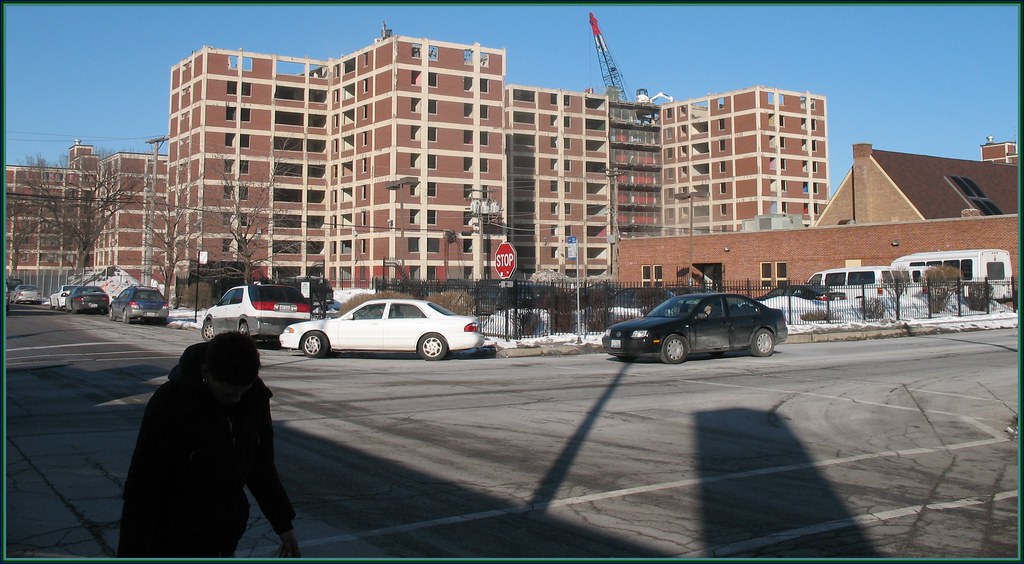
It is seeing this shift that makes me hopeful that we can reverse what is undoubtedly the ugliest trend that I've noticed from coast to coast: the outright rejection of Housing projects. Items with "senior" or "demolition" in the title notwithstanding, Housing projects receive negative vote ratios so consistently that it's as if there was some sort of unspoken rule barring people from voting anything but "No." Even more disturbing than the negative vote ratios are the comments left by mostly anonymous posters at the bottom of each page. Affordable and public housing is called some terrible things, and there is more than anyone's fair share of racism, classism, and willful ignorance. Public housing in America, it is plain to see here, has still not recovered from the havoc wreaked by the slum-clearance-brought tower projects of the 1950s and 60s. Much like with Wall Street, American public housing is experiencing a crisis of confidence.

It would seem that, as much as we need the money to build units for the thousands of people who have lost or are about to lose their homes, it might not be a terrible idea to spend some of HUD's budget on increasing public awareness of the different kinds of housing available nowadays. Stigma attached to terms like "public housing" and "affordable housing" undoubtedly hampers efforts to create sustainable mixed-use communities, a contemporary goal of most major urban housing authorities, by keeping middle- and upper-income residents whose presence facilitates that integration at bay. The focus for housing advocates and agencies is no longer on concentrating poverty, but on economic integration -- and if it's not, it damn well should be. Without changing the conversation, attempts to tackle America's shortage of affordable housing will likely be uneven at best.

For anyone interested in transportation issues (Transit, Airports, Streets & Roads, Amtrak), Community Development, Energy, Housing, Public Safety, Schools, or Water infrastructure, StimulusWatch provides an opportunity to better understand the challenges facing those fields. Whether you're for or against the federal stimulus package, that opportunity shouldn't be missed.


(Photo from Flickr users TheeErin and andyandrew. The original full-sized versions can be viewed by clicking the photos.)

Thursday, December 18, 2008

Demand for Recyclables

Alright, there’s been a lot of talk going around the blogosphere lately about the recycling epidemic forming in the United States. Basically, if you haven’t already heard, the United States sends a majority of their recyclables over seas to China to be processed into new materials, however, because of the global economic crisis prices for recyclables have plummeted leaving the United States with a growing pile of trash. So yes, this is a problem, but seriously, don’t you think it’s an even bigger problem that we create so much waste we have to ship it overseas?


Maybe it's time we begin to look at our recyclables as a raw material rather than a waste product. Many designers from around the world have been creating beautiful products made from post consumer products. Take for instance the Campana Brothers or Piet Hein Eek, both creating beautiful furniture from reused materials and both happen to be outside of the United States. Perhaps it's time for US designers to start looking at these waste materials as a material to work with rather than ignore. The alternative craft movement in the US have been quick to use found materials as it is economically attractive due to the fact that waste is generally free. Also, the use of waste materials is an evironmentally sustainable idea, cutting down on the mining, processing, and shipping of raw materials.

Aside from the alternative craft movement, there have been a few grassroots movements to use our waste as a raw material and divert malterials from being barged overseas or dumped in a landfill. Tiny Texas House has been carefully deconstructing houses in their region and building new prefab houses out of the materials. For me this just makes sense, and apparently it is working from an economic perspective as well.


So what is really stopping these ideas sound really great, and seem to make so much sense, what is stopping them from really taking off? Well there are 2 real issues. First, economic feasibility, Tiny Texas Houses works however they are only producing a very small amount of homes a year and aimed at a particular market who are willing to pay a high price for sustainability. The production of houses is a very refined process and the mining and transporting of materials is rigorously efficient. Maticulously taking down houses and preserving the material is a much slower process and therefore costs more money. New processes and networks need to be put in place before these ideas can really take off. These can come in the form of online networks or informal networks. Ebay and Craigslist are 2 online networks that have done a great deal for reuse. Think about how many items have been listed on craigslist that would most likely have found the landfill 10 years ago? Informal networks can work too, for instance the scrap industry, where legitimate, (and sometimes illegitimate) scrappers pick up reusable materials and sell them to scrap yards for a small profit.


Second, a paradigm shift will have to occur in which the general public changes their opinion on the value of our recyclables. Big name designers don't fool around with used materials because they presume their consumers will not appreciate used materials over new ones. This is why reuse is still a niche market. It is important to note however, that reuse is gaining steam and many companies, such as Frietag, maker of recycled messenger bags, have made enormous strides in changing the perception of used materials. The best way to infiltrate popular opinion is to hit the authorities in consumer products. When Macy's, Bloomingdales and Barneys start selling reuse, soon to follow will be all the small retailers scattered across the nation. But in order for reused goods to get there, there needs to be a good amount of quality designs using these materials to choose from. Maybe we need a national design challenge or something.


(Photo from TreeHugger. The original full-sized color version can be viewed by clicking the photo.)
(Photo from DesignCrack. The original full-sized color version can be viewed by clicking the photo.)
(Photo from TinyTexasHouses. The original full-sized color version can be viewed by clicking the photo.)
(Photo from TreeHugger. The original full-sized color version can be viewed by clicking the photo.)

Wednesday, December 10, 2008

The Cow and How We Use Our Resources


This past summer, I was perusing the aisles of my local, or perhaps regional IKEA store when I happened upon a heaping pile of cow skins, more acceptably called hides. At first, I was amazed, just at the sheer idea that this huge hide used to be part of a living animal. I thought of the Corb chair and lounger, once made of cowhide and how in a sense it was a very modern decoration. But then I looked at the display for what it was: a giant heap of cowhides. This isn’t Nieman Marcus or Bloomingdale's Home; this is IKEA, an operation that sells huge amounts of furniture and home accessories on the mass market. If there are 100 cowhides in just this one IKEA, there must be hundreds of thousands around IKEAs worldwide, and it just hit me as kind of a shock -- wow, that’s a lot of cow. I know that we slaughter some 35 million cows a year for food, and that’s a really crazy number to digest (pun only slightly intended) but we are desensitized to this because we don’t see it and our meals hardly represent their once active past. The cowhide, on the other hand, is directly linked to our visual representation of this animal and therefore triggers a more sentimental reaction. Add to that the skin is to be used as a rug, which people walk on; it just doesn’t seem right.

The next question to ask is: where did these skins actually come from, because here lies the real issue. If the skins are from animals that are doomed to begin with, for food production, and the skin would otherwise be wasted, then is it a good thing to use our animal resources to the greatest possible extent? In addition, how does the social perception of animals change if we are selling cowhides at America’s new favorite furniture retailer? It’s interesting to look at how we use our resources, whether it be coal or cows, and the social perceptions that go along with that can have a lot of baring on what people believe is the right way to live.

Great little debate going on over at Apartment Therapy.


(Photo from Apartment Therapy. The original full-sized color version can be viewed by clicking the photo.)
(Photo from Lindsay's Photography. The original full-sized color version can be viewed by clicking the photo.)

Monday, September 15, 2008

A Letter to Barack

Dear Senator Obama;

Of America's four largest cities, Houston and Chicago are partially underwater, and New York's financial heart is having a coronary. Los Angeles seems to be in the best shape right now, and when you can say that, you know that we have a very, very serious situation on our hands.

Meanwhile, Senator McCain and his moose nugget continue to their banshee screeching about your lipstick on a pig comment in an effort to move the election further and further into their party's most familiar territory: the character assassination campaign.

For over a year and a half, you have promised us a different campaign. You have promised us that you would rise above the pettiness and catscratching that usually passes for political discourse in this country. You gave us your word that, this time, things were going to change. You practically trademarked the word.

Senator Obama, the idea that Americans don't want to hear about actual issues, that the last thing they want to hear is policy talk -- this is the most insidious lie that has been told. True, there are those in both camps that would follow their party out of a plane in flight without a parachute. They are of little concern.

You can run the same campaign that we have seen time and time again. You can continue to get caught up in the scuffle that the GOP is so desperate to get you caught up in. When they will launch an attack ad that oh-so-coyly (tee hee, tee hee) suggests that you just might be a pedophile, what line is left for them to cross?

There is no winning, here, sir. The deeper you get into their fight, the less energized your base will be. The more of us young, tech-savvy folks who launched you past Senator Clinton into the position where you now sit will feel duped, cheated, and used.

Our greatest cities are on their knees. What will you do, Senator, to rectify the situation on Wall Street? In the plainest of terms (because no one loves wonk but a wonkette), tell us what happened, and how you intend to address it if you are elected. What can be done for Houston and Chicago, and other waterfront cities, to protect them in the future? Yes, the current relief efforts are important, but what will you do, specifically, to address the problems that are creating these increasingly dangerous storm systems that travel further inland each year?

Senator Obama, you are at a crossroads, and the current polling information has little good to say about the way that you've responded to Senator McCain's attacks thus far. If you cannot live up to your promise of change on the campaign trail, you have little hope of winning this election, because it speaks very poorly of your ability to affect change once you are in office.

We are still holding our breath. Change the conversation.

Thursday, September 4, 2008

Wow.


I'm a big fan of Jay Smooth over at Ill Doctrine, but he's outdone himself today. I was sick to my stomach when I heard about Sarah Palin and Rudy Giuliani mocking community organizing at the Legion of Doom's GOP's convention in St. Paul last night. But Mr. Smooth's vlog response today does a brilliant job of sucking the political bluster out of the scenario and presenting their banter plainly as what it is: an incredibly careless, openly disdainful slap in the face of everyone who actually goes out and works hard to make a difference in their community. It's a surprisingly moving take-down. Don't miss it.

Sunday, August 24, 2008

Hickenlooper on Biden

I've got my doubts about Barack's veep choice, but this quote from Denver mayor John Hickenlooper gives me hope. Perhaps, as is very, very possible with the contemporary media, Biden's big mouth has overshadowed wise policy. Let's hope that's the case.

At any rate, here's what Hickenlooper had to say yesterday:

"From the point of view of a big-city mayor, I think Barack Obama couldn't have picked a better vice-president. Joe Biden has been at the forefront of a lot of urban policy issues - the governor was just talking about his domestic violence legislation. He has consistently shown that you don't throw money at problems, right? You come up with solutions, and they you measure your investment, you measure your outcomes. He will be very warmly received by the mayors of this country."


(From, Via)

Saturday, August 23, 2008

3000 Broadway

Sure, all major cities look big and dense at their cores. But how do they compare a bit further out? Where's got some (admittedly loose) comparative urbanism for ya's today: aerial images of the address 3000 Broadway in America's nine largest cities -- #10 San Jose has no like-named street. (For the record: Philly's is from 3000 Broad Street, and Dallas' is from 3000 Broadway in the suburb of Garland, since the address does not exist in The Big D proper).

New York City, NYLos Angeles, CAChicago, ILHouston, TXPhoenix, AZPhiladelphia, PASan Antonio, TXSan Diego, CADallas, TX

Thursday, August 14, 2008

Air Show

It's Air Show Weekend here in Chicago, which means the US Air Force's Blue Angels are "practicing" overhead for the next few days. "Practicing," of course, translating to "flying so ridiculously low and fast over one of the most densely populated areas in the country that the noise they make sets off car alarms and makes pictures tilt on their wall hangars."

Seriously, who thought this up?

Any thoughts on urban air shows? They're a blast to watch, but really...do they have to practice over the 'hoods for three days? Listening to the roar of the jets flying overhead, I feel a bit on edge...I have to wonder if an event like this has some sort of subtle psychological effect on people.

Tuesday, July 22, 2008

Rankability

WalkScore has taken their delicious color-coded walkability maps, previously covered on Where, national. The results are...well, a bit disappointing. Perhaps I'm the only one, but I'm getting a bit tired of seeing rankings that use central city populations to determine the sample cities when metropolitan populations are far more important in determining the stature of an urban area. It makes little sense that Jacksonville, Tucson, and Oklahoma City make the cut for such rankings while St. Louis, Cincinnati, and Pittsburgh -- the central cities of much larger, more important metropolitan areas -- are left out because they've lost population to suburbanization.

This methodology has been a minor annoyance to me for some time, but the oversight seems particularly egregious in the case of WalkScore's ranking since it punishes densely-built urban centers for falling victim to exactly what the site is supposedly working against, and rewards cities that inflate their population counts through annexation and suburban deveopment patterns. The end result is a bit embarassing, with the overall city scores dropping under 70/100 points before you even get past the top ten on the list. Average everything out and the US gets a big fat F for walkability in its cities.

While there's a long way to go for Americans to become a more pedestrian-minded people, the idea that only a handful of our major cities are walkable is a bit absurd, and seems more like a misrepresentation than useful information. While it certainly shows the damage that suburbanization has done to our cultural understanding of urbanity, it says little about the actual state of walkability in America.

And that's too bad, because the maps look great, and the idea behind the rankings is a good one. If real estate is about location, the mantra for academic study should be "Execution, execution, execution."

Tuesday, July 8, 2008

Kotkin Kabob'd

On principle, Where does not link to any article containing Joel Kotkin's canned, willfully ignorant whinnying about how cities suck and suburbs are, like, totally awesome, bro. But Where does link to Bill Fulton's skillful and thorough skewerings of said whinnying. In fact, it does so with great aplomb.

And now I'll stop writing about this blog as if it's a sentient being.

Monday, June 23, 2008

The Urban President


What I find most impressive about Barack Obama is his ability to speak about the Bush administration's bungling over the past eight years that so clearly outlines the need for a different approach. As I listened to his speech to the US Conference of Mayors, I found myself shocked -- dumbfounded, even -- to hear a presidential candidate speaking about urban issues in such plain and ambitious terms. That a presidential candidate would talk the talk about metropolitan- and regional-scale economics, mass transit and high-speed rail, and the specific ways that the war in Iraq hurts individual cities and neighborhoods, is almost hard to believe after eight years of secrecy, corporate carte blanche, and a complete lack of focus on anything that actually matters to peoples' day-to-day lives.

"Neglect," Obama quips, "is not a policy for America's metropolitan areas." Word.

If you like the clip above, check out the full video on the US Conference of Mayors website.

Tuesday, June 10, 2008

Chicago: Creative Capital?

Fast Company's Fast Cities 2008 list (which is about a thousand times more coherent than last year's) came with a delightful cherry on top for this blogger, as it named Chicago the "Creative Capital of the Universe." Being from Milwaukee (Chicago's little brother to the north) and currently residing in the Windy City, I found this exciting news; Chicago has long suffered from what you might call Second City Syndrome, always trying to get out from under New York's shadow. (For the record: we don't really think of Los Angeles as a real place, so we're still #2).

All About Cities' Wendy Waters wrote a post tonight questioning whether or not the title was quite accurate; indeed, her assessment of the title's pithy, attention-grabbing nature is right on: it would be boring to read another article about New York or San Francisco being the most creative. But there's more merit to the title than you might think if yer not from 'round these parts.

I'll turn to Paul Graham's recent essay, "Cities and Ambition," for my defense. In his highly enjoyable piece, Graham asserts that cities that act as hubs of ambition have a way of communicating with people; New York says to its residents, "You should make more money;" Silicon Valley says "You should be more powerful;" Cambridge says "You should read all of those books you've been meaning to read." Chicago is most certainly an ambitions place -- it's the Emerald City of the Midwest, the Mount Olympus of Flyover Country. All (rail)roads lead here, so to speak. But after reading Graham's essay, I had trouble picking out exactly what Chicago was saying through its citizens' ambition.

"Creative Capital of the Universe" hit me like a brick in the face. Of course! Chicago says to its citizens, "You should be more interesting." The city is a domestic melting pot, pooling people from a region that is typically overlooked and underappreciated. We of the rust belt and great plains cities flock to Chicago to prove ourselves. Chicago's Second City Syndrome is a great asset; a city that is constantly trying to prove itself, after all, demands that its citizens do the same. And because of the slight sense of inferiority, Chicago is less pretentious than other global hubs like New York, London, or San Francisco. That lack of pretention has the power to erode fear of the unknown; Chicago has always understood that, to make big headlines, you need to take big risks.

In a world as spiky and competitive as the one that we live in today, it's pretty much impossible to claim that one city can claim to be the creative capital. But in terms of big headlines, Chicago seems to have inspired exactly what it was hoping: controversy. Screw being rational. Be more interesting.

(Photo from Flickr user kellyhafermann. The original full-color version can be viewed by clicking the photo.)


Links:
US City of the Year: Chicago (Fast Company)

Chicago: Creative Capital of the Universe? (All About Cities)

Cities and Ambition

Monday, February 11, 2008

Brackets


(Photo from The New York Times. The full-size version can be viewed by clicking the photo.)

Friday, February 8, 2008

WEEKEND READING: February 2-8, 2008

Did you know that it can actually rain slush? Like, the rain is semi-frozen, so as it hits the ground it collects and forms massive fraeking rivers of slush in the middle of streets. It's true. It happened in Chicago this week. It was the worst winter weather I've ever seen, and I'm from Wisconsin. By the way, here's your Weekend Reading. :-)

ITEM ONE: Great article on the recent trend in happiness-focused urban policies.

ITEM TWO: Interchange post by Greg Smithsimon about sustainability and the importance of having plans for change "lying around."

ITEM THREE: Strange Maps covers "America: The Mall" with an enlightening essay.

ITEM FOUR: Just discovered a fanastic new blog called Making Maps. Take a gander at this post on the principles of map design.

ITEM FIVE: Pruned covers some fabulously futuristic designs for a park in Venice. (Photo credit)

ITEM SIX: WebUrbanist's "5 Innovative Industrial Designs for Ecological Living" will have you rethinking the way you interact with everyday objects.

ITEM SEVEN: In the realm of Crazy-But-True, there is apparently a group trying to raise $10 billion to build a dome over Chicago to ward off nasty winter weather. After this week, I almost want to contribute. Best part: they've already raised $233,085.

No more slush rain this weekend, but it's supposed to get down to ten degrees Fahrenheit. Winter here sucks, y'all. Hope your weekend is warmer than mine!

Friday, February 1, 2008

WEEKEND READING: January 26-February 1, 2008

Bienvenidos a la fin de semana. Let's get to the good stuff:

ITEM ONE: I can't bring myself to link directly to "Reason" Magazine, so here's a post from the Center for Global Development on a very interesting interview on immigration policy with economist Lant Pritchett.

ITEM TWO: Strange Harvest visualizes what wireless communication technology might mean for the urban environment.

ITEM THREE: Pigs Will Fly examines the importance of local green economies.

ITEM FOUR: A beautiful piece from the NY Times on the art of decay in gardening. (Photo credit)

ITEM FIVE: TNAC lambasts Forbes' pathetic, poorly-executed disgrace of an article on the "10 most miserable cities in America"...

ITEM SIX: ...and we'll follow that up with a hilarious and spot-on column from Mark Morford of the San Francisco Chronicle entitled "Study says many studies suck." WORD.

ITEM SEVEN: Another good blog to add to your Reader -- Landscape Urbanism. Check it out!

Go have a party and then wake up at two in the afternoon tomorrow and read some of this stuff. Or something.

Monday, January 28, 2008

Maps, Maps, Maps For All

I had a friend over last weekend and we spent a good chunk of time tooling around several of my favorite map sites on the web (because that's what catrography geeks do for fun, you see). After revisiting the glories of Radical Cartography for the first time in months, I was pleasantly surprised to see the pop up in a recent post over at Tropolism.

While Radical Cartography does indeed contain some of the most interesting maps on the interwebs, I thought it'd be fun to do a rundown of five of my other favorite sites featuring innovative cartography. Heck, I'll even let down this blog's hair a bit and put the links directly in the text of the post instead of at the bottom. Hot damn, are you excited yet?! I sure am. Let's get rolling.

1) Fake is the New Real
As its too-cool-for-skool title suggests, FITNR is so not interested in whether or not you find it interesting. This site offers up a heaping helping of cartography and taxonomy with attitude. If you can't imagine such a mixture, click the link. Trust me -- World Subways at Scale and Chicago MilexMile alone are well worth a visit. The rest is icing on the cake.

2) Paris Traffic Noise
Pretty straightforward, this one: it's a zoomable, 3D, color-coded map of the noise levels of every public street and park inside the Périphérique. The colors are projected onto the buildings that line the streets, which themselves are created from satellite photographs. Even if you don't care much about urban soundscapes, this one is just damn pretty.

3) Stamen Design
Stamen is the design studio behind some of the most resonant online maps in recent memory. First came Cabspotting, which uses GPS technology to track cabs in San Francisco, creating a live, ever-changing map of the most travelled routes in the city. Then Stamen made a real splash several months back with Trulia Hindsight, the real estate mapping site that uses color-coded markers to show houses on the market from different periods of time. The animations on Hindsight show the development of cities and suburbs over time. Watching a subdivision flash-bloom onto the screen in a split second? Very cool. There's more than just maps at this one, but do give it a looksee.

4) Transparent New York
An oldie but goodie, I think I first stumbled upon TNY when I was a freshman in college. The site features an interactive series of layers that allow you to construct your own maps of Manhattan. Want to see if contemporary historic districts correlate at all to the island's original farm plots? You can see that here. How about comparing the island's commercial zones to the locations of all of the city's pre-war skyscrapers? You can see that, too. This one is quite fun to play around with.

5) Zipdecode
Another pretty simple concept with geek-tastic results, Zipdecode allows you to type in any series of numbers to discover what (if any) US municipality claims your numeric ramblings as its ZIP code. Turn on the zoom feature for some fun flyover action.

Happy Monday, everyone. Enjoy some good, old-fashioned nerdy map fun.


(Other) Links:
Tropolism post on Radical Cartography

Radical Cartography, itself!

Wednesday, January 23, 2008

Magic of America Image Database Goes Live


The digitization of Marion Mahony Griffin's The Magic of America made a small splash several months ago, but the extensive image library, which contains all 650+ illustrations from the original book, has just gone live this week.

(Click map for kickass large version)


If you like what you see here, don't miss the electronic archive, which is full of drawings, maps, and photographs of buildings from the US, Australia, Japan, and India. It is most definitely worth some perusal.


Links:
The Magic of America Image Database (SAIC Archives)

The Magic of America Main Page