Showing posts with label suburbs. Show all posts

Wednesday, July 8, 2009

Coming Back to the City


The American city has taken quite the rollercoaster ride over the past 70 years. For the half century following World War II, anti-urban sentiment managed to keep pace with the United States’ unprecedented affluence, creating glistening suburban landscapes that surrounded increasingly troubled urban cores. Eight of the ten largest US cities in 1950 recorded their historical population peaks that year (only New York and Los Angeles continued to grow after that census).

This trend has reversed itself in the past couple of decades, of course, and most cities have benefited from the newly widespread appeal of urban living. As Mark Twain reminds us, though, history tends to rhyme rather than repeat itself, and the rebirth of cities is no exception.


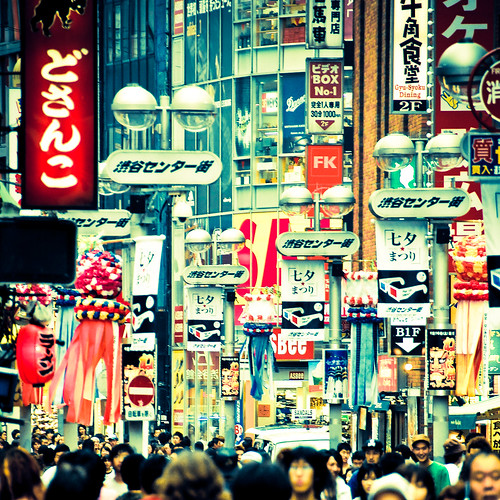
A few months ago, Marc described a phenomenon he called Earbud Urbanism. Contemporary technology as epitomized by the iPod, he wrote, now allows us to replace our actual surroundings with personalized content, one sense at a time. Kazys Varnelis made a similar point last week, just before the 30th anniversary of the Sony Walkman. The Walkman, he wrote, symbolizes the recolonization of US cities just as boomboxes (perceived as “sonic assault devices”) symbolized the height of urban tension and decay.

Why, then, did cities become more appealing in the 1980s and 1990s? Perhaps Earbud Urbanism contributed by making it easy to ignore the unsavory elements of urban environments. In the 19th and early 20th centuries, cities teemed due to lack of choice: If you wanted to do certain things you needed to be in the city. Now, our choices have increased exponentially, and comparatively few people truly need to be located at any one place in order to do something. Everyone’s loved ones are just a virtual arm’s reach away, consumer products can be delivered to some of the most remote places on earth, and one can practically run a business without rolling out of bed. The physical locations of jobs seem to follow people to where they’ve decided to live, instead of the opposite.

Perhaps the suburban fortess mentality of the postwar era gave way to a subtler kind of fortress mentality. The affluent who have chosen to return to the city have come back on their own terms, not the city’s. Many inhabit condos that are sealed off from the surrounding urban environment, with plenty of parking infrastructure to facilitate driving everywhere else. The same high-end chain stores, also with ample parking, have even filled in the formerly industrial spaces of many cities (Chicago’s Clybourn Corridor, for example). And when we do have to venture outside of our comfort zones on foot, of course, we have our iPods to keep us company.


(Photo from Flickr user fensterbme.)

Saturday, July 4, 2009

Suburbs Survival

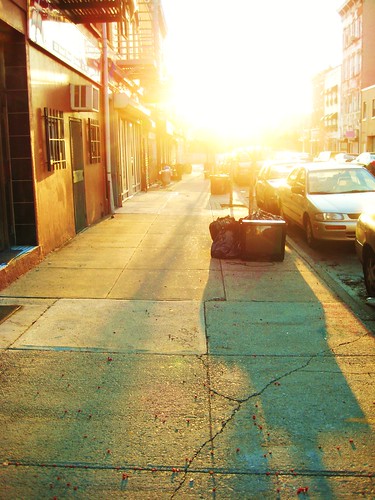
Cities have been getting a lot of attention lately with the majority of earth's population residing in dense urban cores for the first time in history. There seems to be a growing consensus that cities are the way forward and that suburbs should burn in hell for destroying out beautiful countrysides, our farmlands, and promoting unsustainable lifestyles. So how do we resurrect the suburb or make it better? Are we planning on disassembling them and using the material to build new urban dwellings or are they going to become abandoned and sit empty? Is there a way to think about the burbs differently that will lead to a new lifestyle or a renewed sustainable energy?


To survive long-term, the suburbs will likely have to become more community oriented and organized. This century thus far has proved to be about social and sustainable movements. Two movements the suburbs can embrace to improve their chances of retaining and attracting citizens are intense car sharing programs, and intense community farm programs.

Typically, neighborhoods center around some type of public space, whether that be a park, an elementary school, or another type of community-oriented structure. These centers could act as transport hubs, where car share programs are initiated. Programs like carpoolconnect.com can help people find rides and coordinate with neighbors to accomplish errands and daily tasks. Perhaps it seems extreme, but if the suburbs want to kick their negative wrap, they are going to have to show they can compete with cities on transportation and social interaction.


Suburban farming has become a big thing as well. Though urban farming has attracted much of the attention because of its extreme conditions, many suburbanites have been converting their yards into mini-farms and, in some cases, turning a profit. Many organizations have popped up to promote the transformation of turf lawns to lush homestead farms, most famously Fritz Haeg's Edible Estates. His organization has inspired a new breed of farm and a new brand of agriculture. Companies are beginning to form around the country with the intention to lease and cultivate neighborhood lawns. Weekly neighborhood farmers markets could be held at the community center with the majority of produce and added value products coming from within the neighborhood.

When it comes down to it, the suburbs need to bolster their sense of community interaction in all areas of their citizens daily life from transportation methods to food choices to live/work arrangements. The suburbs aren't going to just disappear, so hopefully in the next few years we as a society will develop some new suburban living models worth promoting.


(Photo from The Shift Home and the author. The original full-sized color version can be viewed by clicking the photo.)

Friday, April 3, 2009

Regional Distributions

Photo of suburban housesMuch has been made of suburban change in light of the subprime mortgage crisis. Articles such as What Will Save the Suburbs? and The Next Slum? offer new ways of looking at suburbs, with important implications for cities. A post at Design Observer by Andrew Blauvelt (co-curator of the Worlds Away: New Suburban Landscapes exhibition currently on view at the Yale School of Architecture) offers an interesting perspective on these issues.

Blauvelt finds that suburbs are taking on qualities commonly associated with cities, and vice versa. For example, suburbs see increasing diversity, congestion, and poverty as cities experience gentrification, detached housing, and chain stores. Blauvelt considers cities and suburbs mutually dependent, both from physical and psychological perspectives. He explains that "[c]ity dwellers and suburbanites need each other to reinforce their own sense of place and identity despite ample evidence that what we once thought were different places and lifestyles are increasingly intertwined and much less distinct."

While ideas about cities and suburbs take many evolving forms, their spatial relationship is fairly constant. At a basic level, suburbs are defined by their location on the outskirts of cities. They could be thought of as a gradient between areas of more and less human density. Modern transportation spreads this gradient, like spray-painting a dot on the wall from a distance. What if the density equation were inverted to resemble a spray-painted ring? Or if we were dispersed like stars across the sky? What cultural and ecological changes might take place in the absence of dense urban centers?

(Photo credit: East Hampton Historical Society)

Friday, March 20, 2009

Grand, Gai Paris


Ten years ago I was eighteen and living alone (off of my parents) in Paris. Ah… youth, treasure only gods may keep… Anyhow, Paris was a dream city; not the darkish, seedy Baudelarian urban dreamscape, or even the fleeting Benjaminian fancy. New Millenium Paris for me was a fleshy and flushed Disney-musical-featuring-Julie-Andrews kind of day to day rêverie: absurdly lovely and innocuous. I remember early morning strolls and limestone and birds chirping and leaves turning red and buttery pastries that literally melted in your mouth. Since I was eighteen, I had to feel alienated too, so I wore black all the time and grew my hair long and put on a sullen face every time I went out. I listened to Fiona Apple and sat on bridges alone for hours till my ass froze. That was pretty much it.

I guess for the untrained eye it’s really difficult to notice how Paris can be alienating. First, just because it’s so f-ing beautiful. Second, because central Paris is caught up in a solipsistic detachment that only fluctuates between the gentle, romantic silliness of Amélie Poulin and the voluptuous, tragic silliness of Juliette Binoche in Trois Couleurs: Bleu. Third, because for all of its rocking political heritage, Paris seems convinced it has done enough for the improvement of mankind, content with milking the glories of yesterday and keeping the nasty spots well hidden under the rug. Those daily demonstrations on the Place de la République were just a great big hoax to me, particularly when my famille d’accueil kept a picture of the long-lost family country estate hung over their kitchen table, and they excused themselves for how rundown the street had become since all those “blacks” moved to the neighborhood, or when friends they had over for dinner tried to convince me that the very best thing that could’ve ever happened to us Mexicans would have been to spare Maximilian and remain a French protectorate. Never mind the horrid soirées rallye, pure pre-revolutionary pop.

Paris is patrician, classist, and reactionary to the pretty core, and Parisians know it. It has to be one of the most seamlessly segregated cities in the world. So, even though M. le Président’s call for a “Grand Paris” has tinges of boldness, the plot to make metropolitan Paris (tout compris, meaning the burning banlieus too) more sustainable, livable and equal by way of architectural and infrastructural Grands Travaux amounts to little more than Sarkozy trying to get his game back after loosing the title of young, brazen, charming guy-in-charge to Obama, or simply following Barack's lead of announcing great things and then scaling back. In the long run, marrying Carla Bruni might have a greater impact on the collective conscience of the French.

It's not that the proposals are necessarily poor or perverse in themselves. It's not that green belts and vegetable growing buildings and "urban substance stimulatrors" and techno-infrastructural corridors and a polycentric café-centered urban culture are necessarily bad things. Heck, some of the proposals are indeed quite poetic (even explicitly, calling for "poetic" tram-oriented transport to complement high-speed transit). It's just that in Paris, poetry is more than often a trap.

Despite Roland Castro's and the rest of the teams' good intentions, even the grandest of urban desgin schemes wouldn't be enough to pull Paris together. Not by a long shot. More than an urbanistic version of Paris je t'aime, what planning in the city needs is a François Bégaudeau-type urban antihero. The genius of Entre les mures is that it demonstrates that good intentions never cut it. There are no truly appalling conditions shown in the film. No poverty porn. The setting is a decent, modern, clean, multiculty high school (no graffiti or obtuse racial prejudice or vicious decay one can fight against and prove oneself against and overcome. This is no Stand and Deliver, certainly not Dangerous Minds), and the students are clearly well fed and surprisingly well-dressed. The teachers seem to be doing pretty okay too. Still, there is an unbreachable divide between the two groups, growing deeper by the minute as the movie rolls on. The kids find it impossible to cope with life, and the teachers can't do anything about it. Nothing. They are left to themselves, to their false yearnings and comings of age and their fake (urban) tribal belongings and their sense of needing something else but not knowing where to find it or even where to start looking. We're not faced with a purely outward, practical, spatial, functional problem here; but rather an all-encompassing malaise, a case of cultural exhaustion. It's not only that Paris is broken and divided: the real problem is that it's children are lost.

Monday, August 11, 2008

Energie Tales


Like Fairie Tales, only a bit less connected to reality!

Case in point: Discovery News, today, brings us this report on a competition between several teams of researchers to find a way to turn car exhaust into an energy source. Sigh. Where will it end?

It may well be that recycled car exhaust winds up being a genuinely useful source of energy. I won't dispute that (nor do I have any sort of scientific background to back up such a dispute if I were to try). But doesn't it seem like the things that "researchers" are trying to cull fuel from keep getting more and more...far-fetched? Every time you turn around, there's another story about another mundane, thoughtless bit of waste from our society's daily workings that just may be the source of energy to rescue us from oil dependency! It's getting to be a bit hard to believe any of it.

What's next? A plan to collect dead skin cells from under the blades of used razors to create a biomass engine for powering Las Vegas? Or perhaps an ingenious discovery that shed cat hair is ten times more efficient, when burned, than gasoline if mixed with a teaspoon of the sludgy goop left in the drain-catch after you wash the dishes?

I can see it now: millions of people toss out their dishwashing machines (which will then be melted down to be used as another recycled fuel source involving dead fish and broken Tickle-Me Elmos), and buying cats. The cacophony of feline mating calls fills wealthy enclaves as neighbors cross-breed their pets in an effort to get enough kitty-biomass to get the Beamer to work and back. Driving to the grocery store for more cat food, you see a man hunched over a large, frantic Tabby, combing frantically as the cat claws the air; "Come ON, Patches! Goddamnit, I need to get to WORK!"

Or maybe ethanol will save us all. Oh, excuse me while I go fix my eyes. I just rolled them so hard that they got stuck that way...


Edit: I realized just after posting this that it contrasts pretty sharply with this post back in June. Oh well...chalk one up for fatigue.

Tuesday, July 22, 2008

Rankability

WalkScore has taken their delicious color-coded walkability maps, previously covered on Where, national. The results are...well, a bit disappointing. Perhaps I'm the only one, but I'm getting a bit tired of seeing rankings that use central city populations to determine the sample cities when metropolitan populations are far more important in determining the stature of an urban area. It makes little sense that Jacksonville, Tucson, and Oklahoma City make the cut for such rankings while St. Louis, Cincinnati, and Pittsburgh -- the central cities of much larger, more important metropolitan areas -- are left out because they've lost population to suburbanization.

This methodology has been a minor annoyance to me for some time, but the oversight seems particularly egregious in the case of WalkScore's ranking since it punishes densely-built urban centers for falling victim to exactly what the site is supposedly working against, and rewards cities that inflate their population counts through annexation and suburban deveopment patterns. The end result is a bit embarassing, with the overall city scores dropping under 70/100 points before you even get past the top ten on the list. Average everything out and the US gets a big fat F for walkability in its cities.

While there's a long way to go for Americans to become a more pedestrian-minded people, the idea that only a handful of our major cities are walkable is a bit absurd, and seems more like a misrepresentation than useful information. While it certainly shows the damage that suburbanization has done to our cultural understanding of urbanity, it says little about the actual state of walkability in America.

And that's too bad, because the maps look great, and the idea behind the rankings is a good one. If real estate is about location, the mantra for academic study should be "Execution, execution, execution."

Tuesday, July 8, 2008

Kotkin Kabob'd

On principle, Where does not link to any article containing Joel Kotkin's canned, willfully ignorant whinnying about how cities suck and suburbs are, like, totally awesome, bro. But Where does link to Bill Fulton's skillful and thorough skewerings of said whinnying. In fact, it does so with great aplomb.

And now I'll stop writing about this blog as if it's a sentient being.

Friday, April 4, 2008

WEEKEND READING: March 29-April 4, 2008

First things first: MONU has put out a Call for Submissions for their upcoming issue on "Exotic Urbanism." Sounds freaking brillaint. Now, on to this week's cream o' the crop.

ITEM ONE: New-ish blog Boredom Is Always Counter-Revolutionary with a cutting rant about advertisements, architecture, and envisioning the city of the future.

ITEM TWO: Lee Bey has his own cutting rant this week, this one zeroing in on race, crime, and public housing in Chicago. Spot-on.

ITEM THREE: Switching gears a bit, MNP's post on suburb-eating robots will blow your mind and tickle your funny bone. (Photo credit)

ITEM FOUR: Interchange blogger Scott Page on DIY Urbanism and the upcoming Wicker Park Bucktown workshops in Chicago.

ITEM FIVE: CS Monitor examines Hugo Chavez's plan to build a Venezuelan Brasilia of sorts. Welcome to Caribia, the 21st Century Socialist City.

ITEM SIX: Some eye candy from The Map Room -- a collection of late 19th and early 20th century maps of Latin American cities.

ITEM SEVEN: More humor to cap things off this week. The Onion features an hilarious exposé on the aristocrization of gentrified neighborhoods in American cities (via Super Colossal).

Adios, compadres. See you next week!

Friday, March 21, 2008

Happy Whereday!

Well la-de-da. Exactly one year ago today, Where's first post went up. The site looked a lot different...no logo, basic Blogger format, very...yellow (not sure what I was thinking, there). And here we are, 365 days later, with the 250th post. Plus, since four regular weeks = one full year in blog-years, that makes today Where's 13th anniversary! Hip hip hoo-ray, and all that jazz.

For a bit of self-indulgent celebration, I've put together a list of the Top Ten posts (and series) over the past year. Each header links to the original post. The date of publication follows a brief sample quote, and the posts are listed in chronological order. Without further ado...

Open Spaces, Non-Places
"People have idealized 'open' space when what they should really be focusing on is 'quality' space...[And when] the distinction between 'open' and 'quality' public space is ignored, it allows not only for the types of ridiculous arguments used by the 'concerned neighbors' mentioned above, but on a more subversive level it devalues public space in general." (4/10/07)

Community 2.0 and the Built Environment
"Just as each technological revolution has had to prove its mettle over time, so has the internet; at first, there was a great deal of fear surrounding the dot com revolution...Physical communities, we feared, would become a thing of the past. But now, it seems, we have reached the critical point at which people trust the web -- trust it enough to really take control of it." (5/13-18/07; weeklong series)

Speeding Succession
"Why not help along the process of ecological succession? As urban areas around the world begin to reimagine and reconfigure themselves as more localized, sustainable places, people stranded by a fuel crash or a series of eco-disasters could get work replacing suburban communities with trees. For every house torn down and mulched, ten trees could be planted." (5/29/07)

A True Alternative
"Of late, we have been plagued in our building and planning practices by an intense mediocrity, a society-wide indeciciveness. What we want, of course, is the best of both worlds: the convenience, community, and culture of the city, and the peace, privacy, and pastoral scenery of the small rural town. What we've wound up with is suburbia: the best of nothing." (6/21/07)

The Dawn of Digital Urbanism
"'Who will watch the watchers?' This, I think, will be the most fundamental challenge of Cyberspace: in a universally connected world, the unwatched watcher has more power than ever, as they will have unprecedented access to the masses." (6/28/07)
(Also: from the response post a few days later, Everyone is Watching You: "To paraphrase that famous line: when everyone is a watcher, who's watching the watchers? Everyone.")

Resident Experience Master Planning
"New advances in crowd simulation technology are making Resident Experience Master Planning more and more possible and, with the economic potential of such a development so high, indeed more probable...If urban planning could figure out exactly how to get people to do specific things or behave in specific ways, it would give new and rather intense meaning to the term 'master planning.'" (7/13/07)

Eat Your City
"Urban farms could become for the 21st Century what large, elaborate central parks were in the late 19th and early 20th. Frederick Law Olmsted famously described Central Park in Manhattan as the lungs of the city, but with new green technologies these farms could become more than lungs -- they could be the heart and brain of the city as well." (7/25/07)

The Possibilities of the Post-Retail City
"It's interesting to imagine a world in which shopping took a back seat to other social spaces as the dominant street presence...To get an idea of what might fill the void [left by retail], it might be interesting to see how social space is structured in places where gift economies (or at least barter systems) often already exist and retail strips are few and far between, at least in the traditional sense: slums." (8/13/07)

World Urbanism Day
"[Presented here] is a simple visualization of the landscapes of twelve major coastal cities around the world in three imagined futures: red overlays represent areas that will be submerged after a 50 foot (15.2 m) sea level rise; orange overlays represent areas submerged after a 150 foot (45.7 m) rise; and yellow overlays represent areas submerged after a full 250 foot (76.2 m) rise. The colors represent the fire-like spread of the ocean inland." (11/8/07)

Living in SimCity
"In an existing version of SimCity, a player could cover an empty triangular plot with parks and watch the land value of surrounding blocks rise. Imagine a SimCity that allowed users to completely re-design the Polish Triangle so that any player walking through the area could access this visionary public space and interact with it." (2/13/08)


Have a wonderful weekend. Thanks for a great first year!

Friday, February 15, 2008

WEEKEND READING: February 9-15, 2008

Good stuff, good stuff, good stuff. Enjoy some reading this weekend, folks. There's something here for everyone...

ITEM ONE: Deputydog explores Portland's Dignity Village, the "most organized shanty town on earth."

ITEM TWO: Creative class guru Richard Florida, MIT Department of Architecture head Yung Ho Chang, and Minneapolis Mayor R.T. Rybek are just a few of the experts to which Architect Magazine posed the question: "How Would You Spend $1.6 Trillion on Infrastructure in the US?"

ITEM THREE: A pleasingly astute assesment of the Gentrifyer's Guilt from the blog Believe in the Greatest City that Reads in America (which is Baltimore, apparently).

ITEM FOUR: Landscape Urbanism with a great (and well-illustrated) profile of Jean Nouvel as part of the Veg.itect series. (Also check out this review of the Worlds Away: New Suburban Landscapes exhibit, which opened this week in Minneapolis). (Photo credit)

ITEM FIVE: WorldChanging on how peak population -- and the inevitable decline to follow -- should frame the current discussion of susatinability.

ITEM SIX: Guest blogger Dave Atkins reviews Suburban Transformations over at All About Cities. Where featured a review of this book last month, and if you missed that, make sure to check out Mr. Atkins' post.

ITEM SEVEN: In case you missed it, Science just put out a special issue focusing on cities and the "urban planet" phenom.

See you Sunday for Urbanffffinds!

Thursday, February 14, 2008

Quotable

"I do believe that suburban living is a form of torture. If you made suspected terrorists live in big suburban houses, they would talk eventually. But they'd probably only say things like, 'Have you seen my keys?'"

--Cary Tennis at Salon.com

Wednesday, January 30, 2008

Sustainability and the Unimaginable City

A recent post at WorldChanging offered up for discussion a fantastic Bruce Sterling quote about sustainability: "The ruins of the unsustainable are the 21st century's frontier."

That's a pretty profound statement. To think that the world around us, the things that we consider familiar and take for granted, will be to our great grandchildren what the Roman Aqueducts -- or even British colonial forts -- are to us: relics. Of course, much of our built environment (especially the unsustainable portions) are considerably less visually appealing than crumbling arches and turrets. It's fun to imagine that, somewhere outside Cincinnati in 2108, there will be a tour bus that rolls past long-abandoned McDonald's huts and IHOP psuedo-ski lodges, describing to wide-eyed tourists how these strange buildings used to be used as restaurants back when people were willing to drive twenty minutes for food that had been flown across an ocean. But the likelihood of that scenario is slim.

Most likely, metropolitan regions will adapt to changing conditions, with cities and suburbs both densifying and growing and connecting in new ways. But what will become of the buildings and structures that are left in the sustainability craze's proverbial dust? As people become more educated on and concerned with sustainable buildings and neighborhoods, it seems logical to assume that demolitions will become less frequent than they are now as architects and planners seek to preserve structures with bones worth saving, and to reclaim materials when demolition is required. Politicians will mandate it; high tear-down rates will spell doom at the voting booths.

Even moreso than buildings, large chunks of our infrastructure could very well become obsolete, and will need to be repurposed. A post today at Loud Paper described a recent live design and model-building competition with a very novel premise: the two teams of architects were asked to design futuristic outpost buildings in the Alaskan wilderness, and their primary material was repurposed oil pipeline. Take that general concept to the city; what pieces of our current urban infrastructure -- even, or especially, the invisible pieces -- might we be trying to reuse as a construction materials once the large-scale shift to renewable energy sources has taken place?

And now, another Sterling gem to throw into the mix: "To me, 'sustainability' means a situation in which your descendants are able to confront their own problems, rather than the ones you exported to them. If people a hundred years from now are soberly engaged with phenomena we have no nouns and verbs for, I think that's a victory condition."

Whoa. Kind of re-frames the whole "repurposing" thing, hey?

It is easy (and, I think, quite common) to assume the perpetuation of current conditions. Humans like to think about the future, but we are stuck living only in the present. This means that our experience of the present has a very, very heavy influence on how we envision things ten, fifty, or a thousand years down the line. We live in fairly hectic period, so it can sometimes be difficult to imagine a world where the problems are completely different from those we face today, much less that we don't even have words to describe! My question is (inevitably, if you've ever read this blog before), how will this affect cities?

It's a silly question, really. After all, the very idea being discussed here is that the problems to be faced by a post-sustainability humanity aren't even conceivable to us now, so how the heck do we go about coming up with what those problems might entail? Of course, the answer is: we don't. We can't know what these problems or their solutions will be, but we can use the scenario to appreciate the massive opportunities presented by the challenges of creating a sustainable global society. All we need is a framing device.

Enter: the Air Tree. Madrid's recent announcement that they will be building three of these miraculous little structures (which were originally the result of a design competition in 2004) marks a very important moment in architecture and urban planning that is easy to overlook: the birth of an entirely new building type. The Air Tree is a temporary structure that marks what will hopefully be a permanent change in how cities will be built in the future, since its existence signals the arrival of the building with the sole purpose of acting as a unit of production for Quality of Life. These three futuristic pavilions will create for madrileños gathering places that use natural processes to filter and cool the air. The space beneath the Air Tree is not just social; it's cleansing and renewing.

Many common features of contemporary urban areas -- not in the least the Air Tree -- would have been unimaginable to people living a century ago. Stop and think about that for a second. Now try to imagine the unimaginable city of the future. Pretty thrilling, isn't it?


Links:
The Ruins of the Unsustainable (WorldChanging)

Architecture Gone Wild (Loud Paper)

What we get if we win... (WorldChanging)

The 'Air Tree' (Architecture.MNP) (Photo credit)

Monday, January 28, 2008

Maps, Maps, Maps For All

I had a friend over last weekend and we spent a good chunk of time tooling around several of my favorite map sites on the web (because that's what catrography geeks do for fun, you see). After revisiting the glories of Radical Cartography for the first time in months, I was pleasantly surprised to see the pop up in a recent post over at Tropolism.

While Radical Cartography does indeed contain some of the most interesting maps on the interwebs, I thought it'd be fun to do a rundown of five of my other favorite sites featuring innovative cartography. Heck, I'll even let down this blog's hair a bit and put the links directly in the text of the post instead of at the bottom. Hot damn, are you excited yet?! I sure am. Let's get rolling.

1) Fake is the New Real
As its too-cool-for-skool title suggests, FITNR is so not interested in whether or not you find it interesting. This site offers up a heaping helping of cartography and taxonomy with attitude. If you can't imagine such a mixture, click the link. Trust me -- World Subways at Scale and Chicago MilexMile alone are well worth a visit. The rest is icing on the cake.

2) Paris Traffic Noise
Pretty straightforward, this one: it's a zoomable, 3D, color-coded map of the noise levels of every public street and park inside the Périphérique. The colors are projected onto the buildings that line the streets, which themselves are created from satellite photographs. Even if you don't care much about urban soundscapes, this one is just damn pretty.

3) Stamen Design
Stamen is the design studio behind some of the most resonant online maps in recent memory. First came Cabspotting, which uses GPS technology to track cabs in San Francisco, creating a live, ever-changing map of the most travelled routes in the city. Then Stamen made a real splash several months back with Trulia Hindsight, the real estate mapping site that uses color-coded markers to show houses on the market from different periods of time. The animations on Hindsight show the development of cities and suburbs over time. Watching a subdivision flash-bloom onto the screen in a split second? Very cool. There's more than just maps at this one, but do give it a looksee.

4) Transparent New York
An oldie but goodie, I think I first stumbled upon TNY when I was a freshman in college. The site features an interactive series of layers that allow you to construct your own maps of Manhattan. Want to see if contemporary historic districts correlate at all to the island's original farm plots? You can see that here. How about comparing the island's commercial zones to the locations of all of the city's pre-war skyscrapers? You can see that, too. This one is quite fun to play around with.

5) Zipdecode
Another pretty simple concept with geek-tastic results, Zipdecode allows you to type in any series of numbers to discover what (if any) US municipality claims your numeric ramblings as its ZIP code. Turn on the zoom feature for some fun flyover action.

Happy Monday, everyone. Enjoy some good, old-fashioned nerdy map fun.


(Other) Links:
Tropolism post on Radical Cartography

Radical Cartography, itself!

Friday, January 25, 2008

WEEKEND READING: January 19-25, 2008

Another really great crop for Weekend Reading this Friday. We're going all over the web this week...make sure you set aside some time to browse.

ITEM ONE: TNAC's Hayley Richardson on Richard Florida and the Creative Class (And Florida's response).

ITEM TWO: Nifty blog about architecture and urban planning in the Ugandan capital, Kampala (via Global Voices Online).

ITEM THREE: Ever tried traversing every block of every street in your city? Bill McGraw of the Detroit Free Press has, and now his findings are online.

ITEM FOUR: This one's not so much about the reading as it is the watching -- a mind-blowing clip of software that builds automatic online cities.

ITEM FIVE: Bill Gates calls for a "creative capitalism." (Where is published on a Mac, but this blogger does admire Mr. Gates' social ingenuity).

ITEM SIX: WorldChanging goes head-to-head with the pro-car crowd, breaking down how cars aren't just killing the natural environment, but the built as well.

ITEM SEVEN: The curiously named blog List of Dorms ruminates on the suburbanization of urban cores, with Chicago as a brief case study. (This looks like a blog to watch...)

ITEM EIGHT: One more for the road -- City of Sound provides this well-illustrated update on its World's Best Urban Places & Spaces project.

Sheesh...if the urbanism web keeps up at this speed, the eighth item might become a standard feature! Have a gerat weekend.

(Photo from Flickr user pinehurst19475. The original full-color version can be viewed by clicking the photo.)